

The ASPC is a group of physicians, researchers, and allied health professionals working in the field of preventive cardiology.
USA
Joined July 2011
- Tweets10.5K
- Following3.5K
- Followers8.3K
- Likes6.9K
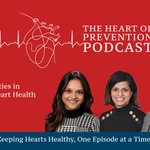



Cardiovascular disease remains the leading cause of death among women, but outcomes differ dramatically across racial and ethnic groups. In the newest episode of Heart of Prevention, host @Kpakanati3 sits down with Dr. LaPrincess Brewer and @GarimaVSharmaMD for a wide-ranging conversation on women's heart health.
Watch it on YouTube: youtu.be/EuDmGTnkCss
Listen on Spotify: open.spotify.com/show/6eCzeZ…
#WomensHeartHealth #HeartOfPrevention #CardiovascularHealth #PreventiveCardiology #WomenAndHeartDisease

ASPC retweeted

#KnowLpa
Congratulations @FamilyHeartFdn on another important Lp(a)-related publication! This in @AJPCardio.
✅ 1.1% of US adults tested for Lp(a)
✅ 1.8% of clinicians account for 50% of tests
✅ Signif disparities in testing
sciencedirect.com/science/ar…
@ASPCardio @nationallipid

Explore Residual Cardiovascular Risk in ASCVD and CKD with Dr. Michael Blaha. Study the content, review the resources, and take the Master Class Challenge. Collect points toward your badge while earning free CE.
Build your knowledge. Add up your points. Earn a Master Class badge.
Take the challenge: healio.com/cme/cardiology/in…
#ResidualRisk #ChronicKidneyDisease #CardioHealth #MedicalEducation #ASPC

🚨The Korean Society for Lipid and Atherosclerosis has a new webinar coming in its Dyslipidemia & Atherosclerosis Webinar Series: "ApoB and Atherosclerosis: Answers and Question".
The webinar will feature a lecture from Chris J. Packard followed by a panel discussion with Meral Kayikcioglu and Sang-Hak Lee.
🗓️November 5, 2026, 6:00-7:00 P.M. (KST)
Zoom ID: 818 0052 2986
Zoom Passcode: 5330
Zoom Link: us02web.zoom.us/j/8180052298…
#Dyslipidemia #Atherosclerosis #LipidResearch #MedicalWebinar #Cardiology

ASPC retweeted


Please join us October 21 & 28th from 7-9 pm EST for our 9th annual virtual #SOUTHASIAN Cardiovascular Conference. Beautiful Canadian 🇨🇦🇺🇸 USA collaboration!
Register for Free & Join the discussion live!:
🔗 ccrnmd.com/south-asian-cardi…
#Southasiancardiovascularhealth

ASPC retweeted

Please join us October 21 & 28th from 7-9 pm EST for our 9th annual virtual #SOUTHASIAN Cardiovascular Conference. Beautiful Canadian 🇨🇦🇺🇸 USA collaboration!
Register for Free & Join the discussion live!:
🔗 ccrnmd.com/south-asian-cardi…
#Southasiancardiovascularhealth
Sunday morning at #ASPC2026 started on the right foot with our fun run! 🏃➡️🏃♀️➡️
It was a great way for attendees to get moving, enjoy the fresh morning, and connect with the #ASPC2026 community. Thanks to everyone who came out and brought the energy!
#ASPCCongress #ASPC #CVPrevention


Join colleagues in cardiovascular prevention at the 18th Annual Orange County Symposium for Cardiovascular Disease Prevention, presented by the UC Irvine Center for Global Cardiometabolic Health and Nutrition and the Mary & Steve Wen Cardiovascular Division, taking place October 23–24, 2026, at the UCI Student Center in Irvine, CA.
Designed for primary care providers, cardiologists, endocrinologists, lifestyle interventionists, nurses, and other healthcare professionals, the symposium covers precision nutrition, lipid management guidelines, GLP-1 receptor agonists, women's cardiovascular health, multimodal cardiac imaging, and emerging diabetes therapies, with up to 9.5 AMA PRA Category 1 Credits and ABIM MOC Part 2 available.
Register now: publichealth.uci.edu/news-an…
The MOMENTUM study was presented at ACC, and the findings have real implications for how we work up resistant hypertension.
Among patients with resistant hypertension (uncontrolled BP on 3-4+ medications):
🔹 27% had hypercortisolism
🔹 21% had hyperaldosteronism
That’s a striking number of patients with a treatable secondary cause hiding behind what looks like “just” hard-to-control blood pressure.
The takeaway for cardiology: if your patient has resistant hypertension, especially with diabetes, which raises the odds further, that should automatically prompt a workup for both hypercortisolism and hyperaldosteronism.
Dr. Matthew Budoff @BudoffMd (UCLA) breaks down what MOMENTUM means for your next uncontrolled-BP patient, and the one test he says every cardiologist needs to know: the dexamethasone suppression test (DST).
For hypercortisolism, the DST is considered the most sensitive tool for documentation, though it isn’t the only diagnostic option available.
Don’t let a treatable cause go undiagnosed. 🫀
This educational initiative is supported by an educational grant from Corcept Therapeutics. ASPC maintains full editorial oversight and approval of program content.
#ASPC #CardioTwitter #ResistantHypertension #Hypercortisolism #Hyperaldosteronism #MedEd #PreventiveCardiology
Look beyond stenosis severity to better identify patients with high-risk coronary artery disease (CAD).
▶️ Watch this on-demand program exploring how AI-driven quantitative coronary plaque analysis (QCPA) can help detect early, non-obstructive, high-risk CAD. Through real-world imaging cases, gain practical insights into applying plaque analysis to preventive treatment decisions and integrating high-quality CCTA into clinical practice.
Watch now: medlive.com/aspc/show/26-10-…
@medliveofficial
#CardiovascularHealth #CAD #CCTA #CardiovascularImaging #PreventiveCardiology #MedicalEducation

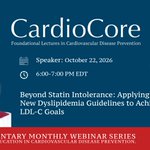
🫀It's time to register for a brand new CardioCore lecture coming later this month. "Beyond Statin Intolerance: Applying the New Dyslipidemia Guidelines to Achieve LDL-C Goals."
Join lecturer Ijeoma Isiadinso, MD, MPH and moderator Kardie Tobb, DO, MS, FASPC as they provide practical guidance on recognizing and managing statin intolerance and review the 2026 ACC/AHA/Multi-society Dyslipidemia Guidelines.
🗓️Thursday, October 22, 2026
6:00 PM - 7:00 PM EDT
Register now: aspconline.org/beyond-statin…
#CardioCore #ASPC #CardiovascularHealth #PreventiveCardiology

ASPC retweeted

❤️ A patient now meets criteria for biomarker-defined pre-HF. What should change in care?
Following the study Drs. @sohailszahid & @MichaelJBlaha share an exciting editorial @AJPCardio “The Signal Before the Syndrome,” focusing on the clinical decisions that come next.
ASPC retweeted
2/ The authors support biomarkers in Stage B pre-HF and reflect how that diagnosis should change management.
Their central challenge: determine which interventions improve outcomes and whether screening pathways can deliver those benefits at an acceptable cost.
ASPC retweeted

Medication adherence is important in the prevention and management of Cardiovascular Disease (CVD).
A new study published in the AJPC looks at the different factors involved in patients' adherence to medication treatments for CVD.
Read the results to learn more.👇
sciencedirect.com/science/ar…
#AJPC #PreventiveCardiology #CardiovascularHealth

ASPC retweeted

Primary prevention is the right question. In the PESA study, LDL-C "even
at levels currently considered normal" was independently associated with
early atherosclerosis. Prevention colleagues: LDL-C, ApoB or imaging first?
ASPC retweeted

All should but few know much about the lipemic index, a test all labs do and never report. We need to demand its reportage. 1/3 of patients with an elevated L-index & concurrent dyslipidemia met criteria for a severe TRL disorder. As an automated measure available at no additional cost, the L-index may help identify patients warranting further evaluation, particularly for severe hypertriglyceridemia and potentially FD-like phenotypes. It can help identify severe triglyceride-rich lipoprotein disorders in adults undergoing routine blood testing and aid in diagnosing pseudohypertriglyceridemia (glycerolemia). Open access at pubmed.ncbi.nlm.nih.gov/4276… @nationallipid @foundationofnla @society_eas @ASPCardio @atherosociety @TheEndoSociety #triglycerides

ASPC retweeted

Grateful to @khurramn1 & @ASPCardio leadership for the opportunity🙏🏻 Excited to contribute across @AJPCardio’s editorial and scientific initiatives.

📣 Introducing the AJPC Editorial & Prevention Fellowship — a new 12-month program from ASPC and the American Journal of Preventive Cardiology, offering hands-on experience across peer review, editorial strategy, special issue development, and more.
We're proud to welcome our inaugural fellow, @IzzaShahid_, MBBS, a postdoctoral fellow in preventive cardiology at @HoustonMethodi1. With more than 80 peer-reviewed publications and national recognition for her work in cardiovascular prevention and women's cardiovascular health, Izza is exactly the kind of rising leader this fellowship was built for.
"We are delighted to welcome Izza as our inaugural fellow," said Dr. Khurram Nasir, AJPC Editor-in-Chief (@khurramn1). "Her strong background in preventive cardiology research, scientific communication, and academic publishing makes her an excellent fit for this new initiative."
Congratulations, Izza! 🎉
Learn more about the fellowship: aspconline.org/ajpc-editoria…
#PreventiveCardiology #AJPC #Fellowship #CardiovascularHealth #ASPC
@ASPCardio

ASPC retweeted
📣 Introducing the AJPC Editorial & Prevention Fellowship — a new 12-month program from ASPC and the American Journal of Preventive Cardiology, offering hands-on experience across peer review, editorial strategy, special issue development, and more.
We're proud to welcome our inaugural fellow, @IzzaShahid_, MBBS, a postdoctoral fellow in preventive cardiology at @HoustonMethodi1. With more than 80 peer-reviewed publications and national recognition for her work in cardiovascular prevention and women's cardiovascular health, Izza is exactly the kind of rising leader this fellowship was built for.
"We are delighted to welcome Izza as our inaugural fellow," said Dr. Khurram Nasir, AJPC Editor-in-Chief (@khurramn1). "Her strong background in preventive cardiology research, scientific communication, and academic publishing makes her an excellent fit for this new initiative."
Congratulations, Izza! 🎉
Learn more about the fellowship: aspconline.org/ajpc-editoria…
#PreventiveCardiology #AJPC #Fellowship #CardiovascularHealth #ASPC
@ASPCardio
ASPC retweeted

I check if my patients are eligible for PCSK9i and if they can have access that will not burden them financially in every case.

🫀 VESALIUS-CV: Why Does This Trial Matter?
Most PCSK9 inhibitor outcomes data has come from secondary prevention: patients who already had an MI, stroke, or major cardiovascular event. VESALIUS-CV asked a different question: can we prevent that first event?
More than 12,000 high-risk patients with atherosclerosis or high-risk diabetes, but no prior MI or stroke, were randomized to evolocumab or placebo. Over a median 4.6 years:
📊 12,257 patients enrolled
📊 No prior MI or stroke
📉 25% relative risk reduction in CHD death, MI, or ischemic stroke (3-point MACE)
📉 19% relative risk reduction in the broader 4-component CV endpoint (4-point MACE)
This shifts the paradigm: we now have randomized outcomes evidence supporting intensive LDL-C lowering with evolocumab before a first major cardiovascular event in appropriately selected high-risk patients.
Prevent the first MI or stroke, not just the next one.
🎥 Watch the full breakdown in our latest reel.
Featuring Anurag Mehta, MD, FASPC, Asst. Professor of Medicine, Cardiology, Emory University @amehta_09
Supported by an educational grant from @Amgen. ASPC maintains full editorial oversight and approval of program content.
Learn more here: aspconline.org/pcsk9-educati…
#VESALIUSCV #PCSK9 #PreventiveCardiology #CardiovascularHealth #LDLC #CVPrevention #MedEd #Evolocumab
ASPC retweeted

🟢VESALIUS-CV moves PCSK9 evidence upstream of the first MI or stroke.
⁉️ > 12,000 high-risk patients with no prior event, evolocumab cut 3-point MACE by 25% over 4.6 years.
🧩 What does this mean: Prevent the first event, not just the next one. @ASPCardio
🫀 VESALIUS-CV: Why Does This Trial Matter?
Most PCSK9 inhibitor outcomes data has come from secondary prevention: patients who already had an MI, stroke, or major cardiovascular event. VESALIUS-CV asked a different question: can we prevent that first event?
More than 12,000 high-risk patients with atherosclerosis or high-risk diabetes, but no prior MI or stroke, were randomized to evolocumab or placebo. Over a median 4.6 years:
📊 12,257 patients enrolled
📊 No prior MI or stroke
📉 25% relative risk reduction in CHD death, MI, or ischemic stroke (3-point MACE)
📉 19% relative risk reduction in the broader 4-component CV endpoint (4-point MACE)
This shifts the paradigm: we now have randomized outcomes evidence supporting intensive LDL-C lowering with evolocumab before a first major cardiovascular event in appropriately selected high-risk patients.
Prevent the first MI or stroke, not just the next one.
🎥 Watch the full breakdown in our latest reel.
Featuring Anurag Mehta, MD, FASPC, Asst. Professor of Medicine, Cardiology, Emory University @amehta_09
Supported by an educational grant from @Amgen. ASPC maintains full editorial oversight and approval of program content.
Learn more here: aspconline.org/pcsk9-educati…
#VESALIUSCV #PCSK9 #PreventiveCardiology #CardiovascularHealth #LDLC #CVPrevention #MedEd #Evolocumab