

Vice President, Youth Opportunity Programs and Executive Director, My Brother’s Keeper Alliance at the Obama Foundation
Joined August 2014
- Tweets15.1K
- Following966
- Followers1.2K
- Likes5.9K







Pinned Tweet
Praying for all of us that are broken or have experienced brokenness - all that have experienced life have experienced, in some small or large way, brokenness. #Grateful for all of the broken parts and those that help me put them back together - stronger and more resilient 🙏🏽
Adren O. Wilson, PhD retweeted

Remember, rest is just as important as the work you put in. 🧡
Breathe in. Breathe out. 🌬️
Here’s a gentle mid-week reminder to slow down, take a moment for yourself, and give yourself permission to rest. You deserve the pause. 🌿


Adren O. Wilson, PhD retweeted

Paul Robeson was the third Black student to attend Rutgers College (now Rutgers University). In 1915 he received a four-year scholarship from the college and graduated in 1919 as valedictorian of his class.
Born on April 9, 1898, in Princeton, New Jersey, Robeson received a four-year academic scholarship to Rutgers in 1915. He was the third Black student ever admitted to the college and its first Black football player. His arrival marked an important moment in the institution's history, but his experience was not without difficulty. He encountered racial hostility from fellow students and opponents, yet continued to excel in the classroom and on the athletic field.
Robeson became a two-time All-American football player and earned varsity letters in four sports: football, basketball, baseball and track. Academically, he was inducted into Phi Beta Kappa, one of America's most prestigious academic honor societies, and became a member of Rutgers' Cap and Skull senior honor society.
In 1919, he graduated as valedictorian of his class, delivering a commencement address that called for equal opportunities and cooperation between Black and white Americans. He subsequently attended Columbia Law School, earning his law degree in 1923.
His career eventually expanded into acting, music and international activism. Robeson's extraordinary bass-baritone voice made him one of the most celebrated performers of his generation, while his outspoken opposition to racism, colonialism and injustice made him an influential political figure.
Paul Robeson's years at Rutgers were only the beginning of a life that challenged expectations and crossed boundaries in education, sports, entertainment and civil rights history.

This is MY SCHOOL @SouthernU_BR @SU_HumanJukebox . AMAZING

Southern University’s Human Jukebox performed a rendition of Mary J. Blige’s “Love No Limit” during the fifth quarter against Alcorn State:
3
246

The lady circled in red was Lucy Higgs Nichols. She was born into enslaved in Tennessee, but during the Civil W@r she managed to escape and found her way to 23rd Indiana Infantry Regiment which was encamped nearby.
She stayed with the regiment and worked as a nurse throughout the war. After the war, she moved north with the regiment and settled in Indiana, where she found work with some of the veterans of the 23rd. She applied for a pension after Congress passed the Army Nurses Pension Act of 1892 which allowed Civil War nurses to draw pensions for their service.
The W@r Department had no record of her, so her pension was denied. Fifty-five surviving veterans of the 23rd petitioned Congress for the pension they felt she had rightfully earned, and it was granted. The photograph shows Nichols and other veterans of the Indiana regiment at a reunion in 1898. She died in 1915 and is buried in a cemetery in New Albany, Indiana.

39

Religious Sisters From Nigeria Joyfully Dancing and Processing For Holy Mass #holymass #CatholicTwitter
52
Adren O. Wilson, PhD retweeted

The Emanuel Nine Memorial officially opened to the public today in Charleston, S.C., in honor of the nine worshippers murdered during Bible study at Mother Emanuel AME Church in 2015
(Photos: Joshua Parks)


Adren O. Wilson, PhD retweeted

Sheku plays Saint-Saëns Cello Concerto No.1 from his new album Hope in Shadow 🎻 🌘
Adren O. Wilson, PhD retweeted

On this day in 1960, four 6-year-olds made history as the first Black students to integrate New Orleans' previously all-white public elementary schools. Their courage helped break down barriers of segregation and changed the future of education in Louisiana.

Adren O. Wilson, PhD retweeted

'Hope in Shadow' is out now on CD and all streaming platforms! It's made up of music I've loved for a long time, first as a listener and now with the thrilling experience of performing it.
shekukannehmason.lnk.to/Hope…
Fannie Lou Hamer - an extraordinary civil rights leader!

MISSISSIPPI, 1969. White landowners weaponized starvation, evicting Black sharecroppers who tried to vote. Fannie Lou Hamer bought 680 acres of farm land and built an independent Black food system.
In the Mississippi Delta, the struggle for voting rights was also a struggle for economic survival. During the Jim Crow era, Black sharecroppers who attempted to register to vote risked losing their jobs, homes and livelihoods. White landowners used their control over farmland and employment to punish Black families who challenged the racial order. Fannie Lou Hamer knew this cruelty personally. After attempting to register to vote in 1962, she was fired from the plantation where she worked and forced to leave the home where she had lived for nearly two decades.
Rather than allow poverty and intimidation to keep Black families dependent on white landowners, Hamer pursued a different kind of freedom. In 1969, she established the Freedom Farm Cooperative in Sunflower County, Mississippi, beginning with 40 acres of farmland. The project eventually expanded to approximately 680 acres, creating opportunities for poor Black families to grow their own food, raise livestock, build homes and develop economic independence.
The cooperative was much more than a farming operation. It established community gardens, a pig bank, a tool-lending program, affordable housing initiatives and educational opportunities. Families who had been pushed out of traditional agricultural employment could participate in a community built around shared resources and collective ownership. Its produce helped feed more than a thousand families in the surrounding area.
Hamer understood that political rights meant little if families could still be controlled through hunger, unemployment and homelessness. She believed that owning land and producing food were essential parts of genuine freedom. Her work connected the fight for civil rights with food security, economic justice and Black land ownership.
The Freedom Farm Cooperative eventually faced financial difficulties, natural disasters and other challenges, closing in the mid-1970s. But its significance went far beyond the years it operated. Fannie Lou Hamer demonstrated that the struggle for equality was not only about being allowed to vote. It was also about having the land, resources and economic power to live independently and with dignity.

21
Adren O. Wilson, PhD retweeted

Two years before both of their assassinations, Medgar Evers [standing at left] and JFK with other civil rights leaders, Yellow Oval Room, upstairs at White House, 1961:


A remarkable moment for Mississippi and America 🙏🏽. The Arc of the moral universe is long, but it bends towards justice! #Grace

34


Adren O. Wilson, PhD retweeted
Tonight let's please honor the memory of Medgar Evers, World War II veteran and NAACP field secretary in Mississippi, who was murdered at the age of 37 outside his home in June 1963 and gave his life for civil and voting rights in Mississippi:


Adren O. Wilson, PhD retweeted
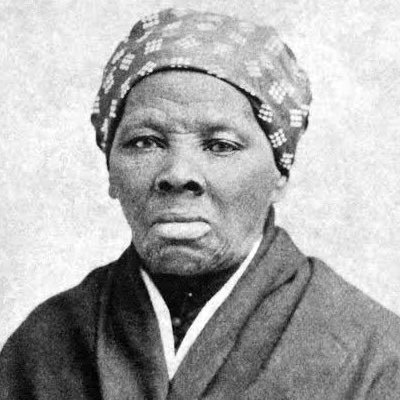
Sadie Tanner Alexander was the first Black American to earn a Ph.D. in economics (1921), the first Black woman to graduate from the University of Pennsylvania Law School, the first Black woman admitted to the Pennsylvania Bar, and the first national president of Delta Sigma Theta Sorority, Inc.

Adren O. Wilson, PhD retweeted

At six, Mother Randle survived the 1921 Tulsa Race Massacre. On October 10, she visited the Obama Presidential Center, bringing her story to our campus. Today, we celebrate her life and the importance of preserving stories like hers. Happy 112th birthday, Mother Randle.


