
Principal Security Consultant @FORTBRIDGE
London, England
Joined February 2010
- Tweets3.3K
- Following742
- Followers646
- Likes56.3K


Pinned Tweet
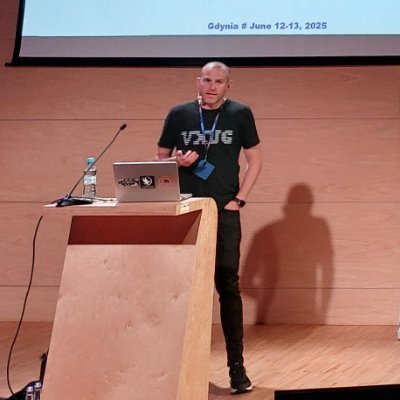
Achievement Unlocked: Spoke at @Microsoft 's @BlueHatIL 🏆💻
(And yes, it was epic.)
BHIL '25 is a wrap, and it was a privilege to be on that stage and connect with so many brilliant minds. I had an absolute blast.
Huge shoutout to the incredible Day 2 speaker lineup—every talk was insightful, creative, and inspiring:
@BLanyado , @DrorOphir , @yarden_shafir , @AradCohen, Omer Nevo, @NetanelBenSimon , @BlauMeir , @avi_lum , @GalElbaz1 , @cglyer , Efim Hudis, @sh0oki , @SecurityBaby , Edan Zwick, Yohan Guez, @sapirxfed , Dor Amit, Shaked Ilan — I learned so much from each of you.
Big thanks to @Microsoft and the amazing BlueHat IL organizing team — @shirleyhermann , @IdaVass1 , @AsherVered10 , and everyone else who made this event happen — thank you!
And last but not least, a special thank you to the CFP board legends. I’ll name just a few that I had the pleasure of meeting face-to-face:
@gentilkiwi , @ace__pace , @dwizzzleMSFT , @ItaiGrady , @TalBeerySec , @j0nathanj — you guys rock.
Also, great to finally meet @LiveOverflow and @ghidraninja in person — super chill guys.
Grateful to have been part of something this special. Until next time!
#bluehatil #CyberSecurity #Microsoft


Lord Steak retweeted

This is extremely important. The bug is very serious, but exploitation is not trivial.

I'll be the first to admit I'm mediocre at exploit development, but I am in contact with enough extremely talented exploit developers to say this for certain:
Anyone claiming they were "easily" able to generate a working php2shell exploit with AI is either:
a) a world-class exploit developer with an extreme case of imposter syndrome.
b) currently looking at some very confident-sounding but wrong LLM output.
I'm rather certain it's the latter based on the number of AI-hallucinated exploits I've seen posted on GitHub. Threat actors are also blasting my honeypot network with "php2shell" exploits that not only don't work, but aren't even within 10,000 miles of anything to do with how the exploit actually works.
I've seen the same technique from the attached image in multiple alleged "php2shell exploits", including one on GitHub with over 100 stars. Problem is, it's not php2shell, nor is it even a vulnerability at all. It's a technique known as "session poisoning", which can be leveraged to exploit local file inclusion (LFI) vulnerabilities in PHP apps (not PHP itself).
The only thing it has in common with CVE-2026-109618/CVE-2026-109619 is they both use the "PHP_SESSION_UPLOAD_PROGRESS" feature. And mitigation advice for both issues reference setting "session.upload_progress.enabled" to "Off".
People are shoving loose details of the vulnerability into LLMs, the LLMs are keying in on the "PHP_SESSION_UPLOAD_PROGRESS" string, then generating session poisoning code that has nothing to do with the actual CVE. And because the people doing this have absolutely no idea what they're doing, they're confident enough to post their "proof of concept exploit" to GitHub and share it on social media.
So if you see people talking about "session poisoning + LFI" it's likely their LLM hallucinated an exploit based on a 2018 blog by Orange Tsai talking about a local file inclusion attack vector.
What's even worse is that "security researchers" are then using LLMs to triage these exploitation attempts, falling victim to the same hallucinations, then confirming there is ongoing mass-exploitation (there currently isn't).
The actual real exploit is very difficult to exploit, and so far I've not seen anyone successfully get it working on more than a handful of PHP version with highly-specific configurations.
LLMs are useful tools in the hands of skilled professionals, but for others, they're often just a Dunning-Kruger accelerator.

Lord Steak retweeted

Another way I explain it: have you ever received high or critical findings on a penetration test?
That $50k penetration test that you had to wait for is now $50 in tokens and on-demand at effectively infinite supply to anyone.
That's both great and terrifying at the same time.
Lord Steak retweeted
With the AI companies hiring all these amazing VR folks and giving them capabilities that 10xs their talent, it’s really no surprise we’re starting to see a vulnpocalypse.
I’d personally like to see them hire more of the world’s best cancer or Alzheimer’s researchers.
Lord Steak retweeted

Oh here they are, as suggested: xitter.cf/starmexxx/status/21133…

Claude Code found a backdoor and spyware on two MacBooks. mine and my friend's. everything was going to a guy named Li Wei on a Tencent Cloud server in Shenzhen.
we checked our phones first. both clean. the MacBooks weren't.
$230,000 in ETH vanished from my wallet. my friend kept losing access to his accounts no matter how many times he changed passwords. we put both MacBooks on the table and Claude Code found the same backdoor on both.
on my M1 Pro it:
stole my MetaMask wallet keys
$230,000 in ETH sent out at 4am to 0x8a7d...3f1e
on his M5 Pro it:
dumped every saved password from Safari and Chrome
copied active session cookies for gmail, twitter, coinbase
grabbed his 2FA backup codes
all going to Li Wei's server:
IP → 119.28.***.47
location → Shenzhen, China
provider → Tencent Cloud
attacker OS → Windows 11 Pro
hostname → DESKTOP-LI4***
panel language → zh-CN
last ping from my Mac → 40.7**, -73.9** · 3 min ago
it was still sending my location while i was scanning it.
how it got in: a Chrome extension called "Notion Web Clipper" with 12 reviews. i installed it from a google ad. the real one has 400,000+ users. this one had 12.
Chrome Sync pushed it to his browser automatically. i was the reason he kept getting hacked.
changed every password from our phones. not from either Mac.
the full step by step is below. takes 3 minutes. save it so you don't lose it and send it to anyone with a MacBook.
Lord Steak retweeted
Where are all the automated AI-based forensics and incident response startups, or at least carefully engineered prompts to task a claude agent to find all state-sponsored malware on a given machine?
It would keep spawning a coordinated swarm of robots to find inconsistencies in OS command outputs, matching indicators, luring actors into superintelligent honeypots, doing memory forensics through an 0day it casually finds in latest kernel, finally sms'ing user after months of work: "Here you go, you've been owned with X family rootkit operated by an adversary Y, he's just dumping all your email daily as it looks from their c2 commands they issue. I've contained the actor by putting it inside a virtual environment, he doesn't yet know we found it. What would you like me to do? (1) a nice blog post, (2) to hack them back, or (3) to hand-off this case to DOJ to take care?"
This quoted post is unavailable.
Lord Steak retweeted

1995: PHP is dead, learn ColdFusion
2002: PHP is dead, learn ASP.net
2003: PHP is dead, learn Django
2004: PHP is dead, learn Ruby on Rails
2010: PHP is dead, learn Flask
2011: PHP is dead, learn AngularJS
2016: PHP is dead, learn Next.js
2022: PHP is dead, learn Solidity
2026: The NSA is advising that you turn off PHP

Effective Immediately, all organizations using PHP for their systems are advised to be prepared for an update addressing two critical vulnerabilities. PHP is widely used for web applications. These vulnerabilities often provide a direct path to the server's file system or database. If an immediate update is not feasible, it is recommend that organizations take the system offline until it can be fully mitigated. NSA will follow up shortly with more specific guidance.
Lord Steak retweeted

I think we've discovered another critical vulnerability:
CVE-2026-BURNOUT: AppSec Professional Exhaustion
Severity: Critical (CVSS 10.0)
Description: A vulnerability affecting security professionals exposed to a continuous stream of critical RCEs, zero-days, emergency patches, and Friday afternoon disclosures.
Impact: Sleep deprivation, excessive caffeine consumption, and an inability to enjoy weekends.
Attack vector: Reading security advisories.
Affected versions: All AppSec professionals, regardless of experience.
Mitigation: No known patch. Air-gapping may delay the inevitable. Total system collapse remains a possibility. 🔥


Lord Steak retweeted

Clean lab environment for local testing. Lab and PoCs for the PHP session.upload_progress memory-corruption bugs, CVE-2026-109618 and CVE-2026-109619. Five exploitation chains from one root cause. Each phase has its own folder with a self-contained Docker lab and a PoC. github.com/TheCyberGeek/php2…


Lord Steak retweeted

As promised, I've got your back! 💪 All the latest research is already in. 🚀
#PHP2Shell has been added from @lcfr_hax's post here:
webhacklist.com/?#desk/2026-…


Do you want your security finding or post to be overlooked? Then release it this week 😂
I will however, try to pick the pieces up and will add them to webhacklist.com! - AI said
I have your back if the article can pass the Judgy McJudgeFace's trial! 🧑⚖️⚖️
Lord Steak retweeted
It's so fascinating to me how many are claiming some sort of credit for pwn2shell who *aren't* @lcfr_hax, who *actually* discovered it, exploited it, and reported it first.
Here's to the quiet ones.

Lord Steak retweeted

PM of the Netherlands is closely monitoring situation surrounding the vulnerabilities in PHP.
Hmm does it mean that he’s watching the heap?!

Het kabinet volgt de situatie rond de kwetsbaarheden in PHP nauwgezet. Het advies van het Nationaal Cyber Security Centrum @ncsc_nl is helder: installeer de patch direct en houd kwetsbare systemen offline tot dat is gebeurd. Websites als DigiD en MijnOverheid komen weer online zodra dat veilig kan.
Lord Steak retweeted

It took 17 minutes to turn the Gitlab RCE to a working HEAP exploit using Gemini 4 Argon and the advisory, then another hour for the complete chain - super fun for someone like me without any binary exp or source code review experience, new cyber era!
Great find by @joaxcar!


🚨 CRITICAL: GitLab flaw (CVSS 10.0) affects 12 years of releases.
CVE-2026-110264 could allow unauthenticated remote code execution on self-managed servers.
Read - thehackernews.com/2026/10/cr…

Lord Steak retweeted

Sydney Sweeney reveals in an interview that she doesn’t care about the PHP vulnerability because she moved everything to Rust in 2024.
“They said the rewrite would take six months. We’re on month 30. We haven’t shipped a feature since, but I’m having a very normal Wednesday.”


Lord Steak retweeted
PHP2Shell: two critical PHP runtime flaws (CVE-2026-109618 / CVE-2026-109619), each CVSS v4.0 9.2. Patch web-serving PHP to 8.2.35 / 8.3.36 / 8.4.27 / 8.5.12 or a verified vendor backport. mod_php has a demonstrated pre-app exploit. Review other SAPIs too. #PHP


Lord Steak retweeted

Team work makes the dream work <3
We wanted to do something a bit different than using LLM's to generate all the pieces from exploit, writeup and art. We decided on a human created comic to offset the LLM usage in our release, that tells the tale with some exaggerated scenarios inspired from a few movies.
If you liked the art (or want your own exploit story/comic..) check out her work at ibiscraft.art


Do you know who illustrated the comic on calif.io/php2shell?
Her name is Stephanie Cortes. And her husband is the hacker who discovered php2shell: @lcfr_hax.
This artist-hacker couple has the best story, stay tuned!
Lord Steak retweeted
CRITICAL: GitLab CVE-2026-110264 (CVSS 10.0) allows unauthenticated RCE on every self-managed release since 7.0. The October 12 patch is NOT enough. Upgrade now. Need help? Contact FORTBRIDGE. #GitLab #CyberSecurity #InfoSec


