

Advances in Radiation Oncology is a peer reviewed, open access journal from the American Society for Radiation Oncology. @ASTRO_org #AdvancesRO
Joined July 2024
- Tweets311
- Following214
- Followers769
- Likes148





☢️ A More Stringent Hematologic Toxicity Control for Hypofractionated
Cervical Cancer Concurrent Chemoradiation via CT- and MRI-based
Bone Marrow Dosimetry: Pooled Analysis from HYPOCx-iRex and
Single-Institute EMBRACE-II Studies
🔗 advancesradonc.org/article/S…
👉🏻This study pooled data from EMBRACE-II (without BM-sparing) and HYPOCx-iRex (with BM-sparing) to: (1) identify dosimetric constraints for HemTox mitigation, particularly for the HYPO 44 Gy/20F regimen; and (2) compare CT- versus MRI-based BM dose correlations with HemTox as practical surrogates for active marrow sparing.
@Advances_ASTRO #RadOnc @UTMDAnderson


What are the immunologic effects associated with FLASH ⚡️RT in HPV+ tumors?
In this laboratory study, HPV+ cell lines and mice models received FLASH ⚡️ or conventional (CONV) RT (27 Gy in 3 fx) and effects on mRNA, protein expression, and lymphocyte population were examined. Compared to CONV RT, FLASH ⚡️ RT demonstrated:
🔘 🔼 CD4+ and CD8+ T-cells in tumor draining lymph nodes
🔘 🔼 antigen-experienced lymphocytes
🔘 🔼 CD8+ tumor-infiltrating lymphocytes, 🔼 PD-1 on lymphocytes, 🔼 PD-L1 on macrophages
👉 FLASH ⚡️ RT preserves lymphocyte # and maintains RT-induced immunogenic signaling in HPV+ cancer models
🔗 - tinyurl.com/525zu4ff
@ASTRO_org @UTMDAnderson #radonc

New in Advances in Radiation Oncology, and yes, this is a plug!
Volume 11, Issue 9 (September 2026) is the functional radiation medicine issue. It came out last month. If the meeting buried it, pull it back up. Open access, and the best single place to see what this field looks like right now.
Two editorials open it. Kriz, Mücke, and Micke trace nonmalignant radiotherapy from a mainstream tool in the first half of the twentieth century, kept alive in Central Europe, to a question North American centers are now studying in earnest. Bajaj, Martin, Robinson, and colleagues call this an inflection point: the 2025 Presidential Symposium under Sameer Keole, then the first full-day Functional Radiation Medicine Workshop at ASTRO 2026 in Boston.
Then the papers.
Musculoskeletal: four low-dose radiotherapy papers in osteoarthritis, including early U.S. community experience and a cohort of 94 patients and 136 joints, plus CT-based targeting for the knee and preoperative RT with revision arthroplasty for arthrofibrosis.
Skin and connective tissue: recalcitrant hidradenitis, granuloma faciale, Dupuytren quality of life and field size, and sialorrhea in ALS.
Central nervous system: SBRT for symptomatic benign spinal tumors, radiosurgery and fractionated RT for cerebral and spinal AVMs, accelerated volume-staged SRS for large cerebral AVMs, and a historical review of low-dose RT for chronic subdural hematoma.
Cardiac: intravascular radiation for recalcitrant coronary in-stent restenosis, and ultra-high-dose-rate proton therapy for breath-hold stereotactic arrhythmia radioablation. Also in the issue: endobronchial HDR brachytherapy for post-transplant bronchial stenosis.
Read it as a field. Pain, function, and treatment burden are the endpoints that show up across these papers. The editors are also clear about the next step: multicenter studies, registries, shared protocols, and follow-up long enough to matter.
Full issue:
sciencedirect.com/journal/ad…
Editorials:
doi.org/10.1016/j.adro.2026.…
doi.org/10.1016/j.adro.2026.…
@ASTRO_org

☢️ Optimal approaches to intensity-modulated proton therapy planning and delivery for liver cancer
🔗 sciencedirect.com/science/ar…
🔬 Three clinical scenarios are presented:
🔸 Large HCC (~10 cm): 45 Gy(RBE)/15 fractions with a simultaneous integrated boost to 67.5 Gy(RBE), using DIBH.
🔸 Large HCC (~10 cm): Proton SBRT delivering 50 Gy(RBE)/5 fractions with abdominal compression for respiratory motion management.
🔸 Liver oligometastasis (~5 cm): Spatially fractionated proton GRID therapy followed by hypofractionated IMPT with SIB (58.05 Gy(RBE)/15 fractions).
👉🏻 These cases provide practical guidance on different planning and delivery approaches to optimize IMPT for liver cancer treatment.
@ASTRO_org @MikeChuongMD #LiverCancer #IMPT @MarylandProton @MiamiCancerInst #RadOnc


🦴⚡️ Can SBRT help patients with symptomatic benign spinal tumors (meningioma, hemangioma, schwannoma, etc) who can't or don't want surgery?
New single-institution series (31 pts, 36 lesions) @UCSFRadOnc shows:
• 🎯 Excellent local control: 97% 5-year PFS
• 😀 Symptom improvement in 58% of lesions
• ➖ Stable symptoms in another 33%
• 🩻 Median imaging follow-up: 49 months
• ⚠️ No grade ≥3 toxicities observed
• 🔄 Similar outcomes whether used upfront or after surgery
Takeaway: SBRT appears to be a safe, effective noninvasive option for symptomatic benign spinal tumors, providing durable tumor control and meaningful symptom relief. 🦴☢️
@ASTRO_org
advancesradonc.org/article/S…

📌 Pre-treatment PSA, margin status and pelvic nodal fields predict long-term outcomes in post-prostatectomy salvage radiotherapy
🔗 advancesradonc.org/article/S…
👉🏻 retrospective study evaluated 196 patients, with a median follow-up of 9 years.
🔍On multivariable analysis, the following factors were significantly associated with a higher risk of biochemical recurrence (BCR):
🔹 Pre-SRT PSA >0.2 ng/mL: HR 1.96 (95% CI 1.24–3.11; p=0.004)
🔹 Higher T-stage: HR 1.38 (95% CI 1.06–1.78; p=0.013)
🔹 Higher Gleason score: HR 1.57 (95% CI 1.20–2.03; p=0.001)
🎯 Surgical margin status mattered:
🔸 In margin-positive patients, pre-SRT PSA >0.2 ng/mL was the strongest predictor of BCR (HR 4.30; p=0.001).
🔸 In margin-negative patients, pelvic nodal radiotherapy (PLNRT) was associated with a lower risk of BCR (HR 0.477; p=0.048) and fewer PSA-response failures (4.5% vs 31.7%; p=0.010).
👉🏻 These retrospective, subgroup-based findings warrant prospective validation.
📖 Read the full study
@ASTRO_org #ProstateCancer


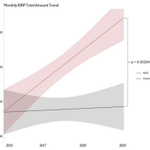
What are the trends in industry-sponsored research payments (ISRP) to #radonc (RO)?
In this analysis, ISRP to RO were assessed through the CMS Open Payments Program database from 2015-2023 and adjusted for inflation. During the study period:
🔘 Total ISRP to ROs = $315.9 million (M): 🔼from $17M ➡️ $49.4M
🔘 # ROs receiving ISRPs = 760: 🔼 from 165 (2.8% of practicing ROs) ➡️ 310 (5.6% of practicing ROs)
🔘 🔼 in annual avg payment/RO over time: $38,157 (STD $134, 337) ➡️ $44,358 (STD, $149,801)
🔗 - tinyurl.com/2z7nkb49
@ASTRO_org @UMarylandRadOnc

New in Advances in Radiation Oncology
Whole-palm vs involved-field RT for early Dupuytren's disease.
DEPART substudy (202 hands): no significant pain/function differences through 36 months; more mild acute toxicity with whole-palm RT; no grade 3+ toxicity observed.
Field choice was not randomized. Contracture-prevention efficacy remains pending.
Read the article:
doi.org/10.1016/j.adro.2026.…
@ASTRO_org #RadOnc #OncTwitter


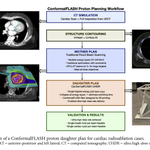
🫀💥 Stereotactic arrhythmia radioablation (STAR) in a second!
Treating VT with radiation means dealing with 2 moving targets: 🫁breathing + the beating 🫀heart.
What makes this @uwradonc study different? 👇
⚡ Ultra-high dose rate (UHDR) proton therapy
🎯 Conformal spread-out Bragg peak
💥 25 Gy × 1
👥 5 VT cases
📈 98.5% target V95
⏱️ 0.37–0.88 sec/beam
🫁 Delivery within a single breath hold
Instead of repeatedly gating around motion, could we simply deliver the radiation fast enough to minimize it? 👀
advancesradonc.org/article/S…
@ASTRO_org


☢️ Incremental Value of Radiation Dose for Prognostic Stratification Beyond Performance Status in Palliative Radiation Therapy for Bone Metastases
🔗 advancesradonc.org/article/S…
@ASTRO_org #RadOnc #RadiationOncology #BoneMetastases #PalliativeCare
🔹 Combining PS & prescribed dose enabled more refined risk stratification for predicting both short- and long-term OS in 423 patients.
🔹 This prognostic value remained robust across key clinical subgroups, regardless of primary tumor risk classification or the number of distant metastatic sites.
🔹 Adding prescribed dose to PS provided significant incremental predictive value for OS compared with PS alone.


How prevalent is food insecurity (FI) among patients under #radonc care?
In this analysis (n=380), patients at 4 treatment sites (university hospital, community practice, cancer center, safety-net hospital) were assessed for FI using the USDA Household Food Insecurity Survey. Among respondents (54% actively receiving ☢️):
🔘 19.6% reported FI
🔘 Prevalence of FI was similar (p=0.13) by treatment site: university hospital (18.5%), community practice (15.2%), cancer center (16.3%), safety-net hospital (30.2%)
🔘 On MVA, 🔼 odds of FI included: 🔽 age, 🔽 education, unmarried status
🔗 - tinyurl.com/5n72efw2
@EmoryRadOncRes @WinshipAtEmory @TrishaSantosMD @ASTRO_org

New in Advances in Radiation Oncology: Patient-reported outcomes after RT for Dupuytren's contracture
This study asks a practical question: years after RT for Dupuytren's, how do patients rate the outcome, the burden, and their hand function?
What they did:
• Single-institution retrospective survey, RT delivered 2017 to 2022
• 22 of 35 treated patients responded (63%)
• 77% Tubiana stage N or I; 14 of 22 had a prior fasciectomy
• Electrons; most received 30 Gy/10 fx split course (15 Gy/5, 10-week break, 15 Gy/5); 3 received 21 Gy/7
• Median 4.3 years from RT to survey
Key findings:
• 77% satisfied with their RT outcome; 86% did not find it burdensome
• 59% agreed RT was effective (7 of 8 primary vs 6 of 14 postoperative)
• Median post-RT Southampton score 5 on a 0 to 20 scale, consistent with mild limitation
• 4 (18%) reported new nodules or cords; 1 needed further surgery
• Late side effects in 59%, mostly very little or mild dry skin; 1 severe dryness; no ulceration or secondary malignancy reported
Why it matters: Patient-reported data after RT for Dupuytren's are limited. For a benign, progressive hand condition, function, durability, and treatment burden are the endpoints patients actually weigh.
Important caveat: No baseline Southampton score, no comparator, and a 63% response rate. These data describe long-term status in responders, not improvement attributable to RT. Progression was self-reported, not measured. The primary vs postoperative gap in perceived effectiveness is exploratory, and all stage II patients were in the postoperative group.
Bottom line: Useful patient-centered data with a reassuring late toxicity profile, broadly consistent with the randomized DEPART toxicity and QoL results. This is a signal, not a standard. DEPART's disease-control data will matter most.
doi.org/10.1016/j.adro.2026.…
@ASTRO_org #RadOnc #OncTwitter


☢️ Repeat Spine Stereotactic Body Radiation Therapy After Prior Stereotactic Body Radiation Therapy for Spinal Metastases: Outcomes, Patterns of Failure, and Dosimetric Associations in a Multidisciplinary Spine Oncology Program
🔗 sciencedirect.com/science/ar…
👉🏻 Primary endpoint LC,
👉🏻 Secondary endpoint OS, pain response, toxicity, and predictors of outcome after salvage SBRT2.
49 patients | 115 vertebral segments
Median OS: 17.6 months
🎯 Dmin ≥28 Gy → 12-mo local failure 6% vs 36%
📈 Oligometastatic disease: median OS 31.6 vs 7.4 months (extensive disease)
💊 55% pain response at 3 months
✅ No radiation-induced myelopathy
👉 Repeat #SBRT is feasible and can provide acceptable early LC, meaningful pain relief, and low toxicity in carefully selected patients, with outcomes most favorable in oligometastatic disease and LC associated with minimum target dose.
#RadOnc #SpineSBRT @ASTRO_org @MessingIan @PennCancer


New in Advances in Radiation Oncology:
Proximal vs distal isocenter targeting in SRS for trigeminal neuralgia
This study asks a practical question: when you treat TN with radiosurgery, does it matter whether you put the shot at the dorsal root entry zone (proximal) or the retrogasserian zone (distal)?
What they did: retrospective review of 86 patients treated 2017 to 2021, all prescribed 85 Gy to the isocenter, all with at least 1 year of follow-up. 54 proximal, 32 distal. Patient-reported pain relief was graded complete, partial, or none.
Key findings:
- Any pain relief: 90% distal vs 74% proximal
- Complete pain relief: 46% proximal vs 31% distal (overall response distribution differed, p=0.011)
- Complete medication discontinuation: 39% proximal vs 13% distal
- Any medication de-escalation: 88% distal vs 72% proximal (p=0.001)
- Median duration of relief: 37 months proximal vs 24 months distal, not significantly different (p=0.18)
- No radiation necrosis and no patients treated for adverse radiation effects
Why it matters: TN patients are not asking for a response rate, they are asking to stop carbamazepine and stop being afraid to brush their teeth. Complete relief off medication and durability are the endpoints that map to that, and this paper reports both.
Important caveat: every proximal case was Gamma Knife and every distal case was frameless LINAC. Target location and delivery platform are completely confounded here, which the authors state plainly. Dose rate, falloff, and platform-specific brainstem constraints all differ, so this compares two strategies, not two anatomic targets. Toxicity was also not systematically captured, and facial hypesthesia is the complication that would most likely differentiate these targets.
Bottom line: this is a useful real-world signal that proximal targeting may favor complete, medication-free relief while distal targeting may favor any improvement. It is hypothesis-generating, not practice-changing. The question worth answering prospectively is proximal vs distal on a single platform, with standardized pain scoring and systematic hypesthesia reporting.
doi.org/10.1016/j.adro.2026.…
@ASTRO_org #RadOnc #OncTwitter

✔️Join us for a special session at #ASTRO26!
MEET THE EDITORS: an engaging conversation with ASTRO Journals’ Editors-in-Chief
🗓️ Sunday, Sept 27
🕞 3:30–4:30 PM ET
📍 Room 155
🎙️ @RachelJimenezMD | Editor-in-Chief, @Advances_ASTRO

🫁 How deep is too deep for DIBH?
A study of 82 patients receiving abdominal RT @NYULH_RadOnc found that ⬆️higher breath-hold level at simulation was associated with ⬆️greater DIBH intolerance during treatment.
📊 Every 1-mm increase → 7% higher risk of intolerance
⚠️ Risk increased sharply at >25 mm
🪇 DIBH intolerance was associated with greater residual motion
🎯Don’t maximize the breath hold, optimize it. Coach patients to a level they can comfortably and reproducibly maintain through treatment.
advancesradonc.org/article/S…
@ASTRO_org

📌 Evaluation of Cardiac Function After Stereotactic Body Radiation Therapy for Lung Tumors: Results of the Prospective Explorative Heart-Lung Study
🔗 advancesradonc.org/article/S…
@ASTRO_org
🫀🫁 The HALO study prospectively evaluated cardiac function after lung SBRT in patients with a stage IA–IIB NSCLC , or a solitary lung metastasis, with tumors <3 cm from the heart, in the absence of simultaneous cardiotoxic therapies.
🔍 Multimodal cardiac assessment included ECG, biomarkers, echocardiography, CMR, and patient-reported outcomes at baseline and 3 and 12 months after SBRT.
👉🏻 Ten patients were enrolled, with 8 evaluable for analysis. No clinically relevant treatment-related cardiac events or significant changes in global cardiac function were observed during 12 months of follow-up.
Results should be interpreted in the context of small sample size, a relatively low mean heart dose (4 Gy), limited irradiated heart volumes, and 12-month follow-up.
#LungCancer #SBRT #CardioOncology #RadOnc


What is the risk of wound dehiscence after post-op ☢️ for keloids?
In this institutional experience (43 pts, 68 lesions), post-op ☢️ (15-30 Gy in 2-6 fx via electrons) was started within 24h of keloid resection. From a mFU of 13 mo:
🔘 Simple lesions: 2/39 (5%) dehisced
🔘 Extensive lesions: 14/18 (78%) dehisced
🔘 Prior☢️: 2/10 (20%) dehisced
🔘 All wounds were treated conservatively and did not require surgical debridement
🔘 Time to healing ranged from 15-324 d post ☢️
🔘 Only 1 lesion had not healed by 300+ d post ☢️
🔗 - tinyurl.com/3pfa7s6x
@ASTRO_org @uwradonc @UWSurgery #radonc

New in Advances in Radiation Oncology:
FES-PET for staging newly diagnosed invasive lobular carcinoma
Key finding: In a 4-patient case series, FES-PET changed or supported management in all 3 patients who received it. Case 1: occult supraclavicular nodal (SUVmax 3.3) and chest wall avidity (SUVmax 5.4) after NAC and three margin-positive surgeries prompted a 1000 cGy in 5 fraction sequential boost. Case 2: biopsy-confirmed osseous metastases shifted a cT3N3bM0 patient from curative intent to first-line metastatic therapy. Case 3: a negative scan supported proceeding with chest wall RT and RNI. A fourth patient staged with conventional imaging alone went from cT2N1M0 to pT3N3a at surgery.
Why it matters: ILC is a known blind spot for mammography, MRI, and FDG-PET. When occult nodal disease shows up before the plan is locked, it changes volumes, dose, and sometimes intent.
Important caveat: n = 4, retrospective, selection bias in who got scanned, no systematic comparison with conventional imaging, and short follow-up. The SCL node in case 1 was treated based on tracer avidity without pathologic confirmation. FES-PET is NCCN-supported for recurrent or metastatic ILC, not for primary staging.
Bottom line: This is a signal, not a standard. Useful hypothesis-generating data for a real staging gap, but prospective work is needed before upfront FES-PET changes how we stage locally advanced ILC.
doi.org/10.1016/j.adro.2026.…
@ASTRO_org #RadOnc #OncTwitter #BCSM

What is the feasibility of memory-avoidance prophylactic cranial irradiation (MA-PCI) in patients with SCLC?
This case report (n=2) evaluates the dosimetric feasibility of MA-PCI delivered via VMAT (25 Gy in 10 fx):
🔘 MA regions 🟰 bilateral hippocampi, amygdalae, fornix, and corpus callosum with PRV (5mm)
🔘 Clinical goals to MA regions: (1) D(0.03cc)<16-17 Gy (2) D100% <9-10 Gy
🔘 In both cases, dosimetric goals to MA regions were met ✅
🔘 During FU, PROMIS cognitive function scores remained stable ✅
🔗 - tinyurl.com/4srhv9m7
@ASTRO_org @joshuapalmermd @Raj_Singh_MD @HaleyPerlow @TugceKutukMD #radonc #lcsm
