

We are a conservation NGO that takes on the long-term management of National Parks in partnership with governments to save wildlife and help local communities
Johannesburg, South Africa
Joined March 2016
- Tweets4.1K
- Following763
- Followers23.4K
- Likes6.7K


“If the island could speak, she would say: stop cutting my trees, stop fishing my friends, stop polluting my environment – and people, keep doing this, because my environment is important to you.”
Those words belong to a child on Bazaruto Island. And they are not unusual here.
Through 9 environmental clubs across the archipelago, children are already leading clean-ups, planting trees and learning to conserve the ocean their families depend on. With 80% of islanders living from fishing, the ocean isn’t a backdrop; it’s a lifeline.
“Who knows – these children could be the next conservationists.” – Marcela Vicente Sitoe, Environmental Education Coordinator, Bazaruto Archipelago National Park
#BazarutoArchipelago #AfricanParks #Mozambique #EnvironmentalEducation #OceanConservation #MarineConservation #CommunityConservation #YouthForNature
“When we first heard about carbon credits, the idea seemed quite far-fetched… but today, it is becoming a reality.” Marcel Kogoro, Mayor of Rafaï
In Agoumar, that reality includes a medical centre extension. Residents identified the need for more space to care for a growing population, and the Chinko Community Fund financed the project using revenue from carbon credit sales.
Revenue contributes to landscape management, conservation, government and communities. Local committees decide how the community share is used, with projects ranging from the medical centre extension to teachers’ salaries.
This is where carbon finance becomes tangible: a verified climate benefit generates revenue, and communities put their share towards priorities they have chosen.
Find out more here: bit.ly/3WpIoDz
#Chinko #NatureFinance #CarbonCredits #AfricanParks


Recently captured in Gambella National Park, Marcus Westberg’s photographs offer a glimpse into one of Africa’s most important transboundary ecosystems.
Extending across western Ethiopia and into South Sudan, this network of wetlands and floodplains supports seasonal wildlife movements and provides habitat for Nubian giraffe, buffalo, white-eared kob, endangered Nile lechwe and hundreds of bird species. It also forms part of the wider landscape connected to the Great Nile Migration.
The landscape is home to pastoral and agricultural communities whose lives and livelihoods are closely connected to its natural resources.
Explore Gambella through Marcus’s lens:bit.ly/4yAyUD4
#GambellaNationalPark #Ethiopia #ConservationPhotography #AfricanParks


At Majete Wildlife Reserve in Malawi, two decades of restoration provided the foundation for a new approach: Verifiable Nature Units (VNUs).
By independently verifying results for habitats and wildlife, VNUs give funders evidence of what their contributions support. For Majete, this funding is flexible, allowing the reserve to direct it towards management priorities, from vehicle repairs to equipment that keeps roads maintained and wildlife monitoring moving.
Discover how measuring what matters is helping fund Majete’s future. Read the full story here: bit.ly/3U1xbIH
#Majete #NatureFinance #AfricanParks


Conservation needs continued funding.
To help sustain nature for the long term, we are developing additional ways to fund the work. Nature itself is part of the answer. By measuring the benefits healthy landscapes provide, from intact habitat and wildlife populations to the carbon held in standing forests, we can attract funding to help conserve these landscapes and support communities.
Discover how nature helps fund conservation: bit.ly/4zsWH8C.
#NatureFinance #ConservationFinance #NatureBasedSolutions #AfricanParks
Once known to many local residents only through ancient rock art, red-necked ostriches are running across Ennedi’s plains again.
Five years after the first 11 birds were released, the reserve is now home to more than 100 red-necked ostriches and counting.
The reintroduction brought together two parks in Chad, with chicks from Zakouma National Park raised and prepared for release into Ennedi. It was made possible through collaboration between the Government of Chad, Sahara Conservation, African Parks and local communities.
Today, community eco-monitors and nest guardians work alongside reserve teams to report sightings and monitor nests, drawing on their knowledge of the landscape to support the growing population. Their work continues as the birds become established, an important step in Ennedi’s ongoing ecological restoration.
Read the full story: bit.ly/3U1iuoW
#Ennedi #RedNeckedOstrich #AfricanParks #Chad


The responsibilities of learners at Kani Public Primary School, in Tanguiéta municipality near Benin’s Pendjari National Park, used to extend beyond their lessons and homework. The children were also tasked with helping to collect the firewood needed to heat their midday school meal. With traditional, less-efficient stove designs, this activity could take a significant amount of lesson time. The adoption of a newer design of earthen cookstove being promoted by the park, with technical support from the Laboratory of Applied Ecology at the University of Abomey Calavi in Benin Republic and funding from the European Union, has noticeably lessened the amount of firewood required each day.
This means that the pupils at the school (and 19 other public primary schools in the Tanguiéta, Banikoara, Kérou, Kouandé, and Matéri municipalities surrounding the park) can spend more time learning and less time collecting firewood.
As school headmaster Barthélémy Ahouandji, explains: “Improved cookstoves considerably reduce the effort required from both students and school staff – just a few pieces of wood can last for several weeks. It is a relief for everyone,” he explains.
In addition to the schools, 330 households across 22 local villages are also taking part in the cookstove pilot scheme.
#PendjariNationalPark #Benin #NaturalResources #Education #Sustainability #CommunityDevelopment #CommunityLedConservation #EuropeanUnion #AfricanParks


Ask Maybin Mwanza about his greatest achievement after nearly three decades in conservation, and he’ll talk about people.
Three-quarters of Kafue National Park’s law enforcement officers have passed through his training. Some are now leaders themselves.
For Maybin, that is what a lasting legacy looks like: generations of rangers trained, mentored and ready to lead.
Discover his story here: bit.ly/4yDi72O
#AfricanParks #KafueNationalPark #ConservationLeadership #PeopleInConservation


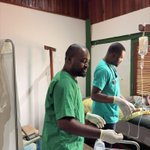
In Odzala-Kokoua, Congo, local clinics provide access to healthcare as well as prevention and awareness information. They focus on addressing concerns highlighted by the communities, including common challenges like malaria.
In the first five months of 2026, the doctor and nurses working at clinics in Mbomo and Imbalanga have completed just over 2,000 consultations for community members, representing around 75% of all the consultations they carried out. Access to these clinics means that people can avoid long, arduous and expensive journeys to the nearest available hospitals, and these clinics are playing an increasingly important role in public health.
Improving healthcare access is resulting in improved patient outcomes, including early diagnoses of serious conditions. It is also helping to build stronger relationships between the park and local communities.
We’re grateful to our partners in this project: the European Union’s NaturAfrica initiative, Stichting Natura Africae and Legacy Landscape Fund, and the SmileStar Charity supported by Kamba African Rainforest Experiences.


On 28 July 2025, communities, traditional leaders, local government and conservation partners came together in Nyaminyami Rural District to celebrate the signing of the Integrated Land Use Plan into law.
But the story began two years earlier. More than 1,600 people helped create the plan, sharing their knowledge, priorities and vision for the future of the landscape they call home.
The result is a community-informed framework that balances livelihoods, development and conservation, while opening 1,754 km² of wildlife corridors in the greater Matusadona landscape.
This is a story about people involved in shaping the future of their land, and making space for both communities and wildlife to thrive.
Read the full story: bit.ly/4z7P4Er

Every line a beast
A map tracing one of the world's greatest wildlife migrations has won two international cartography awards. Lines of Life was recognised among more than 800 submissions for transforming wildlife tracking data into a powerful visual story.
Across South Sudan's Great Nile Migration Landscape, an estimated six million antelope move through floodplains, grasslands and drylands in search of the resources they need to survive. Using GPS collar data from white-eared kob, tiang, bohor reedbuck and Mongalla gazelle, the map captures the scale and complexity of these extraordinary journeys.
Every line represents an individual animal. Together, they reveal migration routes, seasonal movements and the vital corridors that keep this vast ecosystem connected.
Read the story: bit.ly/4rBKMm8


“The plan was always to bring them back.”
Mike Pelham, Park Manager, Matusadona National Park
In June 2026, 17 black rhino returned to Matusadona. Among them were descendants of rhino once found in this landscape, bringing those bloodlines home.
Their story stretches back to Operation Noah and through the poaching crisis of the 1980s and 1990s, when rhino were moved to safer areas. Zimbabwe’s foresight in mapping and safeguarding their genetic lineages made this return possible decades later.
Watch their full-circle journey.
Rhino Rewild, unpacked.
African Parks’ Don Jooste joins Rewilding the World with @BenGoldsmith for a conversation that gets into the thinking, complexity and ambition behind the project.
Listen, wherever you get your podcasts
#RhinoRewild #RhinoConservation #SouthernWhiteRhino #AfricanParks
Rhino conservation is one of Africa's greatest collaborative conservation stories. In this World Rhino Day interview with Xinhua, Donovan Jooste, Rhino Rewild’s Project Manager, highlights the importance of long-term partnerships, shared responsibility, and coordinated action across the continent to secure a future for rhinos.
Read more: bit.ly/4rrMqql


3 Years In. 745 Rhino Rewilded. 19 Landscapes. More than 550,000 Hectares. And Counting.
This World Rhino Day marks three years since African Parks took responsibility for approximately 2,000 southern white rhino and began an ambitious ten-year effort to rewild them into secure, well-managed protected areas across Africa.
Since then, 745 rhino have been moved into 19 recipient areas across four countries. Across these populations, 89 calves have been born. There have also been losses along the way.
Rewilding at this scale is complex. It means establishing rhino in different landscapes and environments, managing disease and security risks, learning from both successes and losses, and adapting as new information emerges.
And none of it happens alone. Governments, protected areas and conservation organisations are taking on the long-term responsibility of receiving and managing these rhino, working alongside African Parks to build resilient populations for the future.
Three years into Rhino Rewild, we are sharing what this work is teaching us about what it takes to move from rescue to rewilding at scale across Africa.
Read the full story: bit.ly/3VnRekH
📷 Wiki West
#WorldRhinoDay #RhinoRewild #SouthernWhiteRhino #RhinoConservation #AfricanParks


In the lead-up to World Rhino Day, we’re shining a light on Rhino Rewild and the journey so far.
What began in 2023 with approximately 2,000 southern white rhino is now an ambitious, continent-wide rewilding effort, working with partners to establish and strengthen rhino populations across Africa.
This film takes us back to where the journey began, and to the scale of the opportunity ahead.
Tomorrow, on World Rhino Day, we’ll share more about what three years of Rhino Rewild have taught us: the progress, the challenges, the partnerships and the lessons informing what comes next.
For now, revisit the Rhino Rewild story and help support the next chapter.
Explore Rhino Rewild and donate: bit.ly/4y9u2oY
#WorldRhinoDay #RhinoRewild #SouthernWhiteRhino #RhinoConservation #AfricanParks
It's happening right now.
Rangers and staff from all 24 protected areas are running the Wildlife Ranger Challenge, thousands of us across the continent, 21km in solidarity with those who conserve Africa's natural landscapes every day.
This is African Parks united.
@TuskTrust
#WildlifeRangerChallenge #WRC #ForWildlifeRangers #RangersAndStaff #AfricanParks #TogetherForConservation #RangersUnite


Challenge accepted.
Tomorrow, rangers and staff from African Parks' 24 protected areas across Africa take on the Wildlife Ranger Challenge. Each running 21km across the remote landscapes they work in, united in solidarity with those who dedicate their lives to conserving nature.
@TuskTrust
#WildlifeRangerChallenge #AfricanParks #ForWildlifeRangers #RangersAndStaff #TogetherForConservation


Sulcata or African spurred tortoises that wander into villages close to the Aouk-Keita Landscape in Chad might previously have been at risk from the illegal wildlife trade, or have faced competition for grazing from livestock.
Today, an initiative begun by community members is resulting in more eco-positive outcomes for the biodiversity of Aouk-Keita, and for individual tortoises. The villages contact the Aouk-Keita conservation team, who carefully transfer each tortoise to the Mandjo Conservation Area, which is known to have a naturally occurring population of these large chelonians.
"I decided it would be best to hand them over to the African Parks team, so they will be better protected and able to live in better conditions," explains Idriss Abakar, a farmer from Haraze who joined the initiative.
In July 2026, six sulcata tortoises were safely released into the Mandjo Conservation Area, where they can now contribute to the viability of the local population, and play a role in maintaining the integrity of this Sahelian ecosystem.


