

#happychild #Godlike #GM$B #Blessed read my thoughts on https://teapawt.org/t.co/okWSxAgk7t
Nigeria
Joined October 2009
- Tweets5.9K
- Following82
- Followers560
- Likes2.2K

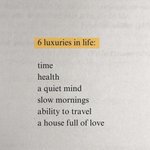







“To wish is of little account; to succeed you must earnestly desire, and this desire must shorten your sleep.” Roman poet Ovid (43 BCE – 17 CE)
As a company grows, the founder faces a difficult question: what should I continue to own personally, and what must I allow other people to lead?
asheradeniyi.com/2026/05/11/…
1
4
228
Goodness and leadership are not the same assignment
When my team member described a good person, she used words such as dependable and trustworthy. Those qualities also belong in any description of a good leader. If people cannot trust your word, motives or judgment, your leadership will eventually become expensive for everyone around you.
asheradeniyi.com/2026/04/16/…
158
Prayerlessness does impoverish the Christian life because it rejects communion and dependence on God. But our public argument for faith should not be built on contempt for societies or people who do not share it.
asheradeniyi.com/2026/04/21/…
121
I have had interesting conversations with atheists and agnostics who say they believe only in science, by which they usually mean that they accept only what can be observed, tested or proved. I respect the desire for evidence. Christians should not be afraid of it, and we should never treat honest investigation as rebellion against God. If something is true, careful examination should not destroy it.
asheradeniyi.com/2026/05/06/…
103
If you believe in yourself, you will take action.
You will do better, and you will demand better.
If you believe in yourself, you will expect nothing less.
What you expect from life is always a reflection of what you believe about yourself.
asheradeniyi.com/2026/02/02/…

65
Congratulations, Team. 🚀🚀🚀

Spend management has always been horizontal: one product for all sectors.
The next wave is vertical, built around specific industries operations, powered by Al.
Today we're launching Glep the Al-Native spend management platform for real estate operators.
glep.com

ALT Glep is an AI-native spend platform for real estate businesses
2
128
Founders naturally fall in love with ideas. But customers pay you to solve problems, and they stay because they come to depend on you. These are not always the same thing.
I think there's something to this, although it's probably more anecdotal than widespread. When you spend a lot of time around founders, the pattern feels much bigger than it likely is across the broader population. The reality is that most people don't even want to start a company. It's gruelling, uncertain, and emotionally demanding work, and most know that instinctively.
Ope is right that some genuinely exceptional people, people you'd love to see inside great companies learning how to build and operate at scale, are choosing to found companies instead. For context, only about one-third of business owners in Nigeria have another job alongside their business, so we're already talking about a relatively small group.
What I'd add, though, is that founders aren't wired like most people. Their willingness to challenge convention, tolerate uncertainty, and persist through repeated failure is their must-have quality of living. The rebelliousness is the point.
David Senra's podcast captures this better than I can. Across almost every founder he studies, the same thread appears: you have to be willing to "eat glass." You have to keep going when everyone around you thinks you should stop.
So, if some of our brightest talent chooses to build rather than join, it's not necessarily because something is broken with them. In many ways, they're displaying exactly the qualities we say we admire. The challenge, then, isn't simply convincing founders to work for companies. It's building companies worthy of them.
That isn't easy. Companies have to create environments where highly independent, ambitious people can do meaningful work, have real ownership, and continue to grow. At the same time, it's reasonable to encourage aspiring founders to spend time inside great organisations first, because there are lessons about scale, execution, and leadership that are difficult to learn elsewhere.
But the relationship has to work both ways.
People who have "eaten glass" already know the upside of building something of their own. If you want them to dedicate that same energy to your company, you have to make it worth their while. That's not cheap talk; it's a very rational trade-off.
So I don't think this is something to frame purely as a problem. It's a signal. It tells us something about the ambitions of exceptional people, but it also tells us something about the kinds of companies we're building. As one of my favourite quotes puts it: loyalty is a two-way street. If you expect it, you have to earn it first.


3
5
282
11:00pm. still working.
Keeping fit. actively being a husband, father, son, brother, and a friend to many. juggling startups across geographies.
Hiring, partnering, good employee exit - dealing with disappointments.
Keeping the books green. Trying to be the face of... which is not a sweet spot. Yet, still working on something transformational with AI - so we’re not left behind. So our community rises. So this place becomes a desirable place to live in.
All this… while fighting to stay sane.
But here’s the truth:
I’m only sane because of Him.
Thanks to Jesus’ sacrifice,
I have a living hope so my efforts are not usually in vain.
He makes all things beautiful, in its time. He makes me wise.
Because He loves me.
That’s the LIVING hope I stand on.
1
4
202
Just finished reading the Edsel story and it shook me.
Ford spent $250M (which would be, when adjusted for inflation, ~ $2.6Bn today) on a car that flopped not because it was bad, but because they stopped listening.
Here’s what it taught me as a builder
1. Failure isn't always bad luck.
It’s often leadership decisions, made subtly, over time, that lead to disconnect.
Even great products fail if the market has emotionally shifted and you don’t shift with it.
2. People don’t reward effort. They reward alignment.
Edsel was impressive. But it wasn’t what buyers felt they needed.
Modern-day Edsels (just fun thoughts in my head): Google+ ($500m), Quibi ($1.75Bn), Amazon Fire Phone and maybe Tesla C.Truck ($2Bn): all had/have money, teams, and vision. But no deep connection.
So I think, it is worthwhile to ask while building:
- Would I buy this if I wasn’t building it?
- Am I solving a real need or just chasing a cool idea?
📌 Should be sharing my full reflections in a blog post soon.
#building #startups #product #leadership
1
2
113

I'm rereading “The Fluctuation” in Business Adventures, a story about the 1962 stock market crash. No trigger. No scandal. Just panic. And it sounds familiar. Like everyday feeling when you're actively building...
In 2021, startups were kings. But by 2023, term sheets vanished. Founders with product-market fit, revenue, and real traction suddenly looked “unfundable.” Why? Confidence collapsed. Markets panicked. Fear, not fundamentals, drove decisions.
That’s what Brooks captured in 1962. Solid companies got punished. Investors froze. Even Wall Street veterans didn’t understand what was happening until it was over. It wasn’t about logic.
Today, too many founders think building a good product is enough. It’s not. The market has moods. And your job is to outlive the bad ones.
I’ve seen great startups fail in the last 2 years, not because they were bad, but because they weren’t ready for “the fluctuation.” They didn’t control burn. They didn’t raise early. They thought being “default alive” was optional.
Brooks’ story is a warning: the market doesn’t always reward merit. Sometimes it punishes visibility. Sometimes it loves noise. Sometimes it hates everything. But if you can stay standing, the cycle always swings back.
If you're building in 2025, here’s what I took away:
- Manage cash like it’s a weapon
- Stay paranoid but focused
- Don’t get drunk on early hype. But hype is good. Flow with it but don't be carried away.
The best founders are builders and emotional regulators.
Perception and timing are real assets, treat them like code and capital
You don’t have to predict the storm.
Just build something so useful and steady, you can outlast it.
That’s the real job.
1
100
Lately I’ve been thinking a lot about people.
Not just people in general, my people.
And how much of my growth has come from being around the right ones.
1
1
88
Interesting read @ Rebel Theorem 3.0, the most advanced machine learning model outside of Y Combinator itself, to predict the success of YC startups using millions of proprietary data points. Instead of relying on gut instinct, the fund classifies startups into Success, Zombie, or Dead categories based on early-stage founder and company characteristics.
Key predictive factors include:
1. Previous startup experience (especially prior exits or fundraising)
2. General work history
3. Founder personality traits (e.g., pragmatism, socialness, risk aversion)
4. Company attributes (with serving U.S. customers being most significant)
The model’s non-linear architecture analyzes interdependent traits across 150+ decision trees, achieving 44–59% IRR in mature YC batches and 27–34% IRR in newer ones, far outperforming traditional VC benchmarks.
RT 3.0 shows a major shift: in early-stage investing, AI-driven decision-making is now a competitive edge, not a luxury.
117
Easter reminds us: death is not the final word. Not for Jesus, and not for us.
As the firstborn of a new creation (Colossians 1:15, 18) and heir of all things (Hebrews 1:2), Jesus reveals a deeper truth: while death is a painful part of our story, it is not the end. Through the light of Christ, we see that God's love carries us beyond death, and the resurrection strips death of its sting.
This is the indestructible life we celebrate at Easter, the life that began with Jesus' resurrection.
Three days after his crucifixion, two women arrive at the tomb to find the stone rolled away. An angel announces: "He has risen." Later, Jesus appears to his disciples, showing them his scars and eating a meal with them (Luke 24:41-43). Fully alive, fully human, fully victorious over death.
In this, Jesus becomes the firstborn of a new humanity. And he promises that the same divine life and power that raised him will now live in all who follow him.
His message to his disciples, and to us is simple yet life-altering: turn away from fear and embrace the love and life of his Kingdom.
Today, we celebrate not just an event in history, but the ongoing reality of new life, new beginnings, and a love that even death cannot destroy.
Happy Easter!
84
Cheers to Q2.
There’s this concept from Good to Great by Jim Collins that’s been on my mind lately: the Flywheel Effect.
He describes building a great business like pushing a heavy flywheel. The kind that takes serious effort to move at all.
You start pushing. It barely moves.
You show up again the next day, push again. Still barely moves.
You keep showing up. Day in, day out.
No applause. No headlines. No immediate wins.
Just pressure.
Just process.
Just the belief that every push matters.
Then at some point, something shifts.
The flywheel starts to turn. Slowly.
Then faster.
Then it picks up momentum, and now it’s spinning, and people on the outside are suddenly like “Wow, you guys are killing it.”
They didn’t see the part where you were pushing alone.
When everything felt slow. When you were tired, unsure, and still showed up.
It’s not always about explosive growth or hype for the sake of it.
It’s about the quiet, consistent work that builds momentum you can’t fake.
It’s about getting clearer with the team.
Fixing things that don’t scale well.
Letting go of what’s not working.
Doubling down on what is.
The kind of work that feels boring or tiring in the moment but builds up over time.
So if you’re not seeing overnight wins, don’t stress it.
You’re not behind.
You’re just still pushing your flywheel and that’s where real things are built.
To the builders, the believers, and everyone still doing the reps when no one’s watching.
Happy Q2
Let’s keep going.
1
76
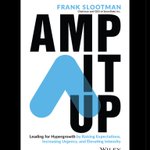
My last thoughts for tonight before I finish Slotman's masterpiece:
Somewhere along the way, we were told:
i. Sleep is for the weak.
ii. If you’re not working 80-hour weeks, you don’t want it bad enough.
iii. Stress is normal—just deal with it.
But it seems the truth is that:
a. Best decisions are not made when you’re exhausted.
b. You’re not more productive just because you’re always “busy.”
c. Your business will NOT fail because you took a break; but it might if you don’t.
Success is a marathon, not a sprint. Rest is not a reward, it’s a requirement.
I think I heard Brian say he sleeps for 8hours minimum. Same with Markus V.
There is something to learn here. At least, fundamentally is that an 8-hour sleep will not be the thing to deprive you from that "success".
69