

Underground Mining Engineer with MBA(Finance) & First Class Mine Manager’s Ticket. Former ASX200 NED. Now PhD Student & Corporate Consultant.
Perth WA Australia
Joined March 2014
- Tweets18.8K
- Following4.7K
- Followers2.5K
- Likes38.3K








Pinned Tweet
Hey Siri, Optimise this complex system of interdependent point solutions.

This quoted post is unavailable.
Alex Atkins retweeted

Tolerating a problem has the same consequences as failing to identify it.
Whether you tolerate it because you believe it cannot be solved, because you don't care enough to solve it, or because you can't muster enough of whatever it takes to solve it, if you don't have the will to succeed, then your situation is hopeless. #principleoftheday


Alex Atkins retweeted

BREAKING: In an amazing moment, Ukrainian President Volodymyr Zelenskyy just met with all of Europe's leaders. Look at the reception he receives. Donald Trump would never.
Alex Atkins retweeted

Watching students successfully design earthquake-resistant buildings is a wonderful reminder of the importance of learning math, physics, and engineering to improve quality of life.
Alex Atkins retweeted

A retired NASA engineer who had worked on the Space Shuttle program for 25 years was hired by SpaceX at age 62. He described the first week as the most disorienting experience of his professional life.
At NASA, a design change required 3 meetings, 2 committees, a review board, and 6 to 18 months of documentation. At SpaceX, his new supervisor said "if it works, build it. If it doesn't, change it by Friday."
He sat at his desk after the first day and called his wife. He told her he felt like a man who had been swimming with ankle weights for 25 years and someone just cut them off. He could move. He could decide. He could build something in the morning and test it in the afternoon. The constraint that he had accepted as the nature of aerospace engineering turned out to be the nature of bureaucracy.
Within 6 months he had contributed to more design iterations than he had completed in his last 5 years at NASA. Not because he was working harder. Because the time between having an idea and testing the idea collapsed from months to hours. The same brain. The same knowledge. A different operating system.
He described a specific moment where he proposed a modification to a Raptor engine component. At NASA, the proposal would have entered a queue. At SpaceX, the modification was machined by the end of the day and tested by the following morning. He watched his idea become a physical object in 18 hours. At NASA, 18 hours would not have been enough to schedule the first meeting to discuss whether to schedule a meeting.
He told an interviewer: "I didn't get smarter when I went to SpaceX. I got faster. The intelligence was always there. The system was in the way."
The difference between SpaceX and NASA is not talent. NASA has extraordinary talent. The difference is the time between a thought and a test. SpaceX compresses it. NASA elongates it. The same engineer produces 10x more at SpaceX than at NASA because the bottleneck was never the engineer. It was the meetings about the meetings about the work.
Alex Atkins retweeted

Arnold Schwarzenegger's No Complaining Rule:
“No complaining about a situation unless you're prepared to do something to make it better. If you see a problem and you don't come to the table with a potential solution, I don't want to hear your whining about how bad it is. It couldn't be that bad if it hasn't motivated you to try to fix it.”

Alex Atkins retweeted

Energy capacity = economic capacity, in one chart
There are no low electricity, rich countries


"Energy Capacity = Economic Capacity"
Former Intel CEO Pat Gelsinger on why America's power grid is the ceiling on growth:
"We went through 10 to 15 years where essentially I was taking coal offline at the rate I was adding renewables, and essentially the nation was flatlined in terms of overall energy capacity."
"So essentially our economic capacity as a nation, flat for fifteen years."
"Even with that, we've gone to maybe increasing our national energy capacity 4% per year. Going from essentially zero to one."
"Nuclear as base load is a fabulous thing that we want to go build more of. Unfortunately all of our renewables have deep dependencies in China."
"Energy capacity somewhat dampens how euphoric we can get on AI. Why build a new data center and buy the million GPUs if I can't power them?"
@PGelsinger @RaghuRaghuram @appenz



Alex Atkins retweeted
The most important aspect of creativity and innovation is not being afraid to fail.
Alex Atkins retweeted
Work as hard and as much as you want to on the things you like to do the best.
Don't think about what you want to be, but what you want to do.

Alex Atkins retweeted

I just watched an amazingly good lecture by Adam Brown about the future impact of AI on physics
youtube.com/watch?v=Mw60FH5i…

Alex Atkins retweeted

I'm excited to share our new film Moloch, about how we all get disempowered without AI going rogue. It’s the 4th (and IMHO least discussed) dystopian AI scenario:
1) Rogue AI
2) Obedient AI misused
3) Obedient AI causes 1984
4) Race-to-replace by obedient AI
Synopsis: As AI triggers worldwide job loss, an engineer who built the tech struggles with dark forces, her family & her CEO over pulling the plug.
Starring Fiona Hampton, Parker Sawyers, David Buttle & Buddy Wignall-Ho.
Written & directed by Tom Cozens.
It's an Owl In Space production in collaboration with FLI.
We worked really hard on this and hope you find it thought-provoking!
Alex Atkins retweeted
Do not use your energy to worry. Use your energy to believe, to create, to learn, to think and to grow.
Study hard what interests you the most in the most undisciplined, irreverent and original manner possible.
—Professor Richard Feynman
Alex Atkins retweeted
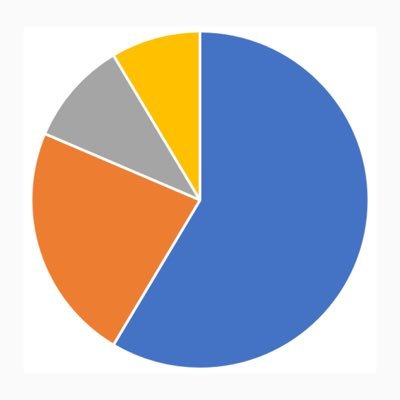
Countries installing the most industrial robots (2025):
1. 🇨🇳 China: 354,200
2. 🇺🇸 United States: 38,400
3. 🇯🇵 Japan: 36,200
4. 🇰🇷 South Korea: 30,200
5. 🇩🇪 Germany: 24,800
6. 🇮🇳 India: 10,500
7. 🇮🇹 Italy: 7,800
8. 🇹🇼 Taiwan: 5,700
9. 🇲🇽 Mexico: 5,200
10. 🇸🇬 Singapore: 4,600
China alone installed more than the next nine countries combined.
Source: IFR, World Robotics 2026
Alex Atkins retweeted
Our responsibility is to do what we can, learn what we can, improve the solutions, and pass them on.
