

Planet Earth.
Joined June 2010
- Tweets109K
- Following1.7K
- Followers1.9K
- Likes59.8K





Michael Benjamin (on the music midnight makes) retweeted

Moeletsi Mbeki accepting an honorary doctorate from the University of Amsterdam on behalf of his imprisoned father, anti-apartheid leader Govan Mbeki, on 9 January 1978. Photo Credit: Hans Peters/National Archives of the Netherlands

Currently on: A memorial seminar for the late poet, Diana Ferrus. youtube.com/live/M-r48vYe8Dg… facilitated by Margriet vd Waal of @UVA. Happening at @zuidafrikahuis .

43
Michael Benjamin (on the music midnight makes) retweeted

Listening to the ICJ detail the facts of the genocide against the Rohingya was heartbreaking. Well done to The Gambia and its legal team.
Michael Benjamin (on the music midnight makes) retweeted

If only you could carry water for Mamelodi where relatives have had dry taps for days. They also didn't have power and had to throw rotten food out. But meme away bro and get your internet likes.

Michael Benjamin (on the music midnight makes) retweeted

I really hope this new-found fascination with AI is sincere. We desperately need growth and jobs, yes, but data centres will suck huge amounts of water and electricity and water out of a very stressed system. We need to know we can cope.
We’ve also been weak on implementing seemingly brave new ideas - remember the “Ocean Economy” and “the 4th Industrial Revolution”?
And then there’s the prospect of it all becoming the latest version of the arms deal, a last chance to eat.
Let’s proceed with both eyes open. Trust, but verify. And no uniforms, if we can avoid it.

Michael Benjamin (on the music midnight makes) retweeted

So let's talk about Griffiths Mxenge.
He had a thriving law firm trusted by various activists and their families and this photograph is one example. He is seen here with Malusi Mpumlwana, his client Nohle Mohapi and Dr Mamphela Ramphele. It was the first day of Nohle Mohapi's civil claim against the minister of police back in October 1979. In fact the had represented Nohle during the inquest into her husband, Mapetla's death in 1976. He would do the same for Mrs Ntsiki Biko.
As with many activists, he was under security police surveillance. As an ANC member he'd been in contact with the ANC in exile and money to the tune of 100k had passed through Mxenge's accounts. These were funds raised to further the aims of the liberation organisation. But none of this was enough to actually arrest Mxenge. He was an upstanding citizen. So there was only one solution: Death.
45 years ago, on this day in 1981, Mxenge was kidnapped outside of his home. His kidnappers, Almond Nofomela, Joe Mamasela and Brian Ngqulunga hijacked his car and drove it to the nearby stadium.
When the first stab landed on Mxenge's chest, the activist pulled the knife out of his chest and began chasing his attackers with it. But he was ultimately no match for the 3 men who stabbed him 45 times and beat him with spanners. His body was later found in an open field. His recently purchased Audi was driven to the Eswatini border and burned.
He was 46 years old.
📸: Sunday Times

Michael Benjamin (on the music midnight makes) retweeted

A quintet featuring Gillespie, Parker, Powell, Mingus, & Max Roach @chrisvick3 @Almostconvinced @capemanchris @JCharlesLeonard @thamintuli @EjazzsocMamsie @nothembaujx @JimmySmithStan @RamsByTheHorns @noelndhlovu10 @mmanyike @ShavanaMushwana @Mkhathini72 youtu.be/onvLuR7E5sM?si=Wa7t…

Michael Benjamin (on the music midnight makes) retweeted

Please join us for the Memorial Service for John Hassan 🕊️
Date: Thursday, 19 November 2026
Time: 18:30
Venue: St George’s Cathedral, Wale Street, Cape Town City Centre @WCGovCas @guy_redman2 @ricardomackenzi

Amazing. Have you read this, @RK_ct ?

What happens when a forest loses its birdsong? Following clues hidden in the sounds birds make while asleep, Argentinian physicist Gabriel Mindlin uncovers a hidden extinction – not of species, but of memory – and sets out to revive vanished melodies before they disappear forever. Part detective story, part cutting-edge science, Mindlin's mission leads him to the dusty 1960s archives of Buenos Aires naturalist, confirming that some songs no longer echo in the biosphere. So he deploys "robot tutors" to see whether young birds can learn and spread the old songs once again. theguardian.com/environment/…

1
1
59

Michael Benjamin (on the music midnight makes) retweeted

Michael Benjamin (on the music midnight makes) retweeted
Just about to post one if my favourite track
Michael Benjamin (on the music midnight makes) retweeted

Robbie Jansen (1949–2010) captured at Kippies Expansion & Newtown Precinct Open-Air Concerts (1992)
Alto saxophonist, trumpet, flautist, and vocalist (known as "The Cape Doctor")
The original member of the 1970s band Pacific Express and a co-architect of the commercial Cape Jazz genre. He collaborated on the seminal Mannenberg and Sebenza projects, using his music as a vehicle for social and political activism

Michael Benjamin (on the music midnight makes) retweeted

some sound gestures and invocations w/ Coltrane 100: Both Directions at Once @londonjazzfest
Michael Benjamin (on the music midnight makes) retweeted

Do we appreciate this South African genius enough?

some sound gestures and invocations w/ Coltrane 100: Both Directions at Once @londonjazzfest
Michael Benjamin (on the music midnight makes) retweeted
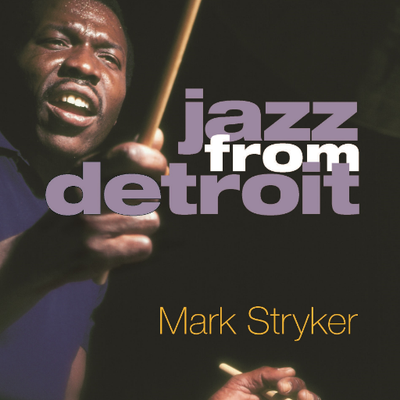
I wrote an in-depth piece for @nprmusic in 2018 about this set and the cultural context in Detroit in which it was created. Can't believe that was eight years ago already. npr.org/2018/11/09/666123401…


Michael Benjamin (on the music midnight makes) retweeted
Up and down Monday. In golf it would be called moving day. #JazzX @chrisvick3 @Almostconvinced @capemanchris @JCharlesLeonard @thamintuli @EjazzsocMamsie @nothembaujx @JimmySmithStan @RamsByTheHorns @noelndhlovu10 @mmanyike @ShavanaMushwana @Mkhathini72
youtu.be/_s3qUsyL6As?si=nggE…

Michael Benjamin (on the music midnight makes) retweeted

The Living Rights Festival 2026 is now on in Cape Town. Attended the opening event last night where the quirky Insurrections Ensemble provided some magic. Here is the full programme for the coming month: ifaaza.org/wp-content/upload…
Michael Benjamin (on the music midnight makes) retweeted

The Guardian joins the NYT and Washington Post as tentpole liberal institutions that manage to pontificate about rising threats to journalism, listing off Official Bad Guy Countries, without once mentioning the country that has killed over 200 journalists. A conspicuous omission!


"But the moment we begin measuring civilians’ right to life by how much they resisted those who governed them, we cross a dangerous line: we stop holding those in power accountable and begin holding their victims responsible for the violence inflicted upon them."
That.

During World War II, American aircraft bombed civilian neighborhoods in Germany, killing nearly half a million German civilians.
Later, in defending these attacks, the United States justified the bombing of civilian populations as a means of breaking German society’s morale. Another argument used to justify such attacks was that the German people’s silence under Hitler amounted to approval of his policies, and that they therefore deserved to be punished.
Yet many historians have challenged this reasoning. Not everyone who lived under Hitler was a Nazi, and not everyone who remained silent supported him. Still, that distinction did nothing to protect civilians from the bombs.
And yesterday, former German Chancellor Angela Merkel revived this same line of reasoning while defending Israel’s policies toward civilians in Gaza, pointing to the lack of widespread public opposition to Hamas within Gaza in the context of her remarks about Israel’s war.
And here is my question:
What exactly is a civilian supposed to do to deserve protection?
Must he take to the streets and confront an armed authority? Must he publicly declare his opposition in front of cameras? Must he prove to the world that he resisted hard enough before his death becomes worthy of condemnation?
I am from Gaza, and I know that opposing Hamas is not an abstract political position. I know that expressing such opposition publicly can carry very real risks.
I also know that Palestinians have criticized Hamas, both before and during the war. Some have even paid with their lives for doing so, even if their voices never reached Mrs. Merkel.
But more importantly, I cannot understand why we should have to pass this test in the first place.
A German child should never have had to prove that he opposed Hitler to avoid being killed beneath the rubble of his home.
And a Palestinian child should not have to prove that his family opposed Hamas in order to deserve to live.
We can discuss the responsibility of governments and armed groups. We can criticize them, condemn their actions, and demand that they be held accountable.
But the moment we begin measuring civilians’ right to life by how much they resisted those who governed them, we cross a dangerous line: we stop holding those in power accountable and begin holding their victims responsible for the violence inflicted upon them.
And what pains me most is hearing this reasoning, even by implication, from a German political figure who, of all people, should understand where the idea of treating an entire population as collectively guilty can lead.
A civilian should not need a certificate of political good conduct to deserve protection from bombs.
2
61