

Breaking down businesses and stocks in charts. I run a business that sells on Amazon, so I read earnings like an operator.
Toronto, Ontario
Joined August 2021
- Tweets1.7K
- Following297
- Followers1.1K
- Likes32.6K


Pinned Tweet
Brookfield is hard to follow because the money moves in a circle. Here's how it works.
BN is the parent. Everything on this map either belongs to it or sends it cash.
One dollar can earn Brookfield money three times. Someone buys an annuity from Brookfield's insurer. The insurer invests that money in a Brookfield credit or infrastructure fund and keeps the spread. The asset manager, $BAM, charges that fund a fee. And when the fund sells its assets at a profit, Brookfield takes a cut of the gain. That cut is carry.
BN owns 73% of BAM, which manages about $1 trillion and sends BN about $1.9B a year in dividends. It owns the insurer, which has close to $200B of assets, earned $511M in Q3 and folds into BN on Dec 1. It owns 45% of Renewable, 26% of Infrastructure and about 69% of Business Partners, which pay BN distributions and pay BAM to run them. And it owns the property group outright, which sends up about $630M a year.
Carry is the piece the market trusts least. Investors in a fund get their money back plus a minimum return first. Above that, the manager keeps a share of the profit, typically around 20%. Nothing is paid until assets are sold, so the cash arrives in lumps, sometimes years after the profit was made.
Most of Brookfield's carry belongs to BN. About $13B has already been earned on paper and is waiting on those sales. Brookfield values the whole stream at $34B, roughly $14 a share. Q3 turned $222M of it into cash, and the three year plan needs about $417M a quarter.
That gap is the debate. Bears see a number on paper that never fully shows up. Bulls point to $53B of assets sold this year, which is the step that has to happen before carry gets paid.
My read: the fee and insurance businesses already justify the stock. Strip carry out completely and the parts are still about $56 against $42. Carry is the upside, and the number to watch each quarter is realized carry against that $417M pace.

$CSU just bought Aspenware, the software a lot of ski resorts use to sell lift tickets and season passes online.
The buyer is Andromeda, one of Constellation's nine operating groups. Andromeda has mostly been real estate, mortgage and lending software up to now, so ski resorts are a new vertical for them.
The part I find interesting is who sold it. Alterra, the company behind the Ikon Pass, bought Aspenware with Aspen Skiing Co in 2022. Owning your vendor is great for you, but it's a tough sell to every other resort. Nobody wants to run their pricing and guest data through software a competitor owns. Under Constellation it's neutral again.
It's grown a lot under Alterra too. 7M users and 2M transactions a year in 2022, now 12M+ users and 3M+ transactions across resorts in the US, Canada, Australia and New Zealand. Price wasn't disclosed, which is normal for CSU.
One thing to keep an eye on: a price fixing lawsuit against Vail, Alterra, Boyne and Powdr points to three of them using Aspenware's dynamic pricing tool. Aspenware isn't a defendant and nothing has been decided.
Pretty classic CSU deal. Mission critical software, sticky customers, and an owner that wasn't really a software company.

Here is a 10 year model on $HONA.
Discount it all back at 8.5% and I get about $194 a share today, so roughly 18% upside. Bear case $141, bull $245.
Base case, the aftermarket grows 7% a year until suppliers catch up and margins get back to 26.5% by 2031. Even if the multiple drifts down from 15x to about 13x EBIT, that's around $446 by 2036, roughly 11% a year with the dividend. Over 10 years the bear case makes about 8% a year, bull 14%.
What surprised me is how little is priced in at $165. You barely need margins to improve at all to justify today's price.
That's without AI. If they get margin gains from AI in the plants and on the repair side, the base case goes to about $221 today, and even the bear case is worth about $164.
On the debt, there's no paydown schedule. It's $16B of bonds due between 2028 and 2066 at around 5%. Their plan is to get to 2.5x leverage then buy back stock, and they already have $3.5B approved. If they wanted to they could pretty much wipe out the net debt by 2031.
Management is targeting more than $6.5B of EBIT by 2030. I have $6.1B so I'm being conservative.
Not a forecast, just my numbers.


1
6
727
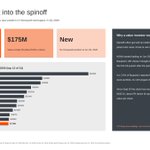
Seth Klarman's Baupost bought 1,132,000 shares of $HONA last quarter, a new position worth about US$175M at the end of September. Honeywell Aerospace has only traded on its own since June 29, when Honeywell spun it off.
What it makes: the avionics, navigation and radio systems, auxiliary power units and engines, and control systems inside commercial jets, business jets, military aircraft and missiles. Three segments: Electronic Solutions, Engines and Power Systems, and Control Systems.
The money is in the aftermarket. Last quarter US$2.1B of the US$4.6B in sales came from spare parts and repairs on planes already flying, against US$0.7B from new equipment. Once a Honeywell system is on an aircraft, it can earn parts and repair revenue for as long as the plane flies.
The problem is supply, not demand. Backlog is US$19.3B, up 12%, and orders are up 9% over twelve months, but sales grew only 2%. Honeywell says a small number of mechanical suppliers are holding back output, and its own scorecard shows bearings as the worst of them. It is bringing about 700 parts in house and building a US$500M plant in Tempe that opens in late 2028.
At US$165.01 on Friday, HONA is worth US$52.3B, about 21x the midpoint of its raised 2026 adjusted EPS guide of US$7.85 to US$8.00. It carries US$14.3B of net debt from the spin and just started a US$0.40 quarterly dividend.
Why Klarman? Spinoffs are a classic hunting ground for value investors, because many holders of the parent sell shares they never chose to own. Baupost bought in the first full quarter after the spin, and it's now 3.5% of its reported US portfolio.
My take: Klarman is buying the fix, not the current numbers. At 21x earnings with sales growing 2%, the stock needs the supply chain to catch up in 2027. The supplier scorecard Honeywell now publishes every quarter is the thing to watch.
This is also the exact type of manufacturing business AI can bring margin expansion to: complex parts, a long list of suppliers to schedule around, and a repair business that is almost half of sales. I'd keep an eye on companies like this.


7
18
2,656
$BAM earns fees on US$682B of other people's money and owns almost none of it. Pension funds, insurers, sovereign funds and wealthy families put up the capital. BAM picks the assets and charges a fee.
That US$682B is up 13% in a year. Last quarter it produced US$1.62B of fees and US$864M of fee related earnings, a 54% margin. Distributable earnings were US$763M, up 15%.
The mix has changed. Credit is now half of fee bearing capital, US$341B, after BAM bought the rest of Oaktree in July and kept adding insurance money from Brookfield Wealth Solutions. Credit fees grew 23% in a year, but credit pays less per dollar, so it's half the capital and 40% of the fees.
The person to watch is Connor Teskey. He joined Brookfield in 2012, ran Brookfield Renewable, and became CEO of BAM in February at 38. Bruce Flatt called it the next step in a succession plan started four years ago, and Bloomberg has reported he's being lined up for Flatt's job at Brookfield Corporation. He built his name in renewables and is now pushing BAM into AI infrastructure, including a Korea deal with NVIDIA and NAVER.
BAM or $BN? BN owns 74% of BAM, plus all the carried interest on older funds and a third of it on new ones. BAM is the clean fee stream. BN is that stake plus insurance, real assets and more of the carry.
Some growth is already signed: US$148B of commitments aren't invested yet, and BAM says US$68B of that will add about US$680M a year of fees.
At Friday's close of US$51.53, BAM trades at about 28x distributable earnings and yields 3.9%. The US$0.5025 quarterly dividend is above last quarter's US$0.47 of earnings a share, so fees need to keep growing in the mid teens.
My take: the business is strong and the succession is clear. At 28x, you're paying for Teskey to keep it compounding at 15%, with little room for a slow fundraising year.


1
34
2,348
$TOI Topicus reverse DCF. No exit multiple this time: a 10% required return, and growth built from organic growth plus how much cash gets reinvested and what it earns.
At C$100 the stock trades at about 24x trailing free cash flow to shareholders, once you take out the extra Asseco dividend (more below).
With 4% organic growth and 15% returns on deals, roughly what $CSU has earned, the price needs Topicus to reinvest about 36% of its free cash flow for the next ten years.
In the first nine months of 2026 it reinvested 38%. In 2025 it reinvested 191%, mostly the Asseco stake, and borrowed to do it. So the price assumes this year's slow pace continues. Any pickup is upside.

What each pace is worth today on the same assumptions.
36%, priced in: C$100.50, about C$192 a share in 2036.
38%, this year's pace: about C$103.
Half: about C$120, C$251 in 2036.
Three quarters: about C$167.
All of it: about C$241.
Topicus closed the Softland acquisition on November 6 and didn't disclose the price. How much it put to work in Q4 is the number I'll watch when it reports.

1
8
704
Two adjustments I made, and what has to be true.
Asseco paid Topicus €59.0M in Q2 2026 against €7.7M a year earlier. Per share that was PLN 13.05 against PLN 3.94 in 2025. Topicus owns 23.1% of Asseco. I kept last year's dividend rate and took the rest out, which cuts trailing FCFA2S from €250M to about €225M.
And 38% of the cash Topicus's businesses generate goes to minority holders, much of it to the Joday Group through Topicus Coop, so I only count what's left for Topicus shareholders.
The grid shows the reinvestment needed under other assumptions. If deals only earn 10%, it's 74%. If organic slows to 3% and deals earn 10%, even reinvesting everything doesn't get there.

2
4
570
$CSU is one ticker, but it is really three companies and a put option.
Constellation has nine operating groups. Seven are held directly: Volaris, Harris, Jonas, Perseus, Vela, Modaxo and Andromeda. Together they did US$2.71B of revenue in Q3 with 1% organic growth. Harris includes Altera, the hospital software business bought from Allscripts, at US$144M a quarter.
The other two trade on their own. CSU owns 31.3% of $TOI Topicus but controls it with one super voting share worth 50.1% of the votes. $LMN Lumine works the same way, held through Volaris: 61.4% of the economics, 50.1% of the votes.
That matters when you read the numbers. CSU reports all US$799M of their Q3 revenue, 23% of the total, but only part of their cash belongs to CSU shareholders. Both also grew faster organically than the rest of CSU, 5% and 3%.
Then the put option. The Joday Group, CSU's partner in TSS since 2014, owns 29.4% of Topicus Coop and can sell those units to CSU. That liability is US$1.3B and moves with Topicus's value, including its roughly 25% stake in Asseco Poland. It is the line behind Q3's US$117M non cash charge.
At market, CSU's Topicus and Lumine stakes are worth about US$5.8B, around 11% of CSU. Close to 90% of what you pay for is the business it holds directly.
Thanks @adrivalue for flagging the new groups.

$DLO dLocal reported Q3 last night. Volume up 77%, record gross profit, operating profit up 37% and record net income of $68M. On the surface it is the best quarter they have printed.
Read the company's own gross profit bridge and it is more mixed. FX gains did the lifting on gross profit, take rate is still falling, and the operating profit jump came mostly from cost cuts.
Here is the full breakdown, number by number.

At Thursday's $13.70 close the market value is about $3.9B. With about $373M of net corporate cash, that is roughly 14x trailing operating profit, 18x trailing earnings and a 6% free cash flow yield.
At 12x operating profit, the price needs about $297M of operating profit in 2027, only about 6% above the low end of this year's guide. My scenarios: bear $11.13, base $15.22, bull $19.44.

1
1
128
My read: a solid quarter dressed up as a great one. Volume, retention and cash generation are real, and so is the cost discipline. But the record gross profit needed FX help, the take rate has not found a floor, and Q4 has to beat Q3 by about 15% on operating profit to hit the guide.
The valuation already assumes a lot of that compression continues, which is why my base case sits above the price. Before paying up I would want two quarters of gross profit growth without help from the Others line, and Mexico margins back up.
Next to watch: the Q4 take rate, Q4 opex, and the 2027 guide in March.
4
118