







Altoshi retweeted

Iran war.
CLARITY Act blocked.
First Fed hike in 3 years.
Treasury yields at multi-decade highs.
Strategy sold 6,916 Bitcoin.
COLDCARD exploited.
Ledger exploited.
Binance hacked.
I genuinely don’t think people realize how much bad news Bitcoin has absorbed.
If this isn’t a sign of resilience and potential seller exhaustion, I don’t know what is.
Altoshi retweeted

Tether froze more than 1.567B USDT related to a potential Binance exchange hack.
Protecting the industry and our partners is our main priority.
Stay safe everyone.
Altoshi retweeted

Illia laid out NEAR's token design in three rules on the Bitcoin Suisse podcast, and one of them has a switch that is still off.
The rules:
> Wherever trust is needed, NEAR is the collateral. Validators stake it, escrow holds it, and it can be slashed.
> Wherever there is margin, NEAR gets bought back. Intents takes a fee on every swap and a cut buys NEAR on the open market. The buyback wallets hold 4M NEAR today and grow by about 12K a day.
> Wherever there is a resource everyone should have access to, you stake NEAR to get it. Stake today and your yield pays for private inference on NEAR AI Cloud, by the second. He calls it universal basic AI: hold the token, hold a claim on intelligence.
The switch: the second rule is live for Intents and not yet for AI. His words: "on the AI side we haven't turned it on yet, but the same approach, as more private AI gets used, we can also start buying back the token."
Think about what is already running through NEAR AI Cloud without touching the buyback: Brave's 128M users, Venice, OpenRouter, the Government of Bermuda. All of that is revenue the rule says should buy NEAR, and it does not yet.
I do not know when they flip it. But I know which side of that date I want to be on. 🚀🚀🚀
Altoshi retweeted

We built end-to-end encrypted Brave AI to ensure your private conversations stay private.
Brave and NEAR AI never hold a readable copy of your chats. Your history stays on your device. The model's maker never sees your words. Attestation proves which model is answering you.


Altoshi retweeted

- 50 Metro Stations closed
- Trains cancelled
- Buses canceled
- Border Sealed
- 1000+ people in detention
Why are you so scared Modi?
Your IT cell told us that hardly anyone will come to our protest, so why all these measures? 😂
Altoshi retweeted
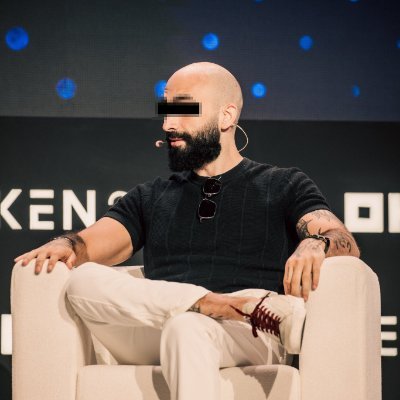
was surprised to see so much panic today, likely made worse by other things like rates and oil that distorted the actual substance in the AI/math talks
tl;dr — you're all gonna be fine. the leading chains of today have ample means to be able to respond to something like this in the unlikely scenario of it happening
longer:
i) is AI getting better at math? yes
does that imply that it will suddenly shatter foundational cryptography concepts? no
"computer smart. therefore the past work of all mathematicians is probably wrong." is not a logical chain with basis
sure, AI will find flaws in past human work in many areas -- in the same way humans themselves find flaws from other humans in many areas. this is how science works
if we find issues, we discuss them, fix them, and evolve
it takes large leaps of complete doomerism to assume that all teams, individuals, and ecosystems will fail at literally everything ranging from planning to prediction to detection to mitigation on all time horizons simultaneously
further, in these scenarios, AI is exclusively seen as a tool *only* for max destruction but never as a thing capable of a solution
so, it can apparently break everything but not fix anything. i hope you can see the bias here
for one, we already know this to be false given recent scaling of formal verification via ai
it is of course easier for AI to make progress in fields and topics that are relatively less looked at vs something like foundational cryptography which all intelligence agencies, nation states, and high-level mathematicians are heavily incentivized to break, all the time
ii) the most unhinged doomsday scenarios assume an instantaneous attack with no lead time by a random person outside of law and jurisdiction, which I would posit is simply not possible
even ignoring the fact that the labs would get there first (and hence the government)
it's not as if one can just break all cryptography on all chains via their beefed up cloud hosts over a few hours or days or even months
that not only assumes an algorithmic advancement with unfathomable magnitudes of improvement but also completely ignores the gargantuan operational complexity and opportunity cost of doing a global heist (vs the trillion other more important things you can do with an ECC break)
it would be vastly impressive if a slight speedup could be found, but the speedups required to fulfill the doomsday fantasies of people on here are not grounded in anything
iii) importantly, assume I am completely wrong for all of the above
well even in that case, upgrading the systems in a world where ECC breaks is entirely possible and feasible (and has been worked on for decades)
in fact, there are many ways of doing it that we know of depending on the existing constraints of the system!
imo, the biggest "risk" in all this is that a frontier lab publishes something about a slight speedup in the future, and then everyone extrapolates that to default to panic which then leads to a selloff like today
I don't think this is all bad because it never really hurts to think about and plan for these things on the protocol level, but the "retail" panic was certainly a huge self-own by the people pushing this stuff
doomerism is not going to win in crypto

People read one emotional Matt Green tweet about public key encryption, spent 0 seconds thinking about it, and decide to panic.
Sure ECDLP will be broken with QC's one day. But there's so many levels to this being wrong to panic over.
- 0 actual progress on attacking anything
- We have tons of alternate plans available.
- Quadratic advantage hash-based PKE
- Lattices
- Multivariate polynomials
- A whole field of KEM's from fine grained cryptanalysis. (Fun fact, works even if P=NP)
Sure you can wake-up and choose doomer and be wrong.
We have decades of cryptography to draw from on for all the above options, AND how to build a lot of what we want from UX tweaks without PKE. PKE just made a lot much easier, and less web of trust routing like.
Altoshi retweeted

$BTC: “Quantum will hack BTC”
My view is clear: by the time quantum breaches Bitcoin, banks, healthcare, logistics, transportation and security systems will have been hit long before. The entire world depends on cryptography, yet people who want to FUD Bitcoin speak as if Bitcoin is the only thing exposed to Quantum. Think one step further. You are talking about a GLOBAL threat to our infrastructure, so its not a Bitcoin thing only. Ask yourself how many weak hands panic sold, and ask who is buying Bitcoin for the next leg up.
Still questions?
Altoshi retweeted
absolutely do not take justin's advice btw
you are way more likely to lose your money by superficially moving it around than it is for fundamental cryptography to break overnight
(if that happened, the whole world would break, not just coins)
an unnecessarily performative post

Altoshi retweeted

Bitwise's new report lays out how NEAR has built a "settlement engine fast and cheap enough for AI-scale commerce."
Bitwise on NEAR's flywheel: "Each layer is built to feed the one beneath it. More AI agents mean more Intents transactions, and more Intents transactions mean more settlement on NEAR Protocol."
Key growth metrics:
✦ $30B+ cumulative NEAR Intents volume
✦ $4B+ 30-day volume, up 896% year over year
✦ $2M+ 30-day revenue, up 512% year over year
Bitwise also highlighted how NEAR Intents demonstrated significant growth through the late stages of the recent crypto winter, and demand surged when the market rebounded.
Bitwise on what comes next: "If AI agents become the dominant users of digital infrastructure—as many technologists expect—and NEAR becomes the settlement layer where they transact, the value unlock would be enormous."

NEAR is building at the intersection of two problems for crypto and AI.
Crypto has a usability problem. Hundreds of blockchains each have their own assets and rules, and moving money between them can be costly and risky.
AI has a centralization problem. A handful of companies control the most powerful models and the data we hand them.
New research from @Matt_Hougan and @RasterlyRock lays out why @NEARProtocol matters for AI agents, cross-chain trading, and the next wave of crypto adoption.
Read "NEAR in Plain English”:
bitwiseinvestments.com/crypt…

Altoshi retweeted
Grayscale names NEAR among the leaders of crypto's AI sector, calling it the "platform for agentic commerce."
NEAR was co-founded by @ilblackdragon, co-author of "Attention Is All You Need," the paper that introduced the transformer: the T in ChatGPT.
grayscale.com/the-stack/the-…

Altoshi retweeted

DON’T JUST INVEST IN THE TECHNOLOGY. INVEST IN THE PEOPLE WHO KNOW HOW TO TURN IT INTO A PRODUCT …
Meet $ZAMA Chief Product Officer Arik Galansky:
— CPO at @zama
— Spent more than four years at Fireblocks
— Rose to VP of Technology at Fireblocks
— Led dozens of technology and innovation projects during his time there
— Worked across institutional digital-asset infrastructure, wallets, security and DeFi
— Deep experience with MPC and secure wallet infrastructure
— Worked on account abstraction and EIP-7702 security
— Helped think through how institutions can safely interact with onchain applications
— Council Member at WalletConnect
— Previously spent roughly eight years helping build and scale HiredScore
— Joined Zama after years working around infrastructure used by institutional crypto participants
— Joined because he believes confidentiality is necessary for the next phase of real-world blockchain adoption
— Now responsible for helping turn Zama’s years of FHE research into products people can actually use
— Helping push confidential payments, stablecoins, DeFi, wallets and institutional applications forward
— Now representing Zama at StarkWare’s Privacy Summit alongside builders discussing FHE, ZK, MPC, TEEs, compliance and institutional privacy
and this is the part that really stands out to me…
$ZAMA already had world-class cryptographers.
they didn’t bring Arik in to invent #FHE
they brought in someone with experience around the infrastructure #institutions already use to help turn FHE into something the financial system can actually use.
think about that progression:
Fireblocks → WalletConnect → Zama
institutional infrastructure.
wallets.
and now confidential finance.
if #TRILLIONS in stablecoins, credit, securities and RWAs eventually move onchain, simply putting them on public blockchains isn’t enough.
those assets need to remain usable #without exposing every balance, payment and financial position to the world.
that’s the problem $ZAMA is attacking.
and it’s why I keep looking beyond the token.
technology will improve. narratives will change. markets will move.
but having people who understand how to take incredibly difficult technology and turn it into infrastructure people actually use?
that’s much harder to find.
$ZEC showed us why private money matters.
$ZAMA is building what comes after private money.
confidential finance.
#ZAMA #FHE #ConfidentialFinance


