


Dr.Amit retweeted

ATHEROSCLEROSIS IS NOT AN EVENT
It’s a life time exposure that deserves early, intensive & sustained management
𝐃𝐢𝐬𝐞𝐚𝐬𝐞 𝐛𝐮𝐫𝐝𝐞𝐧=𝐢𝐧𝐭𝐞𝐧𝐬𝐢𝐭𝐲 × 𝐝𝐮𝐫𝐚𝐭𝐢𝐨𝐧 𝐨𝐟 𝐞𝐱𝐩𝐨𝐬𝐮𝐫𝐞
The question is no longer only "How low?"
But "For how long has been exposed?🕰️

Dr.Amit retweeted

The focused update of the KDIGO 2027 CKD Guideline is available for public review through November 4, 2026.
KDIGO invites the global kidney community to review the draft and share feedback to help inform and improve the final update.
Visit the KDIGO CKD Guideline website to download the draft and share your comments via the feedback survey:
kdigo.org/guidelines/ckd-eva…
The focused update addresses new evidence since publication of the KDIGO 2024 CKD Guideline on SGLT2 inhibitors, GLP-1-based therapies, and nsMRAs in people with CKD, excluding those receiving dialysis or who have received a kidney transplant.
Thank you for your time and insights.

Dr.Amit retweeted

In 100% agreement
Exercise should be a prescribed
New @JACCJournals @ACCinTouch scientific statement
jacc.org/doi/10.1016/j.jacc.…


Dr.Amit retweeted

#JCLSpotlight from the 2026 ACC/AHA/Multisociety Dyslipidemia Guideline Special Issue: "Imaging guided treatment of subclinical atherosclerosis—We’ve come a long way!"
Read now: ow.ly/VTsw50ZXAjB
Read the entire issue: ow.ly/xLKq50ZXAjy

Dr.Amit retweeted

#Cholesterol-lowering medicine has changed almost beyond recognition over the past 25 years—from early #statin trials to today's longer-acting, less frequently dosed therapies, some of which may eventually require only one or two doses a year youtube.com/watch?v=atCHnOrY…
#LDL #CVD

Dr.Amit retweeted

Two days of a high-dose oat diet lowered LDL cholesterol by 10% in adults with metabolic syndrome.
Participants ate 300 grams of rolled oats per day (about 4 cups). By contrast, eating 80 grams daily for six weeks did not significantly lower cholesterol.
What I find especially interesting is the mechanism. Oats shifted the gut microbiome and increased phenolic metabolites, including dihydroferulic acid. These changes tracked with the cholesterol reduction.
Oat beta-glucan is already known to lower LDL. These microbial metabolites may be another piece of the puzzle, and another reason I eat whole oats once or twice a week.

Dr.Amit retweeted
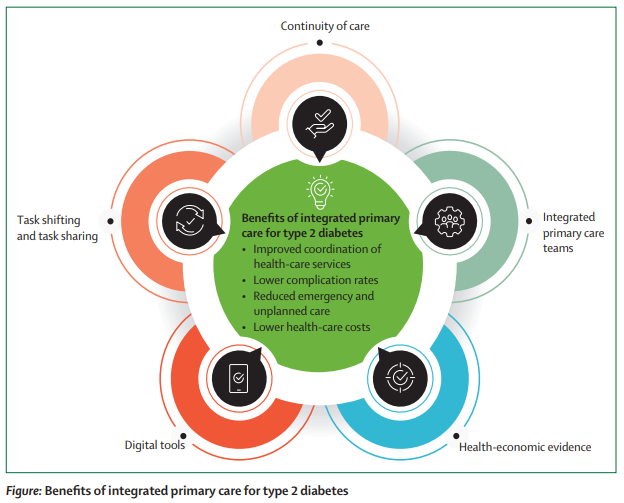
Online—Diabetes and the role of primary care: a global perspective thelancet.com/journals/landi…
#diabetes #primarycare
Dr.Amit retweeted

A full page of excellent writing, @kaunain_s. Very interestingly presented. A must read, please see my quote

Dr.Amit retweeted

Kidney function decline, heart failure hospitalization, and the effect of empagliflozin in heart failure: an EMPEROR-pooled analysis
Across the LVEF spectrum, kidney function decline accelerated before HF-related events and remained rapid thereafter. Empagliflozin attenuated eGFR decline without evidence of heterogeneity across periods.
@hfcollaboratory @gcfmd @SJGreene_md @mvaduganathan
academic.oup.com/eurjhf/adva…

Dr.Amit retweeted

Meta-analysis: In adults with and without #ChronicKidneyDisease, intensive blood pressure lowering reduced major cardiovascular events by 15% per 10-mm Hg lower systolic blood pressure.
ja.ma/4hO14Ea

ALT JAMA Cardiology original investigation: \"Intensive vs Standard Blood Pressure Lowering in People With and Without Chronic Kidney Disease: A Systematic Review and Meta-Analysis.\" Authors include Fotini Iatridi, Alistair J. Roddick, Natalie Staplin, and others.
Dr.Amit retweeted

ICYMI: 🆕 2026 ACC ECDP focuses on “Optimizing Blood Pressure Care in Patients With Resistant Hypertension” and addresses implementation gaps not covered in the 2025 AHA/ACC/Multisociety High Blood Pressure Guideline.
Read the full document ➡️ bit.ly/3VT39ap #JACC

Dr.Amit retweeted
Online—Disease modification outcomes in type 2 #diabetes: a modified Delphi thelancet.com/journals/landi…
#T2D #disease #modification #outcomes

Dr.Amit retweeted

✍️🫀Myocardial bridging is increasingly recognized as a cause of ischaemia with non-obstructive coronary arteries. This review provides an updated guide to prevalence, diagnosis, treatment, and key controversies, highlighting areas of uncertainty in clinical management.


Dr.Amit retweeted

The story of Lp(a) and TGs is now expanding, and this paper goes nicely with the prior one that just came out in JACC BTS. More to come with our new methods to directly measure Lp(a)-TG.


Thanks Sam, very interesting. I was thinking less about a direct correlation with apoB-48 and more about whether the qualitative shift in the apoB particle pool, with fewer suitably remodeled apoB-100 particles available for apo(a) assembly, could contribute. But I agree that particle size may be the key issue. Great paper
Dr.Amit retweeted

Cardio-kidney-metabolic (CKM) syndrome is a common and serious combination of obesity, diabetes, kidney disease, and heart disease. #ASNCJASN #review highlights how team-based care can improve access to effective treatments and lead to better patient outcomes. kidney.pub/CJASN1143

Dr.Amit retweeted

💊 ASPIRIN, APOB & HEART ATTACK PREVENTION
Aspirin is often talked about like it is either a miracle longevity drug or completely useless.
The truth is more nuanced.
Aspirin reduces platelet activation, which can lower the chance that a ruptured plaque suddenly turns into a heart attack or ischemic stroke.
That benefit is very clear in people who already have cardiovascular disease.
For primary prevention, however, studies such as ASPREE, ASCEND and ARRIVE showed that aspirin can reduce some cardiovascular events, but the benefit may be offset by increased major bleeding. That is why we no longer recommend aspirin automatically to every healthy person.
President Trump is an interesting example.
He has publicly reported taking daily aspirin for years, but it is important to understand that aspirin is NOT his only cardiovascular prevention strategy.
His publicly released medical information also shows treatment with rosuvastatin + ezetimibe for cholesterol reduction.
That distinction matters.
Rosuvastatin + ezetimibe:
⬇️ LDL/ApoB-containing particles
⬇️ plaque formation and progression
Aspirin:
⬇️ platelet aggregation
⬇️ chance of an arterial clot after plaque disruption
In other words:
Lipid lowering attacks the disease upstream.
Aspirin reduces one of its dangerous downstream consequences.
This is also relevant for bodybuilders.
Anabolic steroid use may increase cardiovascular risk through higher blood pressure, adverse lipids/ApoB, cardiac remodeling and potentially increased thrombotic risk.
But taking aspirin does NOT make elevated ApoB or steroid-associated cardiovascular risk disappear.
For someone trying to prevent a heart attack, the priorities remain:
Control ApoB, blood pressure, smoking, diabetes, body composition, sleep apnea and overall cardiovascular risk.
Then aspirin becomes an individualized discussion based on cardiovascular risk versus bleeding risk.
The goal shouldn’t simply be to make the blood harder to clot.
The goal should be to prevent the plaque from developing in the first place.
Dr.Amit retweeted
Diabetes and the role of primary care: a global perspective thelancet.com/journals/landi…
#diabetes #primarycare

Dr.Amit retweeted

🆕 ACC ECDP offers practical guidance for managing resistant #hypertension, from accurate BP measurement and diagnosis to treatment strategies, care teams, digital tools, and addressing barriers to care.
Get the details in #JACC: jacc.org/doi/10.1016/j.jacc.… #BloodPressure

Dr.Amit retweeted
Here is a new paper for the lipid nerds from the Balance and ESSENCE trials: Lp(a) is genetically determined—but can change due to metabolic factors. In genetically confirmed FCS, Lp(a) is markedly suppressed, especially in those with small apo(a) isoforms genetically programmed for high Lp(a). Why? Likely the absence of normal LPL-mediated lipolysis/remodeling in a chylomicron-dominant state, altering the apoB-100 particles available for Lp(a) assembly. And the OxPL story (@OxPL_apoB) is striking: OxPL-apo(a) falls disproportionately, with a ~70% lower OxPL-apo(a)/OxPL-apoB ratio—evidence that OxPL partitioning shifts away from Lp(a). jlr.org/article/S0022-2275(2…
