





Innes retweeted

Bledsian Winterfylleth. Mead, incense and prayers were offered, so Lord Ing may make our lands and people virile and prosperous once more.
Hail Ingvi Freyr, progenitor of the North Sea Peoples, Lord of light, slayer of Surtr!
Ūton lofian Ing! ᛝ


Innes retweeted

In Scandinavia, on All Saint's Day, people illuminate graveyards with candles and offerings for the dead. This is a continuation of an ancient Germanic tradition of a three night festival for the dead that begins on the full moon tonight, the first night of Winter full (OE: Winterfylleth, ON: Vetrnætr).
The three nights of Winter full should include several blots:
Haustboð “harvest offering" for Inguifrey. Pray for a good year.
Álfablót "Elf sacrifice" for the noble dead in the barrows as well as the lord of the elves,Inguifrey, and the lord of the dead, Woden (Irmin).
Disablot "Disir sacrifice" for the goddesses and ancestral mothers called in Norse Disir, or in Old English Idesa.
The Old English Winterfylleth marked the start of winter on this full moon. The Norse equivalent, Vetrnætr "winter nights" is specifically said to last for three nights. The Saxon chronicler Widukind of Corvey wrote that the Saxons on the continent held a three day blot to their god Jǫrmun (Odin) in October who is also referred to as Irmin.
So between the Norse, Old Saxons and Anglo-Saxons we have a clear picture of this three day Germanic festival and the gods that were invoked - Odin/Woden (Jǫrmun/Irmin), Inguifrey/Yngvifrey, the Alfar/Ylfe "Elves" and the Disir/Idesa.


Innes retweeted
Or vice versa…


Innes retweeted

I wrote a piece on Irish sartorial revival for those interested
eagnajournal.com/national-co…

Innes retweeted

You never wanted cigarette
What you actually did want
Is raw nipple


Your smoking addiction isn’t because of nicotine.
You would still be sucking on your cigarettes if they only had tar in them because you actually want a nipple in your mouth.
Oral fixation.
You have underlying trauma that makes your brain go “I want mommy”
That’s why it gives you a sense of relaxation.
Innes retweeted

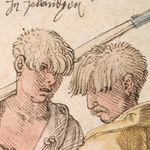
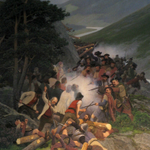
Men of the West by Irish realist painter Seán Keating.
The Middle and Right Figures were modelled by Keating's brother Joe. Joe was a member of the Volunteers. His face is partially obscured in profile and back is turned to the viewer to protect his identity from British authorities.

Innes retweeted

To be a descendant is nothing, to be an ancestor is everything
You need to be living the ways of your people and transmitting them forward. Language, rites, traditions, ethics, social organization, behaviors, outlooks etc
To say you are X, because your ancestors were, with no contribution on your own behalf is to live as a fraud and to betray those who came before you
If your culture is a musuem piece then it is already dead
This Post is from an account that no longer exists. Learn more
Innes retweeted

Ogma for strength
Dagda for defense
Nuada for the assault
Morrigan for fated doom
Be Chuille & Dianann for witchcraft
Lug for victory.

Innes retweeted
Headdress from a grave of a man related to the Khvalynsk culture, Western-Steppe-Herders with high levels of EHG ancestry, closely related to Yamnaya and Corded Ware.
Bird-shaped headdresses in the form of elaborate helmets were popular in the Germanic Iron Age too.


Innes retweeted

Gaelic Catholic hero Red Hugh O'Donnell died in exile in Valladolid in 1602 and was given a royal funeral
He was buried in the Chapel of Wonders, the original resting place of Christopher Columbus a century earlier

Innes retweeted

The two most important works about Germanic peoples coincidentally received (new) English translations in 2026:
- The Culture of the Teutons: The Restored Edition by Vilhelm Grønbech
- The Spiritual World of the Germanic Peoples by Jan de Vries


Innes retweeted

Culture of the Teutons and Syncretism:
These images are from the Culture of the Teutons by Vilhelm Grønbech. A friend of mine, @AnInnes3 , brought it to my attention that these opening pages were rather relevant to the topic of syncretism and Heathenry.
My reply is that this is very insightful and how I see the world.
It highlights the Indo-European trait of finding what works, taking from it, and adapting it make it your's, make it sacred / sanctifiy it, and strength yourself via adding it to your repertoire.
Used to be the ability to adapt and adopt what works for your advantage or see a connection to other things...was seen as a noble and divine thing.
This of course doesn't mean adding everyhing that is alien or foreign willy-nilly without filter or vetting. Nor does it mean adding what is in complete opposite or an antithesis.
That's obvious from what is being said in Grønbech's example.
Often what is being labeled as syncretism from many is just commonalties and similar source material that has developed useful tools in a different environment with different variables. These tools can be utilized for an advantagex stronger will and mindset, or completely understanding. Of course with careful precautions to avoid being extremely eclectic and accepting everyhing regardless potential use origins, or meaning.
Note:
Primary historical examples are amount of Roman influenced that were adopted by the Germanics yet transformed and made their own.


Innes retweeted
Somhairle Mór mac Gillebhride
“Somerled”
Summer-voyager. Sea king. First of the Gall Gael who made the western ocean his hall
He was born in exile, son of a dispossessed thane whose line ran back through the old Dalriadan kings and a Norse mother.
The world that raised him was already broken: Magnus Barelegs had scoured the Hebrides, the high kings of Alba looked east, and the isles belonged to whoever could keep a fleet in the water.
Somhairle did not wait for permission. He gathered the remnant men of Morvern, taught them the new ruddered galley, and began the work of reconquest one firth at a time.
By steel and marriage he took what the Norsemen had held. He wed Ragnhild, daughter of Olaf the Red of Man, and through her the blood of two sea-peoples became one.
When Godred the Black grew tyrannous, Somhairle came with eighty ships at Epiphany and split the kingdom. Two years later he came again and drove Godred into the sea.
From Man to Lewis the isles answered to one lord. He styled himself Rí Innse Gall, King of the Foreigners Isles, yet he spoke as a Gael of old Dál Riata and kept the poets.
The mainland kings grew jealous. Malcolm the Maiden demanded vassalage. Somhairle answered with a hundred and sixty galleys up the Clyde.
At Renfrew in 1164 the host of the isles met the host of Scotland. There the summer-voyager fell, still in the van. His body was carried to Iona.
His sons divided the lordship but the seed held. From him come the MacDonalds, the MacDougalls, the MacRorys, every great name that later flew the galley on their banners
Five hundred thousand living men carry his Y-chromosome. The chronicles call him warlord. The kindred call him the man who made the western sea a power to be reckoned.
That is the measure of Somhairle: not a courtier of dying empires, but the last undomesticated king who remembered that islands belong to those who can sail them and hold them.

Innes retweeted

The Indo-European Migrations: The Single Grave Culture animated
The Single Grave Culture is a member of the larger Corded Ware Complex. This Culture represents the material heritage of the Indo-Europeans in Northern Europe, later becoming ancestral to Germanic speakers and possibly others.
This animation was not made with AI, it was made based off of archaeological material, carbon dated sites and relative chronological inference. A full breakdown will be posted soon.
This is a WIP, part of a much larger video encompassing the entire Corded Ware migration, and the Indo-Europeans as a wohle. You are going to see more videos on this account soon, so stay tuned.
Innes retweeted

The entire social system of Ancient Ireland was based on free farmers forming plough team agreements, so much so that it was the prototypical example of a “shaky” business deal in the Triads. Wheat and Barley were the staple food for 90% of the population.

1188. The first English account of Ireland ever written complains that the Irish will not plough, and gives the reason: they own cattle, so they own their time.
Gerald of Wales came over with the Normans and wrote the country up for the King. His verdict on the people was that they lived on beasts and lived like beasts, had never progressed beyond the pastoral life, neglected the fields, and held that the greatest pleasure was not to work and the greatest wealth was to enjoy liberty. They lived, he noted, on milk and flesh.
Then he described their bodies, and the indictment slipped. The Irish, he wrote, did not swaddle their infants or shape them as civilised mothers did, and yet nature alone produced in them tall and handsome frames, straight-limbed, with fine faces and good colour. He put it down as a marvel. It was the milk.
He meant the whole thing as a charge. Read it again as a description. A family with a herd on a hillside had milk in the morning, butter for the winter, a calf to sell and nothing to plough, and answered to nobody for the grass. A family on a ploughland answered to whoever owned the land, the mill and the tithe barn, and spent its year bent over, short.
Every English writer on Ireland for the next 400 years said the same thing in the same tone. The Irish keep cattle and go where the grass is. They will not settle, till and pay. Spenser said it in 1596. Gerald had said it first, before there was a plantation to sell.
The bodies kept telling the story after the land was taken. In the 1770s the East India Company was forbidden by law to recruit Irishmen, and an Irish officer ignored the law and signed up hundreds. When the records of 1,000 of his men were set against the English recruits beside them, the Irish were taller in every age group and had reached their full height younger, out of a country everybody agreed was the poorer. They still had the cow and the buttermilk. The Englishman had the loaf and the wage.
The word Gerald chose for a people who fed themselves from an animal without a landlord was not lazy, though he tried lazy. It was free. He wrote it as the charge, and then he measured the result and called it a wonder.
Eight hundred years on, the countries with the most cattle per head are still the ones nobody has managed to make plough for somebody else, and the word still bothers the same class of writer.


Innes retweeted
This is where the Arabs were ahead of us
By castrating all their slaves, they made sure that there were no descendants who could claim reparations

I’ve had enough of these grifters. If another government comes whining for slavery reparations from the country that distinguished itself by its relentless global abolitionism, we should treat it as a hostile act and respond with economic sanctions.
dailymail.com/debate/article…
