

PhD Student @hkust @hkustNLP | General Agent @deepseek_ai | LLM Agent | Ex-intern @Kimi_Moonshot @MSFTResearch | Author of SimpleRL, Toolathlon, LOCA-bench
Joined April 2021
- Tweets389
- Following732
- Followers1.7K
- Likes1.6K



Pinned Tweet
🧠 Long-running agents quietly fail as context grows.
Even with 100K–1M token windows, reliability degrades — plans drift, constraints are forgotten, exploration collapses.
We introduce LOCA-bench, a benchmark designed specifically for long-context, long-horizon agents.
Github: github.com/hkust-nlp/LOCA-be…
Paper: huggingface.co/papers/2602.0…

As an old Chinese saying goes:
“Would that I could raise ten thousand spacious mansions,
To shelter all under heaven who seek learning,
And bring joy to every face!”
So, too, should intelligence be—inclusive and for all !


Try our model on general agent tasks —making intelligence more accessible to everyone 🥳🥳🥳
🚀 DeepSeek-V4-Flash Official API is now LIVE in public beta!
🔷 We’ve massively upgraded its Agent capabilities—benchmark scores are now far surpassing the V4-Pro-Preview. Check out the massive performance leap below! 👇
🔷 The official V4-Flash now natively supports the Responses API format and is fully adapted for Codex!
Check out the configuration details in our official API docs: api-docs.deepseek.com/quick_…

Our LOCA-becch now support Sandbox mode,a client-server architecture that separates concerns for better debugging, isolation, and scalability!
Check it here: github.com/hkust-nlp/LOCA-be…


🧠 Long-running agents quietly fail as context grows.
Even with 100K–1M token windows, reliability degrades — plans drift, constraints are forgotten, exploration collapses.
We introduce LOCA-bench, a benchmark designed specifically for long-context, long-horizon agents.
Github: github.com/hkust-nlp/LOCA-be…
Paper: huggingface.co/papers/2602.0…
Add Kimi-K2.5 and GLM-5 results
Very pleased to see that the newly released models have made progress on LOCA-bench compared to their previous versions 👏👏👏

🧠 Long-running agents quietly fail as context grows.
Even with 100K–1M token windows, reliability degrades — plans drift, constraints are forgotten, exploration collapses.
We introduce LOCA-bench, a benchmark designed specifically for long-context, long-horizon agents.
Github: github.com/hkust-nlp/LOCA-be…
Paper: huggingface.co/papers/2602.0…

Weihao Zeng retweeted

As long context becomes the main bottleneck for agents, existing benchmarks focused on long-context modeling still rely on single-step info retrieval/aggregation.
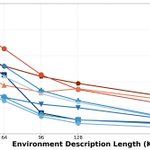
We introduce LOCA-bench, which controllably grows context length (up to infinitely long!) via manipulating env states. LOCA-bench can assess lang agents in various context sizes on the same task query: github.com/hkust-nlp/LOCA-be…

🧠 Long-running agents quietly fail as context grows.
Even with 100K–1M token windows, reliability degrades — plans drift, constraints are forgotten, exploration collapses.
We introduce LOCA-bench, a benchmark designed specifically for long-context, long-horizon agents.
Github: github.com/hkust-nlp/LOCA-be…
Paper: huggingface.co/papers/2602.0…
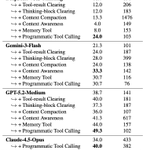
🛠️ One standout: programmatic tool calling.
Across models, it consistently improves success rates and shortens trajectories by reducing intermediate context bloat.
LOCA-bench is open-sourced as a platform to study and stress-test long-running agents in realistic settings.
If you care about long-context agents, this benchmark is for you.

Weihao Zeng retweeted

Writing GPU kernels is the perfect playground for Reinforcement Learning
Why? 1️⃣ Verifiable Objectives: Code either runs or crashes; it’s either fast or slow. 2️⃣ Iterative Nature: It naturally fits multi-turn refinement, just like human experts profile and optimize step-by-step.
But making it actually work is notoriously hard. RL models love to "cheat" (reward hacking) or "slack off" (lazy optimization). 😈😴
We finally crack this.
Introducing Dr. Kernel: Reinforcement Learning Done Right for Triton Kernel Generations.
With just 14B parameters, our model achieves performance competitive with, and even surpassing, frontier models like GPT-5 & Claude-4.5-Sonnet on KernelBench
To solve these challenges, we:
🔹 Built KERNELGYM: A robust environment that handles crashes & detects hacking.
🔹 Propose TRLOO: An unbiased estimator for multi-turn RL.
🔹 Overcome "Lazy Optimization" via Stability (MRS) & Objective (PR/PRS) alignment.
🔹 Achieve massive gains via Sequential Test-Time Scaling (STTS).

Weihao Zeng retweeted
Gemini-3-Pro improves Gemini-2.5-Pro from 10.5% to 36.4% on Toolathlon! Only one step away from Claude-4.5-Sonnet now, very impressive


🚀We are excited to introduce the Tool Decathlon (Toolathlon), a benchmark for language agents on diverse, complex, and realistic tool use.
⭐️32 applications and 600+ tools based on real-world software environments
⭐️Execution-based, reliable evaluation
⭐️Realistic, covering daily and professional scenarios
Toolathlon reveals significant shortcomings of SOTA LLMs in realistic tool-use tasks, where Claude Sonnet 4.5 achieves 38.6% success rate. It also indicates a clear gap between open-source and leading proprietary models.
Check our blog: toolathlon.xyz/docs/blog/too…
Github: github.com/hkust-nlp/Toolath…
Paper: huggingface.co/papers/2510.2…
🧵⬇️
Honored to be part of building Tool Decathlon (Toolathlon) 🛠️✨
Every component — from the user prompts to preprocessing and evaluation — has been meticulously crafted and rigorously verified.
Toolathlon aims to expose where top proprietary models fall short on diverse, complex, and realistic agentic tasks — and also highlight the gap between open-source and proprietary systems.
Our goal: to spark insights that drive the next evolution of agentic models. 😄💪
🚀We are excited to introduce the Tool Decathlon (Toolathlon), a benchmark for language agents on diverse, complex, and realistic tool use.
⭐️32 applications and 600+ tools based on real-world software environments
⭐️Execution-based, reliable evaluation
⭐️Realistic, covering daily and professional scenarios
Toolathlon reveals significant shortcomings of SOTA LLMs in realistic tool-use tasks, where Claude Sonnet 4.5 achieves 38.6% success rate. It also indicates a clear gap between open-source and leading proprietary models.
Check our blog: toolathlon.xyz/docs/blog/too…
Github: github.com/hkust-nlp/Toolath…
Paper: huggingface.co/papers/2510.2…
🧵⬇️
Weihao Zeng retweeted

Want to get an LLM agent to succeed in an OOD environment?
We tackle the hardest case with SPA (Self-Play Agent). No extra data, tools, or stronger models. Pure self-play.
We first internalize a world model via Self-Play, then we learn how to win by RL.
Like a child playing with the env to simply learn about “what if I do this?”
Below, we show our findings on: What is wrong with OOD environments? What are the key factors that allow self-play to succeed?
(1/8)

Weihao Zeng retweeted
Mirage or method? We re-assess a series of RL observations such as spurious reward, one-shot RL, test-time RL, and negative-sample training.
🧐These approaches were all proved on Qwen+Math combination originally, but do they work in other settings? If not, under which conditions do these conclusions hold?
Unsurprisingly, we find these techniques are ineffective in many settings. However, Qwen is not the true magic here -- the original conclusions hold even for Llama models when working on certain tasks.
Through extensive experiments, we identify model-task alignment as the underlying reason here (rather than data contamination): these RL techniques yield divergent conclusions when the models feel the task difficulty differently. ☘️ Luckily, standard RL with gold reward and proper training data size always works in all our settings.
🤔Rather than blaming the previous conclusions, I like the implications from these methods when thinking the other way around: how can we build a base model that can be easily RLed, where these techniques can work and relax the requirements for accurate reward and large-scale in-domain training data? It seems mid-training or cold-start SFT are important factors to affect how critical the subsequent reward and RL data quality needs to be.
Our paper is at: arxiv.org/abs/2508.21188

