

Former USMC EOD Tech. Analysis on Anduril, autonomy, AI warfare, unmanned systems & the defense industrial base. Independent; not affiliated with Anduril.
Strategically Located
Joined May 2026
- Tweets1.9K
- Following828
- Followers4.5K
- Likes2.3K






I know I've written a lot about Ghost Shark in the last 24 hours, but if you want everything you need to know in one place, check out this article from @AlexHollings52 at @sandboxxnews.
Alex, as always, has some info I haven't seen anywhere else.
sandboxx.us/news/andurils-gh…

Here’s the test footage of Ghost Shark deploying sea mines and logistics caches.
The caches still have me thinking. Being able to put supplies on the seabed ahead of time could give a team access to equipment they couldn’t carry themselves, without needing a resupply delivery during the mission.
We’ve talked a lot about Ghost Shark’s potential to strike targets. Supporting the people operating nearby could be another pretty useful job.

Anduril's COO says they'd be behind on production goals without Arda, the new AI startup from OpenAI's former research chief.
Arda's software turns CAD designs into assembly instructions inside ArsenalOS, Anduril's factory software.
Arda says simple work instructions dropped from 10 hours to 15 minutes, and complex ones from up to 30 hours to about 2.5.
Those are company figures, but they show where Anduril sees the bottleneck: engineering time, not just floor space. businesswire.com/news/home/2…

Australia just revealed three previously undisclosed payloads for Anduril’s Ghost Shark autonomous submarine. One of them is another Anduril product.
Including:
• Deploying up to 12 sea mines in a mission.
• Leaving supply caches on the seabed.
• Launching ALTIUS aerial drones for reconnaissance or strike.
The ALTIUS payload is pretty interesting. An underwater vehicle carrying aerial drones could give the Australian Navy a way to reach beyond what the submarine itself can see or strike, without exposing any of their personnel.
The supply caches caught my attention too. Moving equipment into position ahead of time could give forces another way to get what they need when ordinary resupply is limited.
These are all different payload options for the same platform. The Navy could change what payloads Ghost Shark carries to suit the job, and add new capabilities as they're developed.
Some of the newly disclosed maritime payloads are heading to an allied exercise in San Diego this week.
Obviously, there’s still some testing and integration ahead, but we have a much clearer picture of the missions Australia is building Ghost Shark to perform.
minister.defence.gov.au/medi…

I covered Ghost Shark’s newly revealed payloads earlier this week, but the aerial drone option deserves another look.
An autonomous submarine carrying aerial drones could let Australia gather information or strike beyond the underwater vehicle’s own reach, without putting a pilot or submarine crew at risk.
Add sea mines and seabed supply caches, and the same platform could take on very different jobs depending on what it carries.
Anduril says payload testing is active. I’m looking forward to seeing how these options perform as testing progresses.
"Ghost Shark has teeth now." - @PatConroy1, Australia's Minister for Defence Industry.
The @ausgov and @Australian_Navy confirmed the payloads that our Ghost Shark extra-large autonomous submarine carries: sea mines, logistics caches, and air-launched effects for ISR and strike.
Ghost Sharks are rolling off the production line. Payload testing is active.
Maven is moving beyond a specialized intelligence tool toward an enterprise command-and-control layer.
Access at every echelon makes the practical questions more important: how Marines incorporate it into workflows, what reaches the tactical edge, and how systems such as Lattice exchange data with it.
defensescoop.com/2026/10/20/…

Anduril being part of this (of course) caught my attention. We talk a lot about getting more sensors and autonomous systems into the field, but all that information needs computing power to be useful.
Being able to bring substantial AI computing capacity closer to where it’s needed could help process sensor data locally, without sending everything back to a distant data center.
There’s still infrastructure involved. NVIDIA’s 14-day target assumes a site already has power, cooling and network connections ready.
NVIDIA hasn’t explained Anduril’s specific role yet, but the connection is worth following. As we field more autonomous systems, the computing infrastructure supporting them becomes a bigger part of the picture.

BREAKING: NVIDIA introduces forward-deployable, containerized modular AI data centers.
The company announced DSX POD, a factory-manufactured modular data center design intended to reduce deployment times from six months to as little as 14 days at prepared sites. The systems feature pre-integrated computing, networking, cabling, and liquid cooling.
Key partners include @armada_ai and @anduriltech, among others, with initial deliveries expected in early 2027.

ALT Source: NVIDIA
Arsenal-1 reportedly passes 300 employees.
Building the factory also means building its workforce.
The reported 300-person milestone gives us another checkpoint; subsequent deliveries will show how staffing growth translates into output.
bizjournals.com/columbus/new…

I’ll never understand this instinct. A new company starts challenging the established players, and the dream outcome is to fold it into one of them?
Should we fold Tesla into Ford? SpaceX into Boeing?
Collaboration makes sense. Anduril and Lockheed already work together. But we can combine their strengths without putting them under the same ownership.
Anduril still has plenty to prove. That’s a reason to make it compete, deliver and earn its place.
If we want the incumbents to improve, giving them ownership of the companies applying the pressure seems like a strange way to go about it.

This gives us a concrete example of how Lattice fits alongside another manufacturer’s technology.
Hyundai handles vessel functions while Lattice contributes mission management and coordination.
If an uncrewed ship like this can keep doing useful work when its assignment changes or equipment fails, it will show how practical this really is.
navalnews.com/naval-news/202…

The speed at which this evolving makes me wonder if we should be stockpiling common drone airframes and components, with swappable payloads, communications and countermeasures.
Keep the parts that remain useful, then adapt what they carry as the threat changes.
We’d still need different airframes for different jobs. But having those bodies and parts ready could help us field updated versions faster, without building an entirely new drone every time.
The ability to upgrade and reconfigure these drones would be part of what we’re buying from the start.


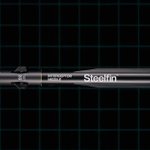
A few additional details about Steelfin from Defense Daily help explain what Anduril is aiming for.
One configuration targets 80% of a Patriot PAC-3-type mission at less than half the cost.
Anduril also describes a higher-end variant intended to operate between Patriot’s most capable interceptor and the Terminal High Altitude Area Defense system, plus a lower-end version targeting more than 80% of the capability of the Navy’s Standard Missile-2 at one-third the cost.
The idea is to give the military different interceptor options built around the same underlying architecture, with cost and capability matched to the job.
Chris Brose also says Steelfin already has contracts, although the customers haven’t been disclosed.
Obviously, these are company targets. The article doesn’t define how those capability percentages are measured, and they shouldn’t be read as interception success rates.
Still, this gives us a clearer picture of the trade-offs Anduril is pursuing. Then comes turning those designs into working missiles in the quantities we need.


Anduril Industries Looks for Steelfin Variants To Take On Drone and Missile Threats - Defense Daily defensedaily.com/anduril-ind…

This makes the Steelfin discussion pretty interesting. Much of the skepticism was about what capability Anduril might sacrifice to reduce cost and simplify manufacturing.
Lockheed is making explicit trade-offs with PAC-3 ACE: reduced range and changes to how it intercepts targets, aiming for less than half the cost of the current PAC-3 MSE. The idea is to save the more expensive missiles for threats that need them.
Steelfin takes a different approach: configurable variants sharing a common architecture and production line, with capability tailored to the mission.
We still need testing and clearer performance and cost figures to compare them properly. But both recognize that every threat doesn’t require our most expensive interceptor.
Ultimately, the REAL question is how soon can they deliver, how many can they produce each month, and can production keep up with use?

Lockheed Martin has revealed more details about the PAC-3 ACE interceptor for Patriot.
— It will cost less than half as much as the PAC-3 MSE (roughly $2-2.5M vs $4-5M), with trade-offs in range and capability.
— It fits the same canister as the MSE, so one M903 launcher holds 12. It targets aircraft, cruise missiles and short-range ballistic missiles.
— Lockheed's lineup, in order of increasing range: PAC-3 ACE → PAC-3 MSE → PAC-3 Edge.
The MSE is in production, the ACE is a cheaper complement, and the Edge (testing 2027, deployment 2031) will have longer range.


I’ve been trying to school myself up on Joint All-Domain Operations (JADO). JADO is how the U.S. military is preparing to fight: coordinating forces across land, sea, air, space and cyberspace so they can operate together as one joint force.
It sounds complicated, but the idea is pretty easy to appreciate: our military should be able to fight together even when the people spotting a threat, making the decision and responding belong to different services.
Imagine Marines on a Pacific island detecting an enemy ship. A Navy commander reviews the information, and an Air Force bomber has the best opportunity to engage it.
Getting those forces to work together means sharing information quickly enough for it to remain useful. They need to understand each other’s reports, know what forces are available and get instructions to the right people.
That’s worth understanding because buying better aircraft, ships and missiles only gets us so far. Their usefulness also depends on how well they work together—especially across the enormous distances of the Pacific.
Joint All-Domain Command and Control, or JADC2, is the broader effort to build those connections. It includes communications networks, software and the rules governing how information gets shared.
That’s where I started wondering about Palantir’s Maven and Anduril’s Lattice.
Maven Smart System brings intelligence and operational information together to help commanders and analysts understand the situation, identify potential targets and plan missions.
Lattice combines information from different sensors into a shared picture and helps operators direct connected equipment, including autonomous aircraft and other uncrewed systems.
Their roles overlap, and the arrangements depend on the mission. Both contribute to helping people turn information into coordinated action.
For Anduril, that gives Lattice a purpose beyond controlling its own hardware. For our forces, the potential benefit is more ways to respond: information gathered by one unit can help another unit act, even across service boundaries.
I’m starting to see why the software connecting our equipment deserves as much attention as the equipment itself.

If you want to learn more about JADO, this is a great video from @RyanMcbeth, who's much smarter about these things than I am.
youtu.be/fc8g2A4-zBo?si=p9t-…
When he first started talking about unmanned systems moving through the ground, there seemed to be plenty of chuckling and eye-rolling at “wacky Palmer.”
Now Netanyahu is discussing the idea publicly. That doesn’t make the engineering any easier, but the conversation sure seems to be changing.

Netanyahu:
I invited Palmer Luckey here.
Palmer Luckey heads a company called Anduril, which I believe is the leading weapons manufacturing company in the United States.
He talks about the possibility of underground penetration.
He talks about unmanned systems underground.
Not systems that you launch into the ground, but systems that actually move through the ground.
I like the idea of giving troops another counter-drone option on a weapon they already carry.
I’d be interested to see how quickly soldiers get comfortable with it and how consistently it helps them make hits. That would tell us more than the range figure alone.


I asked ChatGPT to help me find the best price on a firearm red-dot optic. It refused, citing OpenAI policy.
Then I tried Grok, giving it the exact same prompt. It found me a great deal.
Thank you @elonmusk for creating an AI platform that protects the rights of its users.
