

MD/PhD Candidate @Yale | @PDSoros '22 | #Immunology #Genomics #Healthcare #Biotech | Alum @thisisUIC @Gates_Cambridge @SangerInstitute
Joined December 2020
- Tweets116
- Following146
- Followers128
- Likes416



Pinned Tweet
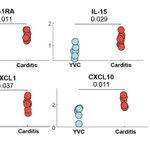
Shedding light on the drivers of rare myocarditis after mRNA SARS-CoV-2 vaccination. An important step towards fully realizing the tremendous potential of mRNA vaccines.
Our latest paper published today in @SciImmunology. A summary: (1/11)
science.org/doi/10.1126/scii…

Anis Barmada retweeted

It would be pretty easy to guess that Garfield was a tomcat even if you didn’t know his name—or didn’t want to peek under his tail. Most orange cats are boys, a quirk of feline genetics that also explains why almost all calicos and tortoiseshells are girls.
Scientists curious about those sex differences—or perhaps just cat lovers—have spent more than 60 years unsuccessfully seeking the gene that causes orange fur and the striking patchwork of colors in calicos and tortoiseshells.
In 2024, two teams independently found the long-awaited mutation and discovered a protein that influences hair color in a way never seen before in any animal.
Learn more: scim.ag/3UG1xkn #ScienceMagArchives

ALT Gene behind orange fur in cats found at last After 60 years, scientists know why gingers, calicos, and tortoiseshells look the way they do
Anis Barmada retweeted

Agree. Some questions (like how a disease develops, or whether a drug has long term health benefits for patients) can only be answered by following people over years. If we don't start those studies now, then future AI will not have access to that data.
Lots of things we could do: we can follow patients’ health over time, see how they respond to treatment, and even bank blood samples for tests that may become available later. Laboratory experiments that take days or weeks can run alongside those studies.
We’re raising $15M for the next round of @ImpetusGrants to fund work like this, with ~$9M raised so far. More here: norn.group/impetus-grants


There’s a really pronounced divide between people who are on the AI side of things and people who are on the biology side of things. Even among people working in AI, the divide persists based on where they’re focused.
The AI side, adherents of scaling laws and the bitter lesson, believe that AI getting better means AI being more capable of novel discoveries in medicine (that go beyond discovering new drugs in well understood targets or speeding up dry lab work etc).
The biology people think the idea of a bitter lesson in biology is kind of ridiculous and that regardless of AI’s capabilities it’s going to be at least 5-10 years until you could hope to reliably simulate human toxicology in silico (right now AI/ML can’t even reliably simulate in vivo studies like binding affinities or functional assays).
Even the most AI pilled of them, who will list all the areas that AI can reduce the time spent on various areas, don’t think the concept of AI discovering novel targets or generating new understanding of causal biology is realistic in the near term. Most, in fact, will readily characterize the assumption that even an “ASI” level model could find cures hidden in our current understanding (without expanding that understanding with significantly more biological data) as patently false.
This was a big part of why we wanted to experience it ourselves by using AI for a (very) small portion of what it can do in biology. It was both mind blowing and revealed some poignant insights into how different the problem of making AI better at something like coding is to the problems of biology.
Even if it unlocked the ability to generate new molecules at a stunning pace, its simulation (in silico) of binding only had 49% accuracy. And if we wanted to improve that, we’d need to feed it back the data from the lab - data that took about 30x as long to get as it took to generate the molecules. And these were tests in a test tube (turn of phrase), imagine how long it would take if we wanted to improve the model with data that required recruiting humans and monitoring their reactions.
Human biology is very complex, and adding a drug - especially a novel drug and doubly so for a novel drug acting on a novel mechanism - means mapping interactions that have nth-order-effects that we don’t have the data to predict. Virtual cells have made advancements enabled by AI, but the perturbations equate to a small fraction of the possible.
This is before you even get into curing disease, especially uniquely human diseases. Brain function involves cellular identities that are unique to humans, meaning animal studies are of little use.
How long does it take to understand what the side effects of chronic administration of a drug in humans are? AI can speed up analyzing the data, or designing the trial or even getting it approved…but it can’t make a 6 month trial complete in 3 months.
I think its important to point out that significant advancements can be made in AI that contribute to biology, while also being realistic about how much it speeds up something as complex as curing a specific cancer or diseases of the brain.
Anis Barmada retweeted

📣 Paul & Daisy Soros Fellowships for New Americans is in 3rd place and so close to joining the #Webbys Winners Circle. RT + VOTE: vote.webbyawards.com/PublicV…

Congrats to #PDSoros Fellows @sylvia_bisco (2018 Fellow), @rishirajgoel (2022 Fellow), & @AnisBarmada (2022 Fellow) on being named to the 2025 Forbes 30 Under 30 Science list! #ForbesUnder30
forbes.com/30-under-30/2025/…

2
173
Anis Barmada retweeted

The Yale Journal of Biology and Medicine is the 130th #GAJET (Good Academic Journal in Ethical Terms)
CONGRATULATIONS @theYJBM & thank u @YaleMed 4 sponsoring & publishing #DiamondOpenAccess
gajetlist.org/the-yale-journ…
#OpenAccess #PublicationEthics #Ethics @COPE @ICMJE


Anis Barmada retweeted

Doing good science is 90% finding a science buddy to constantly talk to about the project.

Anis Barmada retweeted

So thrilled to see people happy with @GlassHealthHQ and you are so right…so much effort has gone into this by the most passionate and intelligent group of physicians and engineers I’ve ever met!

Since I started my internship, I have been using @GlassHealthHQ and I find this platform is top notch. The #AI assisted and clinical decision support practice is wow! The accuracy and clinical reasoning is amazing. The amount of effort that was put in this is tremendous🔥
Anis Barmada retweeted

Artificial intelligence is already transforming the way we practice medicine.
In @GlassHealthHQ's Future of Medicine essay contest and scholarship, medical students are challenged to envision how technology can be leveraged to change healthcare for the better. #MedX #MedTwitter


Anis Barmada retweeted

Very pleased to share our comprehensive review on monoclonal antibodies against circumsporozoite protein and how this emerging tool might aid global efforts to control malaria, published today in Nature Immunology!
@AzzaIdris_1, we did it! :)
nature.com/articles/s41590-0…
Anis Barmada retweeted

We’re thrilled to launch Modes on our Glass AI CDS platform! Our AI responses are now tailored to specific specialties, starting with Internal Medicine and Emergency Medicine. Enhance your differential diagnoses and plans with specialty-aligned outputs at glass.health.
Anis Barmada retweeted
Today, we're excited to launch IM & EM Modes for our AI-generated DDx & A&P drafts.🥳
With AI responses tailored by specialty, Glass is a more useful clinical assistant than ever before. Try Modes for yourself today at glass.health!🎊
#MedX #MedTwitter 🩺

We’re thrilled to launch Modes on our Glass AI CDS platform! Our AI responses are now tailored to specific specialties, starting with Internal Medicine and Emergency Medicine. Enhance your differential diagnoses and plans with specialty-aligned outputs at glass.health.
Anis Barmada retweeted

Something that validates the Yale system @YaleMed. Giving learners more autonomy makes them more engaged with their learning than using punitive/controlling devices like mandatory attendance counting toward grades.
science.org/doi/10.1126/scia…

Anis Barmada retweeted
We co-published b2b papers describing >400 human monoclonal antibodies against the malaria blood-stage antigen RH5! These data will guide testing of current RH5-based vaccines in Africa and improvement of future vaccine candidates.
sciencedirect.com/science/ar…
sciencedirect.com/science/ar…
Anis Barmada retweeted

Celebrating Great Immigrants, Great Americans
Like Jensen Huang, @ylecun, @ashishkjha, @Ilibagiza, Viviana Gradinaru, and so many others who've made vital contributions to the US and beyond
@CarnegieCorp
#HappyFourth

Anis Barmada retweeted
Immigrants and children of immigrants give back to our country in profound ways, bringing innovation and creativity. Our Fellowship celebrates this profound gift.
If you're a New American in/or pursuing grad school in 2025-2026, apply by 10/31!
profellow.com/announcements/…
Anis Barmada retweeted
The YJBM June 2024 issue on Chronic Disease is available on PubMed Central, read here for free: ncbi.nlm.nih.gov/pmc/issues/… Editors-in-Chief: Anis Barmada, Charlotte Godfrey, Samantha Seneviratne, and Morgan Vanderwall. Deputy Editors: Noah Yann Lee and Bassel Shanab.

Anis Barmada retweeted

new @ScienceMagazine framework to improve cancer early detection:
two injectable priming agents (nanoparticles & engineered antibodies) temporarily slow down the clearance of circulating tumor DNA from the body, allowing for higher detection sensitivity
science.org/doi/10.1126/scie…

Anis Barmada retweeted

🧵 1/ What’s at stake with race-based equations for lung function? Clinical, occupational, and financial reclassifications for millions of patients.
I’m delighted to share this labor of love, published today in @NEJM and unveiled at #ATS2024.
nejm.org/doi/full/10.1056/NE…
