

Physician-scientist & molecular hematopathologist at Weill Cornell Medicine
Manhattan, NY
Joined October 2018
- Tweets839
- Following399
- Followers737
- Likes4.3K






Pinned Tweet
Pls RT: The Nam Lab at WCM is recruiting post-doctoral fellows to join the growing team!
If you're interested in deciphering blood cancers through advanced single-cell technologies, please DM me and visit our website annanamlab.com to learn more.
Anna Nam retweeted

Excited to share our new preprint! ChromE-seq reads 3D chromatin and gene expression in one cell. Across ~400,000 human primary cells, B lineage has the fewest chromatin loops and is most perturbed in trisomy 21, driving the B-cell block in Down syndrome.
biorxiv.org/content/10.64898…

Anna Nam retweeted

Proud to have contributed to newly published 2026 @ASH_hematology Guidelines for Myelofibrosis!
10 evidence-based recs spanning molecular testing, JAK inhibitors, anemia & transplant.
📄 doi.org/10.1182/bloodadvance…
#Myelofibrosis #MPN #Hematology #ASHGuidelines #BloodAdvances

Anna Nam retweeted

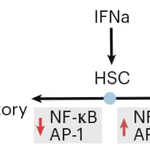
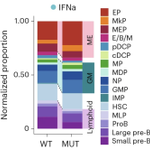
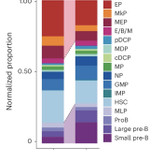
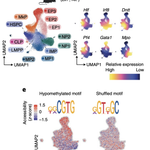
Danielle Isakov, Chhiring Lama, and scientists at @WeillCornell found that interferon-α reshapes hematopoietic stem cell differentiation in #myeloproliferative neoplasms, while disease-causing mutations alter how stem cells respond to treatment. 🩸
🥼 go.nature.com/4AiXtX5
🎧 Join the conversation: bit.ly/4yiewap

Anna Nam retweeted

After many years of effort, deliberation, excitement, angst, joy, and Wednesday afternoon lab lunches, our group's first manuscript on cachexia, led by Venise Jan Castillon, Amy Xie, and really our whole lab nature.com/articles/s41591-0… @NatureMedicine

Anna Nam retweeted

Thrilled to post thread re: new single-cell lineage of mouse embryo reconstructed w/ DNA Typewriter. One animal, zygote to late organogenesis (E13.5). Tree has 1,340,794 transcriptionally profiled, annotated tips (cells), 1,142,588 dated internal nodes, rooted at zygote
1/n
Anna Nam retweeted

Delighted to share RNA fingerprinting, out today in @CellCellPress! Together with @david_a_knowles , we use Perturb-seq experiments—where the causal perturbation is known—to infer what drives cellular responses in new datasets: cell.com/cell/abstract/S0092…

Anna Nam retweeted
Exciting day for DNA Typewriter w/ 2 papers from the lab & SeaHub out today :)
1. Mouse lineage from E0 to E13.5
science.org/doi/10.1126/scie…
2. A fluctuation test for gastruloid heterogeneity
cell.com/cell/fulltext/S0092…
Paper #1 covered in quoted thread. More on paper #2 here. 1/n


Anna Nam retweeted

Benchmarking with Honesty | S1 E1
The Life & Science Podcast 🫶
open.spotify.com/episode/2eO…

Anna Nam retweeted

Ever wonder if tRNAs can regulate the identity of a cancer cell?
@HsiehLab @FredHutch postdoc @yeonsookim_phd did and discovered a single tRNA that can control lineage dependency and drug sensitivity in prostate cancer published today @Nature: nature.com/articles/s41586-0…

Anna Nam retweeted

Big news today: I am deeply honored to receive the NIH Director's Pioneer Award, one of only seven given this year across all fields! We will build an AI engine that generates cancer hypotheses from human data and tests them with robots in tumor organoids news.weill.cornell.edu/news/…

Anna Nam retweeted
🧬 Happy to share our new study in @BloodAdvances! Many inherited cancer predisposition genes only cause disease once a second mutation arrives. We tested that directly, combining CRISPR editing of human primary blood stem cells with xenotransplantation.🧵doi.org/10.1182/bloodadvance…

Anna Nam retweeted

Chemotherapy and ionizing radiation are known to promote clonal hematopoiesis and its progression to leukemia. By inducing temporary quiescence of hematopoietic stem cells during external stress might we mitigate CH expansion? We address this through a collaboration with @AbdelWahablab @PuZhang09980432: nature.com/articles/s41588-0…. Excited to share this and some thoughts from a recent meeting in Hiroshima which puts this work in a broader perspective.

Anna Nam retweeted

🩸🧬 Delighted to share our new @Nature paper! Genetic studies of >28,000 people reveal a BACH2–NRF2 pathway for activating fetal hemoglobin, suggesting new tx avenues for sickle cell disease & β-thalassemia. Led by the amazing @guo_chunjie & co!
nature.com/articles/s41586-0…

Anna Nam retweeted

What happens to the bone marrow niche in #CHIP? We find that CHIP is associated with fibro-inflammatory hubs emerging before the disease.
Co-led by our fantastic @aliciaguilar_ and @gibran_edun
nature.com/articles/s41590-0…
#ClonalHematopoiesis #PreTumorMicroenvironment #Hematopoiesis

Anna Nam retweeted

Congratulations to Sweta and the rest of the team on our new publication in @BCD_AACR exploring the dependence and therapeutic targeting of NAMPT in high-risk MDS stem cells. Thanks to @BloodCancerUtd and Evans Foundation for support! aacrjournals.org/bloodcancer…

Anna Nam retweeted

Very excited to share our new paper, published in Cell!
We found that caloric restriction (CR) in mice reduces somatic mutation burdens across the genome, and that this effect has some surprising features.
🧵👇
1/8

Anna Nam retweeted

#Review🚨
Read how genotype and phenotype co-evolve during cancer progression with insights from single-cell multimodal technologies and phylogenetic approaches, revealing vulnerabilities in mutant clones.
@TamaraPrietoF @FrancoIzzo85 @landau_lab
📖👇
dlvr.it/TVXsBD

Anna Nam retweeted

Read more about the exciting new research in Cell from Dr. Matthew Greenblatt and colleagues which identifies the tendon/ligament stem cell in mice and humans, opening new possibilities for understanding and treating spinal stenosis.
cell.com/cell/fulltext/S0092…

Amazing summary of our manuscript. Couldn't have written it better myself! 🙏🙏🙏

Insane paper alert!
Interferon is the one therapy that can actually deplete the mutant stem cells in myeloproliferative neoplasms, the blood cancers where the marrow keeps overproducing one lineage or another. The standard explanation for how it works was fairly mechanical. It pushes the mutant cells into the cell cycle, they divide, and eventually they exhaust or lose ground. Clean enough to teach. Lama et al. pulls it apart, and it can do that because of a set of single-cell methods that read out the mutation, the transcriptome, the surface proteins and the chromatin in the same cell, so the healthy stem cells sit inside the same patient as a built-in control, right next to their mutant neighbors.
What they see is that interferon does not do one thing to a stem cell, it does two opposite things at once. Part of the stem pool is driven into an inflammatory myeloid progenitor state nobody had really described before, running on AP-1 and NF-κB. Another part is pushed toward lymphoid output. That lymphoid arm is easy to overlook, but it seems to be doing the clinical work, offsetting the myeloid overproduction that defines the disease, which is likely why counts normalize even in patients whose mutant fraction barely moves.
Interestingly, the result that carries the paper is a negative one. If fitness ran on proliferation, the clones cycling fastest under interferon should be the ones whose fate you could predict. But the mutant cells cycled faster than the healthy ones throughout, before treatment and during it, and that gap predicted nothing about which clones expanded and which collapsed. What predicted it was whether a clone would follow that inflammatory myeloid path out of the stem state. The ones that resisted held on or grew. The ones that went along got cleared.
So the drug is not really wearing the clone down. It is holding open an exit from the stem cell state, and resistance amounts to declining to take it. The mutations tilt the cell's transcription-factor wiring, PU.1 in particular, so mutant and healthy cells read the same interferon signal differently, and the mutant ones tend to sit tighter in the stem compartment…and the same resistance signature turns up in DNMT3A clonal hematopoiesis, so it is probably not tied to one mutation or one disease. If a clone survives by refusing to differentiate, killing it is beside the point. You would have to take the exit away, so it has to leave the stem state whether it resists or not, and I don't know what that looks like yet, or how much of this same quiet sorting runs in ordinary aging marrow where no one is being treated at all.
@AnnaEnim @landau_lab and many more rockstars!
#MyeloproliferativeNeoplasms #Hematology #StemCellBiology #SingleCell #Interferon
Nature Genetics, doi.org/10.1038/s41588-026-0…

Anna Nam retweeted
Ever wonder how heterogeneity defines bladder cancer subtypes?
Ha and Hsieh Lab postdoctoral fellows @pushpa_itagi and Samantha Schuster @fredhutch did, leading to a deep study of bladder cancer clonality, evolution, and heterogeneity published @Nature
nature.com/articles/s41586-0…
