

Relatos de terror cada noche a las 3:00 🕯️ Leyendas de España y Latinoamérica. Si lees esto de noche, ya sabe que estás despierto.
Detrás de ti
Joined November 2026
- Tweets284
- Following73
- Followers25
- Likes397
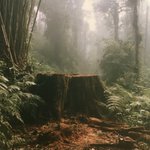




In March 1979, a crew of six men climbed into a ravine outside Aguadas, in Colombia's coffee region, to clear the forest for a new coffee plot. It was a steep, damp slope covered in giant bamboo and ferns, with a creek at the bottom you could hear from the top. In the middle stood a huge, ancient tree, so wide that three men couldn't reach around it.
The old-timers had warned the landowner that nobody touched that tree. That it was the home of the Madremonte, the mother of the forest, the one they call Marimonda on the coast, and that she never forgave anyone who harmed her woods. The foreman, Efraín Ospina, a man who wasn't afraid of anything, laughed about it in front of everyone and cut the tree down himself with the chainsaw.
That same afternoon, around four, Efraín stepped into the brush to relieve himself, about twenty yards from the group. He never came out.
They searched until dark with flashlights and machetes, shouting his name across the ravine. The men who were there always told it the same way: the strange part wasn't that he didn't answer. It was the silence. Not a single animal on the whole slope. No crickets, no frogs, no birds. Just a heavy smell of wet leaves and turned earth, like after a storm, though it hadn't rained.
On the second night, Arnulfo Giraldo, the youngest of the crew, pointed his flashlight up the slope and froze. Among the bamboo stood a figure almost ten feet tall, covered in moss and in roots that hung like hair, its face hidden behind a tangle of branches. Between the branches, two green lights, perfectly still, watching him. It was holding Efraín by the hand. He walked beside it like a child, barefoot, eyes wide open, not blinking.
Arnulfo screamed his name. The figure turned its head toward him, slowly, and the whole forest cracked at once, as if a thousand branches were snapping. The flashlight died in his hand.
Arnulfo ran blindly down the slope. Behind him the bamboo snapped, stalk after stalk, closer and closer, and long branches clawed at his back and wrapped around his neck like fingers. He fell into the creek and ducked under the water, holding his breath, while something enormous stopped on the bank right above him and sniffed the air.
When the others came running, there was no one. Only a thick smell of rotting leaves and, in the mud, enormous footprints that didn't belong to any animal.
On the third day a fourteen-year-old boy found him sitting in the creek, water up to his waist, shaking with fever. His clothes were covered in moss and his arms were scratched by vines. He had no idea how much time had passed. He just kept saying that a very tall woman had led him by the hand through the forest all night, that her face was covered in branches, and that she wouldn't let him sit down to rest.
Efraín never worked again. He spent months in bed and died in 1983, thin and silent, at his sister's house.
Arnulfo stopped talking for months. One morning in 1981 he left his house at dawn, barefoot, heading for the forest, and never came back. His mother said that the night before she had heard him in the hallway talking to someone who answered in a voice like wind through leaves.
They planted coffee in the ravine, but it never grew right. Today it's thick forest again. The men who still work in that area take off their hats before stepping in among the trees and say "excuse me" under their breath. Nobody laughs about it. And nobody goes in alone.


1
36
Antes De Apagar retweeted

Buenas tardes:
A veces pensamos cómo sería el contacto con otra #conciencia dentro del fenómeno OVNI o como algo futuro, cuando ya ha ocurrido en nuestra Tierra y hace mucho tiempo: el encuentro sapiens y neandertal.
🤖 Made with AI
Antes De Apagar retweeted

🚨 ¿Y SI UN BARCO DE GUERRA HUBIERA DESAPARECIDO… Y REAPARECIDO A 600 KILÓMETROS?
Octubre de 1943. La leyenda del #ExperimentoFiladelfia asegura que el #USSEldridge se volvió invisible, fue teletransportado y regresó con una tripulación marcada por el horror.⚡🛸
#Misterios

Proyecto Filadelfia: ¿desapareció el USS Eldridge? | Archivo Oscuro Remake
youtu.be/80QfedF1hRw

Antes De Apagar retweeted

Con esa voz de @Horizonte_Cero uno no puede dejar de escuchar el programa ¡Te recomiendo que escuches este audio de iVoox! Entidades Coexistentes No Identificadas: OVNIs, esferas invisibles y fenómenos inexplicables go.ivoox.com/rf/181726673

Antes De Apagar retweeted
👾 ¿Y si alguien pidió ayuda desde otra galaxia?
Una señal SOS extraterrestre, una nave condenada y un silencio infinito.
Quizá el universo aún guarde mensajes que esperan ser escuchados.
Descubre la historia completa en HorizonteCero 👇
go.ivoox.com/rf/183201775
#Misterios #OVNIS
La Sayona is one of the most feared spirits of the Venezuelan llanos, the vast tropical plains that stretch across Apure, Barinas, Guárico and Portuguesa and on across the Arauca River into Colombia. Kids in Caracas know her name. But the people who really fear her live out on the plains: on the dirt roads between cattle ranches, along the creeks, by the moriche palm swamps, on nights with no moon.
The most common version is about a young woman called Casilda (in some places she's Melisa), married to a good man, with a baby only a few months old. She was as beautiful as she was jealous. She used to bathe in the river, and a man who watched her from the bushes, bitter because she never gave him a second look, told her a lie: her husband was cheating on her. And the other woman was her own mother.
Casilda didn't ask a single question. That night she waited until her husband fell asleep with the baby beside him, and she set fire to their house of mud walls and palm thatch. Then she went to her mother's with a machete. Wounded and dying, the old woman swore it was all a lie, and with her last breath she cursed her daughter: she would wander the roads forever, without rest, punishing men.
The name comes from the saya, the long white gown she appears in. Others say it comes from sayal, the coarse cloth of colonial times, because some versions place her long before the ranches and the highways.
She appears to men who travel alone at night, especially womanizers and men coming home from seeing someone they shouldn't. At first she's a tall, slender, stunning woman with black hair down to her waist, standing by the side of the road. She says good evening and asks him to walk with her. If he's on horseback, the horse panics and no spur will make it go on. If he's on foot, she walks beside him, half a step behind, and he can never quite see her face.
Plainsmen say the first thing you notice is the smell, wet ash and burnt flesh. Then that her feet make no sound. And that the faster the man walks, the closer she gets, until he feels her cold breath on his ear.
When he finally turns around, her face is no longer a face. It's a skull with skin stretched tight over the bone, huge bloodstained teeth and two red eyes glowing like coals. Some versions say she grows taller than the palm trees and lets out a laugh you can hear across the whole savanna.
Some men are found at dawn lying on the road, burning with fever, unable to speak. Others are found dead, without a scratch, their faces twisted. And some are never seen again.
That's why on the plains they say you never give a ride to a woman waiting alone on a road at night. And if you do see her, you pray the Creed without missing a single word, or you curse at her until she leaves, because they say she can't stand either one.
She has relatives all over Latin America: La Llorona in Mexico, La Patasola in Colombia, La Tulivieja in Panama. All of them women who did something unforgivable out of love or jealousy, and were left to wander.
Out on the llanos there are still people who swear they know someone who saw her. It's always an uncle, a compadre, a ranch hand from the next farm over. And the story almost always ends the same way: he swears he never went out at night again, and his wife says that, after that, he didn't need to.


188
Antes De Apagar retweeted
¿Buscan oro bajo #NuevaYork?
🕳️ Los llaman los «Hombres topo»: grupos que se adentran clandestinamente en las alcantarillas de la Gran Manzana en busca de joyas y objetos perdidos.
💰 ¿Leyenda urbana, tesoro oculto o una peligrosa obsesión? #Misterios #enigmas

Antes De Apagar retweeted

Archivo 21: El Cocodrilo del Bronx: Terror Bajo Nueva York #misterioreal #cocodrilo #terrorreal
youtu.be/HoyB9SzYOpE

Antes De Apagar retweeted

#MicroRelatosDeTerror 💀
#ElGuardianDeLosRelatos
#LaNiñaDeLaCurva 😱
Clásica leyenda urbana del folclore Español. O no? 🤔
🕯️🕯️🕯️🕯️🕯️🕯️🕯️

En noviembre de 1984, Julián Mendoza conducía un camión de ganado entre Calabozo y San Fernando de Apure, en los llanos venezolanos. Tenía treinta y dos años, una esposa en Calabozo y fama, en todas las paradas de la ruta, de no volver nunca directo a casa.
La noche del 22 salió tarde de una fiesta en un caserío cerca de Camaguán. Era una carretera recta, sin luz, con la sabana a los dos lados y el olor a monte quemado de la temporada. Pasada la medianoche vio en el arcén a una mujer sola, alta, con un vestido blanco largo y el pelo negro suelto hasta la cintura. Le hizo una seña con la mano.
Julián paró. Ella no subió. Caminó delante del camión, despacio, por el borde de la carretera, y cada tanto se giraba lo justo para que él viera que sonreía, pero nunca lo suficiente para verle bien la cara. Él la siguió a paso de hombre con las luces largas. Luego se bajó y la siguió a pie, porque ella se había metido por un camino de tierra hacia un palmar.
Los llaneros conocen esa historia. Hablan de la Sayona: una mujer que, engañada y loca de celos, quemó su casa con su propia madre dentro, y a la que la madre, antes de morir, maldijo a vagar para siempre detrás de los hombres infieles. Se les aparece hermosa, los lleva lejos y, cuando por fin se da la vuelta, tiene cara de calavera, dientes enormes y ojos de candela.
Julián no se fijó en que las reses habían dejado de mugir en la caja del camión. Ni en que en todo el palmar no cantaba un grillo. Solo cuando ella se paró, de espaldas, a cincuenta metros de la carretera, notó el olor: a ceniza mojada, a casa quemada. Ella se rio bajito, una risa de muchacha. Y se dio la vuelta.
Julián echó a correr hacia las luces del camión, a través del palmar. Detrás de él sonaban unos pasos que no eran de mujer: algo que corría a cuatro patas, rápido, golpeando el suelo con los huesos. La risa le sonaba ya en la nuca, y con ella un aliento caliente que olía a carne quemada. Lo alcanzó a cien metros de la carretera. Lo derribó de un zarpazo en la espalda y lo arrastró por los tobillos, boca abajo, de vuelta hacia la oscuridad, mientras él se agarraba a la tierra con las uñas y la oía decir su nombre, Julián, Julián, con la voz de su esposa.
Uno de los vaqueros de un hato cercano, Ramón Sosa, había salido antes del alba a buscar un becerro y vio el final. Contó que, de lejos, le pareció una muchacha de blanco inclinada sobre un hombre tirado en un caño seco, como cuidándolo. Se acercó al trote. Ella levantó la cabeza.
La cara era una calavera con la piel pegada al hueso, gris, rajada. Tenía los dientes enormes, largos como de caballo, y manchados de sangre. Los ojos eran dos brasas rojas. Lo miró fijamente, soltó una carcajada aguda que espantó a los caballos y se deshizo en la oscuridad como humo, mientras la risa seguía sonando por todo el palmar.
Ramón encontró a Julián boca abajo en el caño, a casi dos kilómetros de la carretera. Estaba vivo. Tenía la camisa hecha tiras, arañazos largos y hondos en la espalda, las uñas arrancadas de tanto agarrarse a la tierra y la mirada fija en el suelo. El camión seguía en la carretera, con las luces encendidas y la puerta abierta. Dos de las reses estaban muertas en la caja, sin una herida.
Julián tardó semanas en volver a hablar. Cuando lo hizo, solo dijo que ella le había susurrado al oído el nombre de cada mujer con la que había estado, una por una, y que la última era su propia esposa.
Dejó la ruta y vendió el camión. Vivió muchos años más en Calabozo, con la misma esposa, sin salir de noche. Los vecinos recuerdan una costumbre suya que nunca explicó: si iba por la calle y oía a una mujer reírse detrás de él, no se volvía. Se paraba en seco, cerraba los ojos y esperaba a que la risa pasara de largo.


In August 1997, Ramiro Salgado had been working as a night watchman for eleven years at a plant nursery in Xochimilco, on the edge of the Cuemanco canal, south of Mexico City. His shift ran from ten at night to six in the morning. He had a tin shack with a bare bulb, a plastic chair, a battery radio and two stray dogs that had decided to live there.
He was a practical man. He laughed at his mother for lighting candles and said the only scary thing on the canals was drunks on the party boats.
On the night of the 14th, a little after three in the morning, he heard a woman crying across the water. Not screaming. A low, worn-out kind of crying, like someone who had been at it for a long time. He figured some girl had been left behind after a party, grabbed his flashlight and walked down to the dock.
The dogs didn't follow him. They crawled under the shack and wouldn't come out.
The beam ran over black water, water lilies, the floating gardens on the other side. Nobody. But the crying went on, and now it sounded closer, as if it were coming from his side of the canal. Then closer still. Ramiro said later that this was the moment he understood: he wasn't hearing anyone's footsteps. Whatever was coming was coming through the water.
He ran down the boards. Beside him the canal churned as if something were swimming along the edge of the dock, matching his speed, and the crying followed him right at his ear, so close he felt an icy breath on the back of his neck that smelled like mud. Something wet grabbed his ankle. He fell flat, kicked himself free and crawled the last few yards to the shack.
He bolted the door. Through the little window, he saw her.
A woman in white, standing on the water, six feet from the dock. Not floating. Standing, as if there were ground beneath her. Her soaked dress clung to a body that was too thin, too long. Black hair covered her whole face and dripped down to her waist. She was crying with her head down.
Then she stopped.
She lifted her face slowly. Through the wet strands Ramiro saw she had no eyes, just two dark holes full of canal water. Her mouth opened far wider than a mouth can open, and out came a scream, "¡Ay, mis hijos!", so loud the bulb in the shack burst.
Ramiro spent the rest of the night in the dark, on his knees, praying what little he remembered. For hours he heard something scraping the tin from outside, back and forth, slowly, looking for a way in.
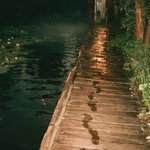
At six his boss found him pale and silent. On the boards of the dock there were wet footprints. Bare feet, small, a woman's. They came out of the canal, went up to the door of the shack, turned around and went back into the water. With the sun already up, they still hadn't dried. The outside of the shack was covered in long scratches, at the height of a face.
That same night, in the Caltongo neighborhood, half a mile away, a woman woke up to find her window open and her two-year-old's crib empty. The sheets were wet and smelled like the canal. They searched the canals and floating gardens for a week. They never found him.
Ramiro quit that week and never went back to Xochimilco. His family says that for the rest of his life, whenever one of his grandchildren cried at night, he was always the first one up to soothe them. He said you had to quiet them fast. In case someone out there heard them and thought they were hers.


Antes De Apagar retweeted
Buenos días:
El #neochamanismo puede ser benificioso, pero siempre está dentro de la fina línea de la charlatanería cuando se convierte en mercancía...¿Estamos preparados para una vuelta a los orígenes en esta sociedad tan dirigida por el beneficio económico?
🤖 Made with AI

La Sayona es uno de los espantos más temidos de los llanos de Venezuela. Se cuenta desde hace generaciones en Apure, Barinas, Guárico y Portuguesa, y también al otro lado del río Arauca, en los llanos de Colombia. La conocen hasta los niños de Caracas, pero donde de verdad se le tiene miedo es en el campo: en los caminos de tierra entre un hato y otro, en las orillas de los caños y en los pasos de los morichales, las noches sin luna.
La versión más repetida habla de una mujer joven llamada Casilda (en otros sitios la llaman Melisa), casada con un hombre bueno y madre de un niño de pocos meses. Era tan hermosa como celosa. Tenía la costumbre de bañarse en el río, y un hombre que la espiaba desde el monte, despechado porque ella nunca le hizo caso, le contó una mentira: que su marido la engañaba. Y que la otra era su propia madre.
Casilda no preguntó nada. Esa noche esperó a que su marido se durmiera con el niño al lado y le prendió fuego a la casa de bahareque y techo de palma. Después fue a casa de su madre con un machete. La vieja, ya herida, le juró que todo era mentira, y antes de morir la maldijo: vagaría para siempre por los caminos, sin descanso, castigando a los hombres.
El nombre viene de la saya, la bata blanca y larga con la que se aparece. Otros dicen que viene del sayal, la tela basta de la época colonial, porque hay versiones que la sitúan mucho antes de los hatos y las carreteras.
Se les aparece a los hombres que andan solos de noche, sobre todo a los mujeriegos y a los que vuelven de ver a otra. Al principio es una mujer alta, delgada y bellísima, con el pelo negro hasta la cintura, de pie a un lado del camino. Saluda y pide que la acompañen. Si el hombre va a caballo, el animal se espanta y no hay espuela que lo haga avanzar. Si va a pie, ella camina a su lado, un paso por detrás, y él nunca consigue verle bien la cara.
Los llaneros dicen que lo primero que se nota es el olor, a ceniza mojada y a carne quemada. Que no hace ruido al pisar. Y que cuanto más aprisa camina el hombre, más cerca la tiene, hasta notarle el aliento frío en la oreja.
Cuando él por fin se gira, la cara ya no es una cara. Es una calavera con la piel pegada al hueso, unos dientes enormes y manchados de sangre y dos ojos rojos que brillan como brasas. Algunas versiones cuentan que crece hasta ser más alta que las palmas y que suelta una carcajada que se oye en toda la sabana.
A unos los encuentran al amanecer tirados en el camino, con fiebre y sin poder hablar. A otros, muertos, sin una herida y con la cara retorcida. Y de algunos no se vuelve a saber nada.
Por eso en el llano se dice que a una mujer que espera sola en un camino de noche no se la recoge. Y que, si uno la ve, hay que rezar el Credo sin equivocarse en ninguna palabra o gritarle groserías hasta que se vaya, porque dicen que no soporta ninguna de las dos cosas.
Tiene parientes en todo el continente: la Llorona en México, la Patasola en Colombia, la Tulivieja en Panamá. Todas son mujeres que hicieron algo imperdonable por amor o por celos y se quedaron vagando.
En el llano todavía hay quien asegura conocer a alguien que la vio. Siempre es un tío, un compadre o un peón de otro hato. Y la historia casi siempre acaba igual: él jura que no volvió a salir de noche, y su mujer dice que desde entonces no hizo falta.


Antes De Apagar retweeted

Nuevo comic de Señales, el numero 6 espero que lo disfrutéis #TikTok vm.tiktok.com/ZN8moLGQf/


Todos los espejos de la casa estaban tapados con sábanas cuando llegué. —Es por tu abuelo —dijo mi madre—. No debe vernos. La sábana del salón se movía desde dentro.
15
Antes De Apagar retweeted

Siempre intentamos que todos aprendemos algo en cada capitulo. Si te ha gustado el inicio de la aventura de Hernán Cortes no te pierdas el final!
Antes De Apagar retweeted
Buenos días:
Una de las posibilidades que explicarían la teóricamente baja prevalencia de las #ECM en la población puede ser que el proceso se olvide: quizá las ECMs sean mucho más frecuentes de lo que se registran, y sea preciso buscar otra manera indirecta de detectarlas.
🤖 Made with AI
Antes De Apagar retweeted
🛸 ¿Un OVNI metálico con púas sobre Massachusetts?
En 1957 se observó un extraño objeto cilíndrico con protuberancias puntiagudas.
Documentos desclasificados del Release 8.
#OVNIs #UAP #ArchivosDesclasificados #Misterio
@revistaANOCERO espaciomisterio.com/ovnis-y-…

Entre los informes desclasificados en los 8º lote está un avistamiento de un objeto metálico y cilíndrico con protuberancias en forma de púas. Fue observado en Massachusetts en 1957 😱 Todas las claves del 'release 8' aquí 👇
espaciomisterio.com/ovnis-y-…
