

Conceptual Wizard | Tech Futurist | Red Panda Adorer | Car Designer for Retrograde Motor Company
Earth
Joined November 2024
- Tweets4.1K
- Following301
- Followers680
- Likes7.6K








John Merritt retweeted

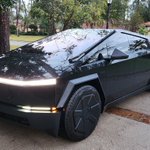
An open offer to Tesla: We fully support putting Cybercab first, and we’d be glad to take the Cybertruck line off your hands.
We’d fund it with a consortium of investors and run it at no cost to Tesla’s floor space, headcount, or focus. All of that goes to Cybercab. Cybercab gets first call on battery cells too. We’ll wait our turn.
Tesla gains incremental profit: a license fee, plus FSD and Robotaxi network revenues on every vehicle built.
We’d build the Cybertruck, a three-row CyberSUV, and an unmanned CyberCargo hauler. More autonomous miles, across every surface of this planet and beyond.
Worth a conversation?
John Merritt retweeted

The Fae Realm is closing its doors soon. 🍂❄️🌸 Brambletooth, Snownip, Foxglove and the whole enchanted crew are waiting to come home with you, and so much more. Our Fae Realm campaign ends Thursday at 10am CT, so this is your last chance to get your Fae Realm.
backerkit.com/c/projects/ten…


John Merritt retweeted

New cat alert! A call from a wildlife sanctuary about a "weird cat" has led to the first new cat species discovered in over 100 years in Bolivia’s Yungas forest ecoregion. Learn more about this feline surprise: on.natgeo.com/JRuaGj

John Merritt retweeted

Chilean photographer Juan Alonso Gutiérrez captures the blood-red eyes of a white-tufted grebe


John Merritt retweeted

Honey, here's some money. Go buy a new purse and some shoes.
"Why? What did you do?"
Can't I just shower my wife with gifts for no reason?
"No. Spill it."
I want to buy a laser defense system for our backyard. It kills mosquitoes.
"..."
I'll take that as a yes, then?

NEW: Photon Matrix built an Iron Dome for mosquitoes.
The Blue Laser Mosquito Air Defense is built for patios, campsites, and outdoor dinners, using sensors to find mosquitoes mid-air and zap them with a visible blue laser.
-Scans a 20-foot, 90-degree field in front of the unit
-Targets flying insects as small as 2 mm
-Uses LiDAR, radar, and AI vision to confirm targets
-Internal aiming system points the laser at the mosquito
-Outdoor kit adds a rotating base for 360-degree coverage
-Runs about 4–5 hours from a power bank
-Blue flash shows when it fires
Pricing starts at $1,088.


John Merritt retweeted

Quick tip: download the open models you care about from Hugging Face as soon as you can. You never know what the next few years may bring.
Keep multiple sizes like:
• Gemma 4 12B
• Qwen3.8-27B
• DeepSeek-V4-Flash
• GLM-5.3 once the weights are released
For each model, keep a GGUF Q4 copy and, when available, an MLX 4-bit copy for Apple Silicon. If you have Blackwell hardware, grab NVFP4 too.
4-bit is a great sweet spot for preserving quality without wasting storage.
Maybe you can’t run the biggest models today. That doesn’t mean you won’t be able to tomorrow.
Keep them somewhere safe. There may come a day when you’ll be very glad you did.

John Merritt retweeted

Wow! This Changes Everything We Thought We Knew About Memory
It is a groundbreaking big deal.
TOU ARE MAKING GENERATIONAL MEMORIES RIGHT NOW IN EACH CELL!
Scientists just found that your brain doesn’t just store memories — it stores the rules for how those memories will change in the future.
A brand-new preprint from Stanford’s Greenleaf and Schnitzer labs (led by PhD student Yuxi Ke) drops a bombshell that feels like science fiction becoming reality overnight.
For decades, neuroscientists have suspected that chromatin the DNA packaging material inside every cell nucleus might somehow “store” memory-related information. But what kind of information? Content? Timing? Rules?
Now we have the answer!
Using activity-dependent genetic tagging, fear conditioning, and single-nucleus multiome sequencing in the mouse medial prefrontal cortex (the brain’s long-term memory vault), the team tracked engram neurons for a full *month* after a memory was formed.
What they discovered is electric:
- One month after encoding, engram neurons have acquired a completely new chromatin landscape.
- These chromatin changes are almost invisible at 7 days… but roar into existence by 28 days.
- At recall, these engram cells don’t just “remember” better — they rewrite their entire transcriptional response.
They preferentially fire up chromatin regulators, RNA processing machinery, and protein-turnover systems instead of simply boosting classic plasticity genes.
In other words: the chromatin doesn’t just hold the memory of the past.
It holds metaplastic instructions— rules that dictate how the neuron will respond the next time the memory is triggered.
They call it chromatin metaplasticity.
This is the “future tense of memory.”
It is a massive deal
1. Memory is not just synapses. For 70+ years we’ve been obsessed with synaptic weights. This work proves the nucleus itself is a computational device that stores history-dependent rules.
2. It explains remote memory. The chromatin signature keeps maturing for weeks after the experience, perfectly matching the time course of systems consolidation into the cortex.
3. It’s energy-efficient genius. Instead of constantly maintaining memory proteins, the cell stores a silent, writable program that only activates when needed. Nature’s version of lazy evaluation.
4. It links development to adult memory. The late chromatin state is enriched for the exact same transcription-factor motifs used in embryonic development. Your adult brain is still running developmental software to lock in lifelong memories.
5. Huge therapeutic potential. If we can read or rewrite these chromatin metaplastic rules, we might one day boost failing remote memories in Alzheimer’s… or selectively dampen traumatic ones.
This isn’t incremental. But a brand new layer of the memory code.
And it explains WHY a person can receive memory from an organ transplant.
It also explains generational traumas.
Link:
biorxiv.org/content/10.64898…
The future of neuroscience just got a lot more exciting and a lot more nuclear.
Your chromatin is writing tomorrow’s memories today.
And we finally have the first page of the instruction manual.

John Merritt retweeted

This skateboard trick may never be eclipsed.
Danny León, a Spanish Olympic skateboarder, set up this shot and landed it during today's eclipse in Spain.
Perfect planning!
John Merritt retweeted

Elon Musk reveals what happens when a rocket launch needs approval from Fish and Wildlife
Elon: "Nonetheless, we were forced to kidnap a seal, strap it to a board, put headphones on the seal and play sonic boom sounds to it to see if it would be distressed."
Elon: "This is an actual thing that happened. This is actually real. I have pictures."
Before the seal, there was a shark.
Elon: "One of the things that was a bit of a challenge at one point is that they were worried about our rocket hitting a shark."
He asked for the data to calculate the odds. They refused, in case shark hunters got hold of it.
Elon: "Then they said, well, there's another part of Fish and Wildlife that can do this analysis. I'm like, well, why don't you give them the data? They don't, we don't trust them. Like, excuse me, but they're literally in your department."
Then a second agency raised whales.
Elon: "If our rocket does hit a whale, which is extremely unlikely beyond all belief, that whale has some seriously bad luck. It's the least lucky whale ever."
The seal test was for launches out of Vandenberg, where the seal population has been rising for years.
Elon: "So if anything, rocket booms are an aphrodisiac based on the evidence."
Elon: "The amazing part is how calm the seal was. Because if I was a seal, I'd be like, this is the end. They're definitely gonna eat me."
Elon: "Its seal buddies are never gonna believe him that he got strapped to a board and they put headphones on his ears."
They did it twice.
Elon: "I don't think the public is quite aware of the madness that goes on."