

Helping EU organisations with effective custom web solutions since 2002. Building https://teapawt.org/t.co/5uitQZT61C to solve web performance monitoring.
Europe
Joined August 2009
- Tweets3.8K
- Following794
- Followers670
- Likes3.3K


Apogee Information Systems retweeted
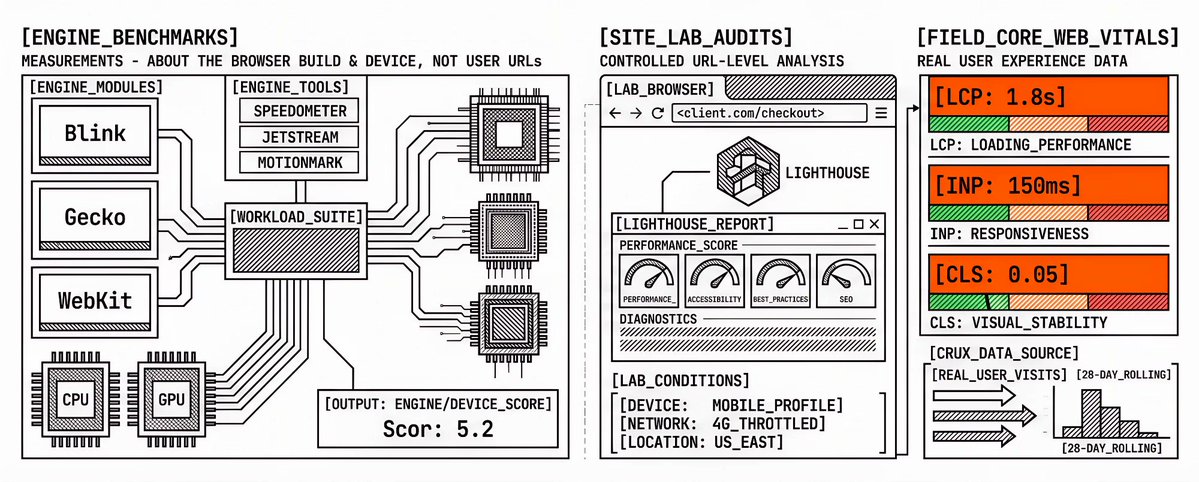
Most teams treat Core Web Vitals like one scoreboard. They run a quick test, pick a single set of numbers, and move on. The same URL can still produce different LCP, INP, and CLS stories on mobile versus desktop because device shows up in how you measure.
We argue for a paired view: mobile and desktop for the same pages, the same cadence, and the same triage rules. Otherwise you ship a desktop fix that leaves mobile failing, or you explain an incident with one device story when the client is looking at the other.
apogeewatcher.com/blog/mobil…


Apogee Information Systems retweeted
A launch checklist and a retainer checklist answer different questions, and most agencies run them as one document.
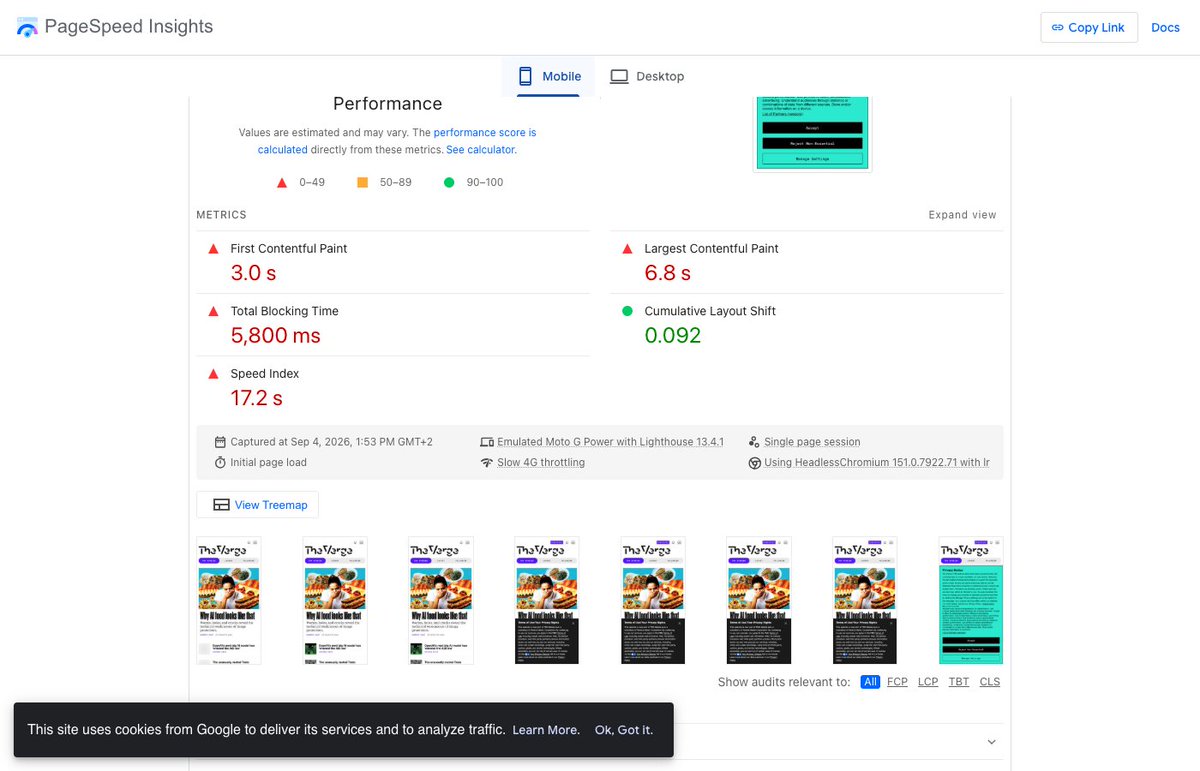
The launch checklist asks: is this site safe to show the client today? Forms work, mobile layout holds, analytics fires once, someone pasted a green-ish PageSpeed Insights score into Slack. That is a ship decision. It is binary, human, and finished when the domain goes live.
The retainer checklist asks: will we notice when it gets worse next month? That one is calendar-shaped. Named URLs, a weekly lab run, field data once CrUX exists, a budget someone can explain, and a named person who reads the first amber week.
AI-built sites widen the gap. A builder session can swap the hero, add a booking widget or switch on a chat script a week after launch. The afternoon QA still passed. LCP and INP moved anyway, and nobody had a before-and-after to compare.
Our handoff is short. Keep the launch list as the ship record. Move three to five URLs (home, conversion path, one volatile template) onto a weekly schedule. Put one plain threshold on each Core Web Vital the client already understands. Make the next scheduled run mandatory reading after any AI session that touches layout, media or third-party scripts.
We wrote the side-by-side, plus the handoff steps and an FAQ, here:
devlog.apogeewatcher.com/lau…


Apogee Information Systems retweeted
Performance alerts that fire for every flaky lab blip train teams to mute the channel. A Slack policy that names severity, owners, and quiet hours is how the route stays useful when LCP or INP actually moves on a money path.
We argue for fewer routes, clearer thresholds, and a written handoff so the night page does not become a museum of ignored pings.
apogeewatcher.com/blog/slack…

A launch checklist and a retainer checklist answer different questions, and most agencies run them as one document.
The launch checklist asks: is this site safe to show the client today? Forms work, mobile layout holds, analytics fires once, someone pasted a green-ish PageSpeed Insights score into Slack. That is a ship decision. It is binary, human, and finished when the domain goes live.
The retainer checklist asks: will we notice when it gets worse next month? That one is calendar-shaped. Named URLs, a weekly lab run, field data once CrUX exists, a budget someone can explain, and a named person who reads the first amber week.
AI-built sites widen the gap. A builder session can swap the hero, add a booking widget or switch on a chat script a week after launch. The afternoon QA still passed. LCP and INP moved anyway, and nobody had a before-and-after to compare.
Our handoff is short. Keep the launch list as the ship record. Move three to five URLs (home, conversion path, one volatile template) onto a weekly schedule. Put one plain threshold on each Core Web Vital the client already understands. Make the next scheduled run mandatory reading after any AI session that touches layout, media or third-party scripts.
We wrote the side-by-side, plus the handoff steps and an FAQ, here:
devlog.apogeewatcher.com/lau…

Apogee Information Systems retweeted
Core Web Vitals are the shared language clients already use when they forward a PageSpeed screenshot. LCP, INP, and CLS are not vanity scores; they name load, interactivity, and layout risk on the URLs that matter.
We still see teams treat a single lab run as the whole story. A practical guide starts with what each metric measures, where field data fits, and how to keep the conversation on outcomes instead of a colour band nobody can act on.
apogeewatcher.com/blog/what-…

Performance alerts that fire for every flaky lab blip train teams to mute the channel. A Slack policy that names severity, owners, and quiet hours is how the route stays useful when LCP or INP actually moves on a money path.
We argue for fewer routes, clearer thresholds, and a written handoff so the night page does not become a museum of ignored pings.
apogeewatcher.com/blog/slack…
Apogee Information Systems retweeted
Agencies already know how to sell a PageSpeed retainer. The harder part is keeping the continuity promise once the portfolio grows past one careful developer.
For years we billed discovery, fixes, and a PDF that proved the homepage looked fine on the day we checked. Clients remembered the artefact. Nobody really owned the calendar. The statement of work said "monitor," and delivery drifted into sporadic PageSpeed Insights pastes when someone remembered.
The tempting product move is a prettier branded audit. That still answers one question on one day. Retainers need a second question: did last month's fix stick after the next plugin update or template ship? A product that only sells the first question leaves the expensive habit inside the agency.
What we productised instead is the continuity job: organisations, sites, discovered pages, scheduled lab runs with CrUX context when Google returns it, budgets, alerts, and shareable domain and organisation reports. Fix work stays human. The product owns history and the schedule so retainer hours go to diagnosis instead of paste-and-screenshot theatre.
We still layer premium RUM on flagship origins when the economics justify it. Multi-tenant PageSpeed monitoring covers the long tail of client hosts without a first-party script on every brochure site.
If you are mid-pivot, list the last ten hours billed under performance and mark which were fixing versus re-running the same URLs. The second pile is usually the better first product.
devlog.apogeewatcher.com/age…


Apogee Information Systems retweeted
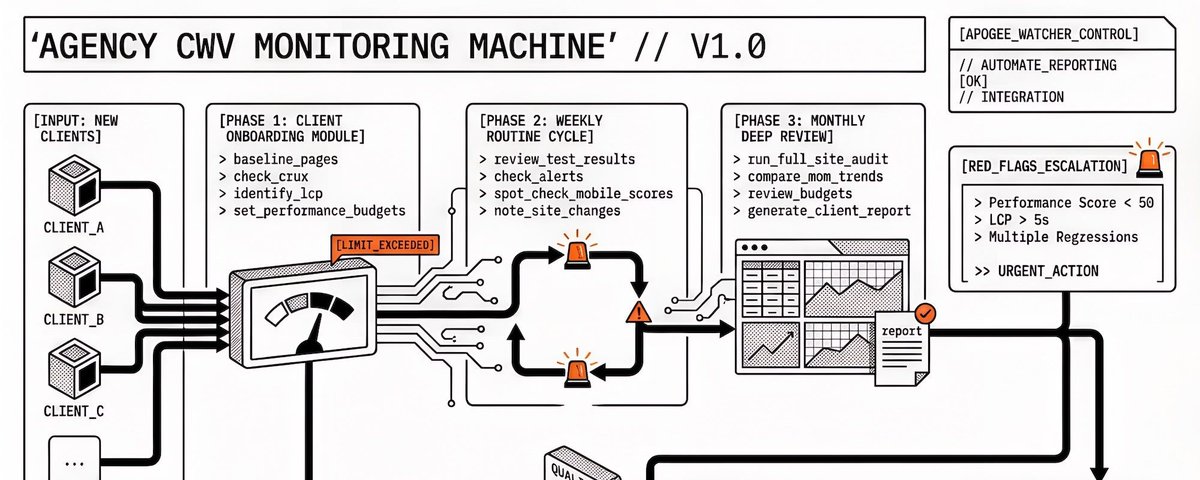
Agency CWV checklists still fail when nobody owns the weekly re-check — worth revisiting this one before Q4 retainers lock.
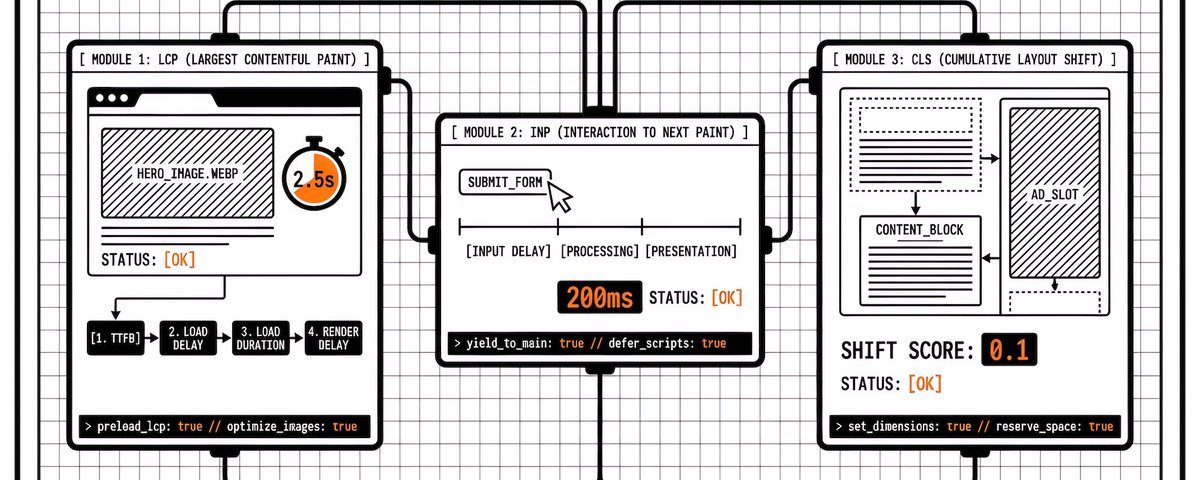
Core Web Vitals are the shared language clients already use when they forward a PageSpeed screenshot. LCP, INP, and CLS are not vanity scores; they name load, interactivity, and layout risk on the URLs that matter.
We still see teams treat a single lab run as the whole story. A practical guide starts with what each metric measures, where field data fits, and how to keep the conversation on outcomes instead of a colour band nobody can act on.
apogeewatcher.com/blog/what-…
Agencies already know how to sell a PageSpeed retainer. The harder part is keeping the continuity promise once the portfolio grows past one careful developer.
For years we billed discovery, fixes, and a PDF that proved the homepage looked fine on the day we checked. Clients remembered the artefact. Nobody really owned the calendar. The statement of work said "monitor," and delivery drifted into sporadic PageSpeed Insights pastes when someone remembered.
The tempting product move is a prettier branded audit. That still answers one question on one day. Retainers need a second question: did last month's fix stick after the next plugin update or template ship? A product that only sells the first question leaves the expensive habit inside the agency.
What we productised instead is the continuity job: organisations, sites, discovered pages, scheduled lab runs with CrUX context when Google returns it, budgets, alerts, and shareable domain and organisation reports. Fix work stays human. The product owns history and the schedule so retainer hours go to diagnosis instead of paste-and-screenshot theatre.
We still layer premium RUM on flagship origins when the economics justify it. Multi-tenant PageSpeed monitoring covers the long tail of client hosts without a first-party script on every brochure site.
If you are mid-pivot, list the last ten hours billed under performance and mark which were fixing versus re-running the same URLs. The second pile is usually the better first product.
devlog.apogeewatcher.com/age…