A Multidisciplinary journal @WileyVCH, leading research in Applications from across all areas of Natural Sciences, Life Sciences, Engineering and more.
Joined November 2020
- Tweets1.8K
- Following217
- Followers456
- Likes5.1K
Pinned Tweet
The October issue of @Appl_Research @WileyVCH is online!
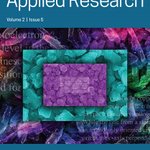
The cover image features how Silk based Hybrid-Antioxidants provide long lasting antiradical protection!
Read the article 👉onlinelibrary.wiley.com/doi/…
Full access issue here⚡️onlinelibrary.wiley.com/toc/…
Dielectric Properties of Pristine and Green-Synthesized Hematite Nanomaterials Vis-A-Vis Their Dependence on Porosity and Particle Size (Ashis Bhattacharjee and co-workers) • onlinelibrary.wiley.com/doi/…
Applied Research retweeted
Ring around the galaxy… Here’s Webb’s stunning new mid-infrared image of M104.
This bright core of the galaxy is dim in this view, revealing a smooth inner disk as well as details of how the clumpy gas in the outer ring is distributed. go.nasa.gov/4i1guEj

ALT Image of a galaxy on the black background of space. The galaxy is a very oblong, blue disk that extends from left to right at an angle (from about 10 o’clock to 5 o’clock). The galaxy has a small bright core at the center. There is an inner disk that is clearer, with speckles of stars scattered throughout. The outer disk of the galaxy is whiteish-blue, and clumpy, like clouds in the sky. There are different colored dots, distant galaxies, speckled among the black background of space surrounding the galaxy.
Accelerating #DrugDiscovery With High-Throughput Crystallographic Fragment Screening and Structural Enablement (Frank von Delft and co-workers) onlinelibrary.wiley.com/doi/…
Perspective on Dual-Tower Concentrated Solar Power Plants (Alberto Boretti) onlinelibrary.wiley.com/doi/…
PEDOT:PSS Electropolymerization Protocol for Microelectrodes Enabling Low-Cost Impedance-Based Cellular Assays (Sven Ingebrandt and co-workers) onlinelibrary.wiley.com/doi/…
How Two-Dimensional Heterocovariance Spectroscopy and Data Fusion Level out the Inadequacies of Compact Spectrometers (Martin Jaeger and co-workers) onlinelibrary.wiley.com/doi/…
Improved Production Process Map and Safety of Millet-Based Fermented Beverage (Emmanuel Boakye Asare and co-workers) onlinelibrary.wiley.com/doi/…
Polyaniline-Doped Textile-Based Triboelectric Nanogenerator: Self-Powered Device for Wearable Electronics (Krishnaveni Sannathammegowda and co-workers) onlinelibrary.wiley.com/doi/…
Applied Research retweeted
🛎️ It's quiz time! This dramatic image of Messier 106 🌌 was the subject of our Picture of the Month in August. The galaxy has a remarkable feature – two ‘anomalous’ extra arms that cannot be seen in visible light!
Design, Synthesis, and Biological Evaluation of Novel Heterocyclic Derivatives of 2,4-Thiazolidine Dione as Anti-Cancer Agents (Jayaprakash Kanijam Raghupathi and co-workers) onlinelibrary.wiley.com/doi/…
The Role of Lactic Fermentation in Ensuring the Safety and Extending the Shelf Life of African Indigenous Vegetables and Its Economic Potential (Irakoze Marie Lys) onlinelibrary.wiley.com/doi/…
Applied Research retweeted
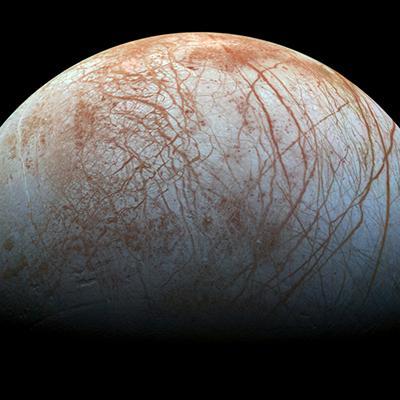
A journey of 1.8 billion miles is about to begin.
All about NASA's #EuropaClipper mission to explore Jupiter's intriguing moon Europa: nasa.gov/europaclipper
Launch is slated for Monday, Oct. 14. Here's how to watch: go.nasa.gov/europaclipperliv…
Applied Research retweeted
🌎 Farewell, Earth! 👋
Last week, after we successfully launched our Hera mission, its instruments were switched on for the first time and the asteroid deck was pointed back towards our planet.
This allowed Hera to capture the first images of Earth and the Moon from a distance of more than one million km!
🔗 esa.int/Space_Safety/Hera/He…
Status Monitoring System of Reciprocating Hydrogen Compressor Based on Hilbert-Huang Transform (Bin Zhao and co-workers) onlinelibrary.wiley.com/doi/…
The HZB F2X-Facility---An Efficient Crystallographic Fragment Screening Platform (Manfred S. Weiss and co-workers) @HzbMxde @HZB_BESSY onlinelibrary.wiley.com/doi/…
Applied Research retweeted
This year’s chemistry laureates Demis Hassabis and John Jumper have developed an AI model, AlphaFold2, to solve a 50-year-old problem: predicting proteins’ complex structures.
Check out two examples of protein structures determined using AlphaFold2. First up, a bacterial enzyme that causes antibiotic resistance. The structure is important for discovering ways of preventing antibiotic resistance.
Animation: ©Terezia Kovalova/The Royal Swedish Academy of Sciences
#NobelPrize
Applied Research retweeted
The 2024 #NobelPrize laureates in physics used tools from physics to construct methods that helped lay the foundation for today’s powerful machine learning.
John Hopfield created a structure that can store and reconstruct information. Geoffrey Hinton invented a method that can independently discover properties in data and which has become important for the large artificial neural networks now in use.
Although computers cannot think, machines can now mimic functions such as memory and learning. This year’s physics laureates have helped make this possible. Using fundamental concepts and methods from physics, they have developed technologies that use structures in networks to process information.
Applied Research retweeted
The 2024 #NobelPrize in Physiology or Medicine focuses on the discovery of a vital regulatory mechanism used in cells to control gene activity. Genetic information flows from DNA to messenger RNA (mRNA), via a process called transcription, and then on to the cellular machinery for protein production. There, mRNAs are translated so that proteins are made according to the genetic instructions stored in DNA. Since the mid-20th century, several of the most fundamental scientific discoveries have explained how these processes work.
In 1993, this year's Nobel Prize laureates published unexpected findings describing a new level of gene regulation, which turned out to be highly significant and conserved throughout evolution. They discovered microRNA, a new class of tiny RNA molecules that play a crucial role in gene regulation.
Read more: bit.ly/4dlPE6f
Applied Research retweeted
BREAKING NEWS
The Royal Swedish Academy of Sciences has decided to award the 2024 #NobelPrize in Physics to John J. Hopfield and Geoffrey E. Hinton “for foundational discoveries and inventions that enable machine learning with artificial neural networks.”