
law risk regulation environment $ psychology & #s co-wrote The Psychology of Environmental Law, Guide to U.S. Environmental Law & Guide to EU Environmental Law
law professor @ IL
Joined November 2012
- Tweets487
- Following346
- Followers368
- Likes1.3K


Pinned Tweet
Awww - I didn’t mean to beg for praise but totally would have if I thought it would work out like this! Thank you so much for the most amazing experience writing legal publication #1 & for all the lovely ideas, inspiration & encouragement in the years since ❤️❤️❤️

Arden Rowell retweeted

We often see nature as an absolute good that must be protected from human influence. But this mindset is dangerous, argues @ArdenRowell, leading us to focus only on how our projects might degrade the environment, not how they might improve it. iai.tv/articles/natures-not-…

Loper Bright (LB) has the potential to change the structure of power in the U.S. Is that good or bad? Depends on who you are, where you think power should be + what you think of disruptive change.
A day-of-opinion 🧵about who/what could stop the change (= Congress/lower courts) + what this means for the President, agencies, OIRA, businesses & the public.
THE PUBLIC has an interest in how businesses do, how effectively & efficiently agencies operate + in whether the country has a good and stable power structure. The public has no direct control over what SCOTUS/federal courts do--the Constitution purposefully insulates judges from democratic accountability. But the public can let Congress know what they think.
More subtly, the public can sometimes bring suit to challenge agency action. This may matter especially in cases where the agency is strategically abandoning a prior interpretation, or where varying standards in circuits’ “independent judgment” mean that bringing suit in one circuit locks in a preferred interpretation.
We can ask and (hopefully eventually) answer questions we just didn’t realize mattered before we took off our blinders.

In the real world, though, environmental law already saves hundreds of thousands of lives every year—and that’s with one hand tied behind its back. I’m hopeful and excited to see what it can do with all hands on deck.

If you liked this thread, you might like my new favorite article of mine, which just came out – it’s called Indoor Environmental Law. It’s text-only, but I think still fun (?)! rb.gy/dsslda
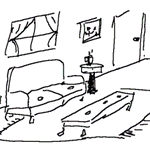
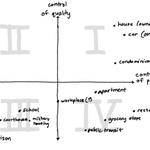
Suddenly we can identify indoor environmental externalities. We can start thinking about how people can get the info they need to make choices even in places they control, or whether the way (esp. uncontrollable) indoor environmental risks are distributed is fair or just.
Suddenly all the questions people have learned to ask about outdoor environments can be used to interrogate indoor environments too. In law, this means we can ask things like: If there is a human or constitutional right to a clean environment,
