

high performance computing researcher
Travelling
Joined March 2013
- Tweets131
- Following104
- Followers311
- Likes119







i wanted to buy some socks today, but the socks i want are only in stock in Kazakhstan, so now i am ordering the socks from Kazakhstan. this will be the first time i purchase something from Kazakhstan.
52
working on sub-10 µs JIT compilation today (copy-and-patch method). seems very effective, getting within 10% of hand-fused kernel throughput with just regalloc stencils and region splitting where spills would be forced
2
102
i gave my old phone to a security guard in Kenya so he could sell it, and then he sold it, quit his job (which was paying just $2/day), and used the capital to start a business selling women's shoes. the bananas in his village taste much better than supermarket bananas
50
tackling hashtable branch misprediction this evening
key: 100% hit / 50% hit / 100% miss, million QPS
mine: 1035.4 / 144.5 / 922.7
abseil: 710.9 / 162.0 / 864.8
boost: 794.1 / 155.4 / 650.6
hopefully I can get to 180M/s tonight
1
2
204
update: it was easy. increased 50% hit performance from 145 QPS to 380M QPS, more than double the query throughput of the next fastest hashtable on this pathological case
1
87

You don't need a storage device for this. Beams of light can both transmit and hold data (a delay line). 1/

Memory cost and capacity are significant issues for AI accelerators.
Unlike game rendering, model inference can have a deterministic memory access pattern. You don’t need “random access memory” at all for model weights, and you could tolerate cold-start latencies in the multiple milliseconds, as long as continuous reads were delivered at the necessary bandwidth.
NAND flash is over 100 times cheaper per GB than HBM, so there should be opportunity there, even after giving a flash controller a 1024 bit interface with HBM bandwidth.
You could make a specialized pin protocol that just supported pipelined transfer of full 16KB+ pages from the flash to program-managed accelerator scratchpad memory and improve per-pin performance over HBM, but it might be more convenient to make it still look like a true random access memory with very fragile performance characteristics, where anything but sequential reads falls off a 1000x+ performance cliff.
That has the advantage of automatically using existing cache hierarchies, and providing a natural path to update the flash memory with new model weights. With the stream-to-scratch interface, code has to be completely rewritten before it works at all, while the ram-emulation interface will start off just extremely slow, and you can incrementally sort out the changes for full performance.
There may be cases where there isn’t enough scratchpad SRAM to hold the weights for a layer, which might force you to deploy the old optical drive optimization technique of duplicating data in multiple places on a sequential read to avoid seeking, but there would be capacity to burn.
It might be possible to do something like cuda graph capture to record a memory access trace and have everything magically remapped to a linear sequence, but deploying programmer / agent elbow grease to manage transfers and access in a scratch ram ring buffer would be lower risk.
A split memory system consisting of some channels of flash and some channels of HBM will probably be suboptimal compared to a uniform memory, but it could be much cheaper, and allow much larger models to be run.
I think th case is strong for inference, but you have to stretch more for training. You can still linearize all the weight memory accesses, both reads and writes, but flash memory would quickly wear out from the writes, even if they were all perfectly page aligned. Replacing low-latency HBM with massively parallel cheap(er) DRAM at high latency might still be a worthwhile cost savings.
1
1
1,025
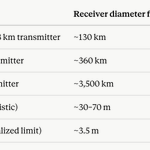
Downside: diffraction costs ~15 dB/hop, so the stream needs full regeneration every ~20 hops to circulate indefinitely. That puts maintenance at ~6 W/GB. DRAM is 0.02. Terrible storage, but if every node reads every pass you land in the same power consumption ballpark as HBM. 3/3
1
83
Ashton Six retweeted

Welcome to my new followers! Here is representative high grade parallel programming content.
…and if anyone knows how best to configure a kernel to completely occupy a GPU without “spilling over,” please reply with your thoughts!

Theme I’ve noticed: the gap between grid-stride loops (# of blocks tied to hardware) and single iteration kernels (# of blocks tied to problem size) keeps increasing with each generation. Adding a grid-stride loop on Tesla or Ampere can actually cause throughput regressions!
I haven’t quite figured out what hardware changes are expanding this gap: none of the explanations I can get from AI models feel plausible.
Anyway, the upshot is that for multi-stage kernels: on older arch multiple kernel launches work better, on newer arch a single kernel launch with cooperative grid works better.
Boolean function search ~1000x faster than SAT baseline (reuse of intermediate states while solving many functions at once), AND first instruction-count-optimal solver for real software ISAs (NEON+SHA3 yields best results):
github.com/ashtonsix/perf-po…

20 GB/s prefix sum (2.6x faster than FastPFoR baseline) github.com/ashtonsix/perf-po…
15
5,877
86 GB/s bitpacking with NEON (2.0x previous SOTA): github.com/ashtonsix/perf-po…
1
9
4,807


