

Economist in MMT & ecological macro, completing a M. Economics of Sustainability. On a crusade for economic enlightenment, even experts can’t resist my wit.
Wiradjuri Country
Joined December 2010
- Tweets53.8K
- Following557
- Followers2.9K
- Likes2.8K





Pinned Tweet
Richard Murphy’s rejection of the Job Guarantee is a profound category error.
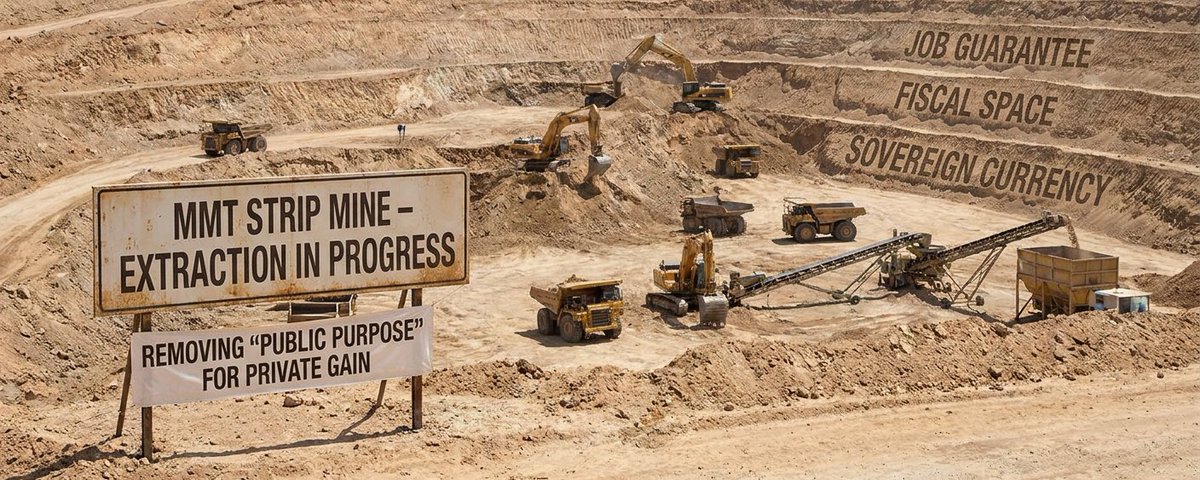
By stripping the JG out of MMT, we allow the establishment to extract the "fiscal space" while leaving the NAIRU intact.
We cannot let MMT be strip-mined. Here is why: 👇
teapawt.org/AusMMT/status/20591387…

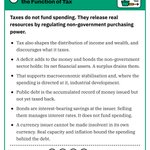
Week one, in one line: the Commonwealth doesn't need your tax dollars to spend, because your tax dollars came from its spending in the first place. #MMT
The household analogy fails not at the margins but at the premise.
Next: what actually happens when Canberra spends.
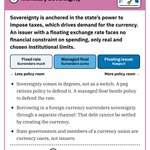
So why tax at all? Four reasons, none of them funding. #MMT
It creates demand for the currency.
It withdraws spending power when the economy is running hot.
It reshapes distribution.
And it discourages things we want less of. Those are real jobs.
"Raising revenue" isn't one.
The remedy: Close the channel that binds, through industrial policy, import substitution, deeper domestic-currency markets and managed private debt, not austerity. Connected entries: 1, 3, 6 and 7.
Physical: Imported food, energy or critical inputs. Financial: Foreign-currency debt, reliance on foreign capital, private debt a falling currency makes harder to service, weak institutional credibility. These limit policy space, not the issuer's ability to pay.
For an issuer, a trade deficit means receiving physical wealth, at the time of the trade, for digital keystrokes. Growth capped by export earnings describes a fixed exchange rate, not a floating issuer. Vulnerability channels, alone or compounding.
#MMT Card 8 of 12, External Sector and Policy Space.
For monetary sovereigns, external deficits are not inherently constraining. Persistent imbalances may signal structural issues. Points: Exports are real costs. Imports are real benefits.

The Job Guarantee supplies the structural anchor, so unemployment does not have to serve as the buffer.
Communication, social dialogue and targeted interventions are often crucial.
Connected entries: 6, 8, 9 and 11. 4/4
Genuine excess demand: Taxation or spending restraint. Points: Raising the policy interest rate, the orthodox default, faces the same test rather than being assumed: What is driving prices, and who pays? 3/4
Bottlenecks: Targeted spending, capacity building. Market power: Competition and price regulation. Lending-fuelled bubbles: Credit controls. Distributional conflict: Negotiated incomes arrangements. A falling currency: Import substitution. 2/4
#mmt Card 7 of 12, Inflation Management: Plural Tools. Combine fiscal, regulatory, industrial-policy and institutional tools, coordinated to the specific drivers and their distributional impacts. Match the tool to the diagnosis. A table pairs each driver with a tool. 1/4

Then: Who carries the cost of a fix, and whose interest is served by calling a price rise "the problem"?
Connected entries: 2, 4, 7, 8 and 10.
Common mechanisms, shown as labels: Demand pressing on capacity. Supply bottlenecks. Market-power mark-ups. Wage–profit conflict. Import prices after a currency falls. Points: First question: Which mechanism is binding? Each calls for a different remedy.
#MMT Card 6 of 12,
Inflation: Multi-Causal and Contextual.
Icon: A thermometer and a magnifying glass. Inflation has multiple, interacting causes and distributional impacts. Measurement is imperfect and context-dependent: It needs plural indicators and careful diagnosis.
