

Austral Ecology publishes original papers describing experimental, observational or theoretical studies on terrestrial, marine or freshwater systems.
ecolsoc.org.au
Joined April 2017
- Tweets2.1K
- Following684
- Followers2.1K
- Likes50
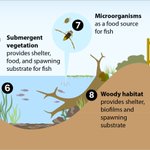




With freshwater fish facing global extinction risks, this #AustralEcology study finds semi-artificial farm dams can serve as refuge habitats for threatened species like the southern pygmy perch. @EcolSocAus @WileyEcolEvol
bit.ly/3Uwz5Ox


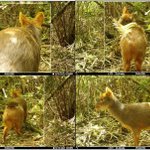
El uso de pelo de mamíferos por aves es bien conocido, pero la cleptotriquia,arrancar pelo de animals vivos, se reporta raramente! Lee más sobre este comportamiento captado por una cámara trampa en Chile. bit.ly/4e3DL5r #AustralEcology @EcolSocAus @WileyEcolEvol

#NaturalHistoryNote: Birds using mammal hair for nests is well-known, but kleptotrichy—hair plucking from live animals—is rarely reported! Read more about this behaviour captured in a camera trap in Chile. bit.ly/4e3DL5r #AustralEcology @EcolSocAus @WileyEcolEvol

In coastal plains of the Atlantic Forest, tadpole communities in ponds with lower environmental complexity show more closely related species than expected by chance, creating a clustering structure. #AustralEcology @EcolSocAus @WileyEcolEvol bit.ly/40hzSX9

In the Amazon, dung beetle perching dynamics vary by species and body size. Larger individuals perch higher, but leaf area also influences perch height. #AustralEcology @EcolSocAus @WileyEcolEvol bit.ly/3TRemVk 📸:Guillaume Delaitre

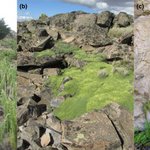
Los pastizales saxícolas en Patagonia actúan como refugios para plantas adaptadas al frío, con alta diversidad en una pequeña área. Es vital proteger estos ecosistemas del fuego, invasiones biológicas y pastoreo @EcolSocAus @WileyEcolEvol #AustralEcology bit.ly/3Zz9o2W

New in #AustralEcology: Saxicolous meadows in Patagonia act as refugia for cold-adapted plants, with high species diversity despite their small area. It is vital to protect these unique ecosystems from fire, invasions and grazing @EcolSocAus @WileyEcolEvol bit.ly/3Zz9o2W

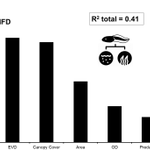
Spatial and temporal population trends pre- and post-predator exclosure fencing establishment in semi-arid Western Australia reveals minimal net negative to positive impact on small native non-target vertebrate species. @EcolSocAus @WileyEcolEvol bit.ly/3Yh2hdc

New comic in #AustralEcology now available on: bit.ly/40euynm
@EcolSocAus @WileyEcolEvol
comic drawn by Claire Duncan
read the #OpenAccess paper here: bit.ly/4d5YsgA

Artículo revela amenazas de atropellos en el Chaco paraguayo.En 15 meses se registraron 2338 cadáveres de 87 especies. Es urgente implementar estrategias de mitigación específicas para mamíferos, aves y reptiles @EcolSocAus @WileyEcolEvol #AustralEcology bit.ly/3TPGR5L

New #AustralEcology study reveals roadkill threats in Paraguay's Chaco. Over 15 months, 2338 carcasses from 87 species were found on a 250km road. Urgent need for targeted mitigation strategies for mammals, birds, and reptiles. @EcolSocAus @WileyEcolEvol
bit.ly/3TPGR5L

The resilience of restored and remnant habitats is being reduced by Australia’s ever changing climate, challenging scientists to think of practical (and effective) solutions for building resilience. @Ecotrails @WileyEcolEvol @EcolSocAus
Explore further: bit.ly/3MR1Cuo
Nova nota de #HistóriaNatural em #AustralEcology revela Didelphis albiventris (gambá) consumindo néctar de uma árvore polinizada por morcegos na Caatinga brasileira. Será que os gambás são polinizadores noturnos importantes? @EcolSocAus @WileyEcolEvol
bit.ly/4d2pANq
New #NaturalHistory note in #AustralEcology finds Didelphis albiventris (opossum) consuming nectar from Hymenaea cangaceira, a bat-pollinated tree in Brazil's Caatinga. Could opossums be key nocturnal pollinators? @EcolSocAus @WileyEcolEvol
Read more: bit.ly/4d2pANq


Prescribed burning is frequently used in savanna vegetation in Australia and worldwide. An experiment was established to test for non-target impacts of prescribed burning on herbaceous vegetation. bit.ly/4dO2Em9 @WileyEcolEvol @EcolSocAus

Brushtail possums are becoming recognised as key clean-up-crew members for local carcasses in Australia. We explore how widespread possum scavenging on carrion varies based on bioregion, habitat, and season. @Patt_Finnerty @EcolSocAus @WileyEcolEvol bit.ly/3YbYb7t

Nuevo artículo en #AustralEcology que explora la distribución de tamaños y proporciones de etapas de las especies de Cyrtograpsus en Playa Cangrejales, Argentina. 🦀
@OnoratoAnd64054
@EcolSocAus @WileyEcolEvol
Más información: bit.ly/3X2U0co

Exploring the size distribution and stage proportions of Cyrtograpsus species in Playa Cangrejales, Argentina. 🦀 @OnoratoAnd64054 #AustralEcology @EcolSocAus @WileyEcolEvol
Read more: bit.ly/3X2U0co


New records show Peru's endemic Black Metaltail using both pollination & nectar robbing, with robbing tied to longer corolla flowers. 36% of foraging events were nectar robbing. #CitizenScience #AustralEcology @EcolSocAus @WileyEcolEvol @Ecamerlenghi
bit.ly/4d5YsgA

#NaturalHistory note: Fifty percent of male northern quolls survived into their 2nd year in a Pilbara population, likely due to reduced breeding stress & increased rainfall 🌧️. #AustralEcology @EcolSocAus @WileyEcolEvol
@CowanMitch
Read more: bit.ly/4edor77
