

Pilot ✈️ | IA Mechanic 🛠️ | Aircraft Owner 🛩️ | Entrepreneur 🚀 Web + AI Developer 💻 | #AviationLife
Chicago, Illinois, USA
Joined July 2010
- Tweets44.1K
- Following51.2K
- Followers66.2K
- Likes2.2K




JackG retweeted

Breaking - Three killed in a midair collision involving two helicopters in Oregon. Accident occured near near McMinnville Municipal Airport, involving an H125 (N704RH) - 1 person aboard and a Robinson R22 (pilot and pax aboard). @aero_in
JackG retweeted

Landing here looks dangerous mainly because nothing separates this aircraft from everything else. The strip is a wide patch of bare dirt with no fence, no markings and no visible boundary. In the first frames, people are standing and walking close to the edge of the cleared ground, and houses and market-style tents sit just past it. A twin-engine turboprop moving at landing or takeoff speed covers that distance in seconds. If one person, child or animal wandered onto the surface at the wrong moment, the pilot would have almost no time to react and the consequences can be deadly!


JackG retweeted

Was disappointed the sun didn’t break through. But some engine fogging made up for it a bit on this Cathay Retro departing Manchester this morning airplane-pictures.net/photo/…

JackG retweeted
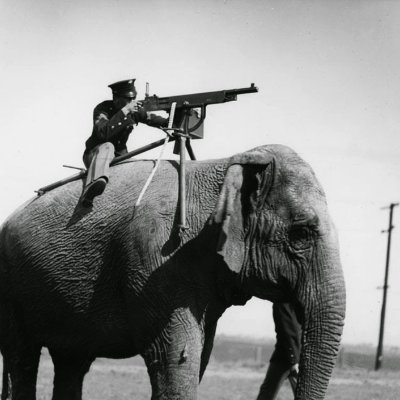
Footage of the moment an Italian Ch-47 Chinook crashed during an EUFOR training exercise in Gorice, Bosnia.
JackG retweeted

I checked FlightAware this morning and spotted the flight plan had been filed for the NASA aircraft, so naturally, we raced over to the base to catch their takeoffs!
Listen to those engines on the NASA X-59 QueSST as it takes off! 😍😍😍
She is on her way to Birmingham now.
@NASAAdmin @johnkrausphotos @TheAviationist @thenewarea51
JackG retweeted

WATCH: New CCTV video of the Westjet Boeing 737 Max 8 hitting a food catering truck at Toronto-Pearson International Airport on Tuesday.
JackG retweeted
As you may have noticed, NASA is my first love when it comes to aviation, and that will always be true. So catching the X-59 QueSST at NAS JRB Fort Worth today is something extremely special. This is my first time catching an X-plane!
The X-59 is an experimental aircraft developed by Lockheed Martin Skunk Works for NASA to test quiet sonic booms. It completed its first flight on October 28, 2025, making today the one-year anniversary of its first flight. How fitting to catch it on such a special day!
@rookisaacman @NASAAdmin @LockheedMartin
JackG retweeted

After a $1 billion renovation, the National Air and Space Museum's final two exhibit halls will reopen this Friday and on Veterans Day, with a gallery on Space and a gallery on Modern Military Aviation. I took a sneak peek today.


JackG retweeted

We generally don’t do static takeoffs. Under certain wind conditions, it can be a problem for the engines to sit still at high power.
As the post explains, we sometimes do it to shed ice from the fan blades. In other conditions, I might run up the engines as I’m holding on the runway & anticipating takeoff clearance, but only to about 40%.
The usual procedure is to release the brakes, run up the engines to 40% (which will start rolling the jet forward), check that they made it to 40% & that all indications are good (fuel flow, exhaust gas temperature – better known as EGT – oil pressure, vibration) then push the throttles forward. Once they are standing up at about the 12 o’clock position, engage the autothrottles & let them push the throttles the rest of the way forward.
When they get to your thrust setting, the pilot flying calls “check thrust”. The pilot monitoring checks the engines again & verifies that the thrust is at or above the setting calculated & replies “thrust set” if all is good. Sometimes the autothrottles slip a little & don’t make it all the way to your calculated setting; if so, the pilot monitoring just moves them up manually.
The post also explains that we almost never use all the thrust the engines can produce…we aren’t jamming the throttles all the way forward. Instead, we calculate a “de-rated” or “reduced thrust” setting for the conditions & runway. This saves wear & tear on the engines & airlines often get a discount on maintenance for doing so. It might sound counterintuitive, but I also like to think it’s safer, as running an engine as hard as it will go could damage it & that’s not a good time to damage an engine.
We always have the option to push the throttles all the way forward, though, if something doesn’t look right. In addition, there are some scenarios we won’t use a reduced thrust setting, such as very gusty winds or the possibility of windshear. We want all the power to punch through any sudden loss of airspeed. On some short runways, the pilots might elect to do a static takeoff, but it’s not required.
On reaching a certain altitude, the thrust setting will automatically change again & the autothrottles will adjust. It’s usually a thrust reduction to help noise abatement, but it can be an increase in some situations.
Oh, and I’m aware I’ve used the word “throttles” here, but they are more correctly referred to as “thrust levers” now. I don’t really know why, sorry, but that was new to me when I got to the airline world…the military called them throttles.

This is a static takeoff or rather, a combat-style takeoff, on a commercial flight which is something you need to get off your bucket list. Your takeoff will feel like a sports car launch!
A static takeoff involves aligning the aircraft on the runway, holding the brakes, and increasing engine thrust before releasing the brakes and beginning the takeoff roll.
On the Boeing 737NG, there are specific procedures for operating in icing conditions. A static engine run-up may be required to shed ice from the engine fan blades and spinners before takeoff.
A normal static takeoff isn't necessarily a full-power launch. On many jets, pilots stabilise engine thrust at an intermediate setting, often around 40% N1, before releasing the brakes and advancing to takeoff thrust. This helps ensure the engines accelerate smoothly and symmetrically, and can reduce the runway distance used during the thrust-setting phase.
The exact procedure varies by aircraft type, engine and operating conditions. In icing conditions, specific procedures may also require a timed run-up at higher thrust settings to shed accumulated ice.
Video clip via Ollies aviation based at Bristol Airport.
JackG retweeted

VISUALS FROM HOUSTON IAH: Black smoke was seen rising over George Bush Intercontinental Airport (IAH) following a fire in Terminal C North.
What We Know:
• Cause: United Airlines and local authorities confirmed the fire originated as a kitchen grease fire at a Terminal C restaurant.
• Response: Houston Fire Department crews responded quickly to bring the blaze under control. Passengers in the immediate vicinity were relocated as a safety precaution.
• Injuries: No injuries have been reported.
• Flight Operations: Flights in other terminals continue to operate normally. United Airlines travelers flying through IAH should double-check their gate assignments, as some flights may shift gates due to the temporary terminal impact.
#airport #airlines
JackG retweeted

The @NTSB has highlighted a lack of situational awareness during a night takeoff from a rooftop helipad as a causal factor in the May 13 crash of a medevac helicopter in Dallas. vist.ly/5q9sc
#helicoptercrash #dallas #texas #aviation
JackG retweeted
Second time lucky? An ATR 42 comes back for another try at Glasgow after its first approach didn’t work out in the strong winds. Look at how much this thing is getting shoved around. The nose is pointed into the wind, the wings keep rocking, and the pilots are trying to keep it lined up with the runway. A small turboprop gets thrown around by every gust way more than a big jet, so the crew are earning their pay here.
🎥 Caledoniaspotting

JackG retweeted

🚨 JUST IN: A United flight from Las Vegas to Newark was forced to turn around mid-air after a flight attendant spotted a passenger texting that he was going to HIJACK the aircraft.
25-year-old Dante Milne of Clifton, NJ, allegedly wrote he was “gonna hijack this” plane and would “crash ur row only.”
The crew locked down the cockpit and returned to Vegas without him even knowing anything was happening. He was arrested on terrorism threat charges… then promptly posted his $10,000 bond.
He’s due back in court TODAY.
JackG retweeted

FAA just made horizontal stabilizer freeplay checks mandatory on 1,987 US-registered 737 NGs.
AD 2026-20-14 covers the -600, -700, -700C, -800, -900 and -900ER that are listed in the Boeing bulletin from June 2025. MAX is not included. Effective 23 November 2026.
It came from multiple operators reporting pitch oscillations caused by excessive freeplay. The work is measuring the left and right pivot hinges and the jackscrew, then doing whatever the result requires... more measurements, repair, or replacing worn parts.
FAA says if you don’t address it the condition can lead to a flutter event that can result in loss of control. Cost estimate is six work-hours or $510 per aircraft, not counting parts. Canadian North asked for a longer first interval and United asked for longer repeats after new parts. Both were rejected.
No grounding. Just the measurements and whatever follows. Other regulators will decide for non-US planes. Over 5,000 NGs are still active worldwide.
It’s a straightforward measurement job once you have the airplane and the tools.
JackG retweeted

On Saturday , I took my son plane spotting at HNL. He wanted photos of a unique Australian firefighting aircraft parked at Signature Aviation.
We were in a public parking spot, and my son was taking pictures through the fence.
As we started driving away, a Signature employee waved us down.
Employee: “Why are you taking pictures of that airplane?”
Me: “Because it’s a pretty unique aircraft.”
Employee: “You’re not allowed to take pictures of Signature property.”
Me: “You do realize we’re on public property, right? And we can legally photograph what’s visible from public property?”
Employee: “NO! You’re not allowed!”
Me: “Sorry, but you’re misinformed.”
Then came the best part.
Me: “Would you like a picture of my license plate for your records?”
Employee: “I already took pictures of your vehicle and license plate.”
Me: “Cool! Well, I’ll be back another day to take more pictures. Have a nice day!”
Imagine being so concerned about a kid taking airplane pictures that you photograph their vehicle and license plate.
It’s called plane spotting, not espionage. 😂

