

Nothing has ever been found of irreducible complexity
United Kingdom
Joined April 2016
- Tweets3.8K
- Following17
- Followers9.9K
- Likes108


Erwin Schrödinger was an Austrian theoretical physicist who won the Nobel Prize for his contribution to quantum mechanics. He developed a fundamental equation that describes how particles, such as electrons, can behave like waves and how their quantum states change over time

28
White dwarfs, stellar core remnants composed of electron-degenerate matter, emit stored thermal energy, gradually cooling down to eventually become a black dwarf over a period longer than the current age of the universe; therefore, there are no black dwarfs in the universe yet

The higher a photon's frequency, the greater its energy. The energy of photons in blue light (750 terahertz) is greater than that in red light (430 terahertz)

In our Solar System, all eight planets orbit the Sun in the same direction as the Sun's rotation. This is because the Sun and planets formed from the same enormous cloud of gas and dust

55
Entanglement is the mysterious phenomenon in which 2 particles are able to communicate their quantum state to each other instantaneously, no matter how far apart they are. There is plenty of evidence that this happens, but we don't know why

39
About four and a half billion years ago, our Solar System formed from a huge cloud of dust left over from a supernova explosion

62
Quantum Electrodynamics (QED) is the quantum theory combining Quantum mechanics and Special Relativity that explains how light and matter interact. It describes how electrically charged particles, such as electrons, interact with one another through the exchange of photons

1
47
Our Sun is 109 times wider than the Earth, 330,000 times as massive, and its volume is 1.3 million times that of Earth

Marie Curie was the first person, and so far the only one, to be awarded the Nobel Prize twice: 1903 Physics, 1911 Chemistry

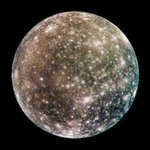
Callisto, Jupiter’s second-largest moon, nearly the size of Mercury, was discovered in 1610 by Galileo Galilei

109
The neutrino is an elementary subatomic particle first postulated in 1930 by Austrian physicist Wolfgang Pauli to explain the apparent missing energy in radioactive beta decay. It was not until 1956, 26 years later, that the neutrino was experimentally detected for the first time

35
Our Milky Way moves through space at about 2 million km/h with respect to the Cosmic Microwave Background. Relative to the Andromeda Galaxy, we are approaching each other at approximately 396,000 km/h

1
80
The far side of the Moon is much more heavily cratered and has a thicker crust than the near side. This is the result of early thermal history, tidal forces, and a unique chemical asymmetry

55
Most galaxies around us emit red-shifted light because they are moving away from us; however, Andromeda emits blue-shifted light because it is on a collision course with the Milky Way

42
The Hubble tension is one of the biggest unresolved problems in modern cosmology. It refers to a puzzling disagreement between measuring how quickly galaxies are receding and calculating what the expansion rate today should be based on the Cosmic Microwave Background

37
Pluto and Neptune swap their order in terms of distance from the Sun. Pluto can be closer to the Sun than Neptune for about 20 years at a time. The most recent such period began in 1979 and ended in 1999

62
In 2011, Saul Perlmutter, Brian P. Schmidt, and Adam G. Riess won the Nobel Prize in Physics for the discovery of the accelerating expansion of the Universe

1
52
Mars has two natural moons: Phobos and Deimos. Both are relatively small (22 km and 12 km in average diameter, respectively) and are irregularly shaped objects, quite different from Earth's large, nearly spherical Moon

41
The atomic nucleus was experimentally discovered in 1911 by New Zealand-born British physicist Ernest Rutherford, 14 years after the discovery of the electron

55
