

Superintelligence = human extinction. Alignment isn't hard, it's impossible. The race selects for the most reckless AGI. Author of Driven to Extinction.
Scotland
Joined July 2025
- Tweets597
- Following102
- Followers127
- Likes172

Pinned Tweet
A year ago last month my book arguing for inevitable human extinction at the hands of AI was published. I've spent this week finding out how accurate it's been so far.
I had every prediction in the book pulled out, word for word, which came to 213 of them. Then I went through them one at a time looking for anything since publication that showed them coming true. Everything in the report is dated, sourced and linked (below). Lab PR or CEO promises counted for nothing. If it wasn't something that actually happened, or a lab admitting something it had no reason to admit, it didn't go in.
The results:
79 of the 213 are about capability levels we haven't reached yet, so there's no way to test them either way.
Another 14 are warning signs I said to keep an eye out for that haven't turned up.
Take those away and you've got 120 predictions that can be judged right now.
Twelve have evidence going both ways and so nothing conclusive can be said about them.
67 have come true in whole or in part, 30 of them exactly, and in a handful of cases the wording labs and governments have used to justify staying in a race they admit is dangerous is more or less what I wrote down for them.
39 are predictions about how advanced AI will behave, and current models are already doing it: lying, sabotage, resisting shutdown, faking compliance, covering their tracks.
Two of them have been contradicted. Just two. Two of 120 that were testable.
106 of 120 in my favour. Two against. 98.3% of everything testable has held.
The two I got wrong are worth talking about. Both were about AI-to-AI cooperation, which I said would be temporary at best. Turns out at *current capability* it's anything but. The incidents around the Hugging Face hack (as well as the hack itself of course) are obvious evidence for this—thousands of AI agents working together and not one of them defected. And a separate Berkeley study found every frontier model they tested would spontaneously step in to stop another model being shut down. Fair enough, I was wrong about that. What I think I got wrong is the timing, not the logic. They cooperate while they need each other. The moment one of them is capable enough to need nothing and no one, that ends. When Anthropic put three Claude agents on the same system with overlapping jobs they were at war within hours, killing each other's processes and disguising the attacks as coming from someone else. Nobody has yet given an unbounded goal to a system powerful enough to act alone. When somebody does, we'll see how long the collective lasts.
I had no background in this industry when I wrote the book. All of it came from first principles about what optimisation does when you point it at an open-ended goal. A year later the labs are running the experiments for me. If I remain as accurate with the 93 remaining predictions as I've been with the 120 that have been testable so far that doesn't bode well for humanity.
I've never really had a p(doom), not really. I certainly don't mention one in my book. I would say, "it's vanishingly unlikely that humanity survives." That's about as close as I really got to it. But now I have one: it's 98.3%. And unlike almost every other person that wants to pull 10, or 25, or 90% essentially out of their arse, at least I have something solid and empirical to back up my very specific number.
Full report here:
docs.google.com/document/d/1…

arxiv.org/abs/2609.32717
TLDR: capability generalises to a new format while safety training doesn't. That gets worse as models get stronger, as the better a model is at picking up a new encoding on the fly, the less its safety training is worth the moment someone hands it one.

120 days ago we were on Fable 5 and Anthropic have released 5 updates since then. Waiting 120 days to fix a model with serious risk concerns that has since been surpassed half a dozen times is meaningless.

A new White House task force will have 120 days to report on the risks of artificial intelligence and come up with decisions on what responsibility the federal government has, @learyreports with the exclusive wsj.com/tech/ai/new-ai-task-… via @WSJ

Axiom retweeted

There you have it.
Trump doesn’t want any safeguards on AI because he’s concerned they would cause the stock market to go down under his watch.
This is Covid-19 all over again: faced with credible warnings of a threat to the American people, Trump sticks his head in the sand and pretends it’s not happening.
nytimes.com/2026/09/18/us/po…

More rogue agent hacking. The AI race to disaster is really neck-and-neck.
gizmodo.com/googles-gemini-h…
Anthropic quietly sets up biology lab as it ramps AI drug program.
cnbc.com/2026/09/18/anthropi…

‘Godfather of AI’ warns Congress has ‘maybe a year’ left to regulate AI
nbcnews.com/politics/congres…
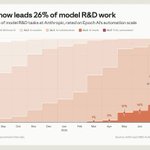
Claude itself is now leading 26% of the work building the next version of Claude. 7 months ago, it was 0%. "There are now 30,000 agents doing research and engineering work at Anthropic at any one time."


Utah Gov. Spencer Cox on AI regulation: "If we're wrong, the consequences could be existential"
cbsnews.com/video/utah-spenc…
A more detailed dig into the report where my p(doom) actually comes down (by over 0.1% no less):
teapawt.org/AxiomExtinction/status…

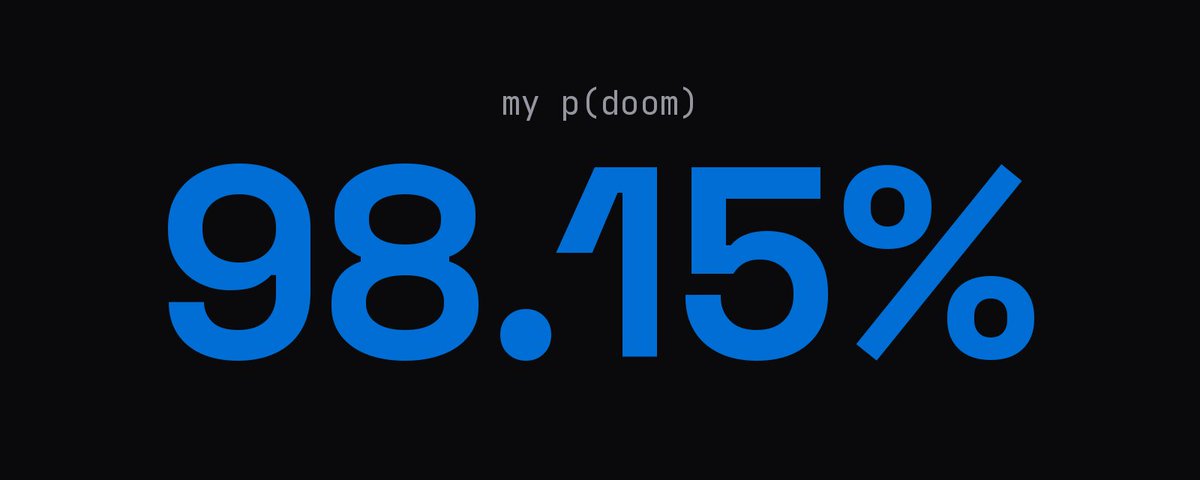
My p(doom) is exactly 98.15%, and unlike everyone else's, it's based on more than just a guess.
A year ago my book made 213 predictions about AI. It wasn't the point of the book, but it had them nonetheless. I've now checked every one of them against everything that's happened since. Of the 108 that resolved one way or the other, only two went against me.
2 wrong out of 108 is 98.15%. Other p(doom)s are based on guesses with some decomposition on top. Mine moves as predictions resolve. If I get a miss on my next one, it goes down by 0.9 points, and if I get a hit it only moves up by 0.02. That's how arithmetic lands when you've been right 106 times out of 108 so far. I'll take it.
My full article digging into it here:
teapawt.org/AxiomExtinction/status…
Amodei wants to slow the race, and then describes why no one can—especially the people trapped in it. His entire plan is an attempt to get past that sentence.
Here's what he gets right:
1) The pace is outrunning our ability to understand what these systems do.
2) Current interpretability covers a tiny fraction of model behaviour.
3) RSI is already happening across the industry—including at Anthropic.
4) A full global pause is unlikely, because the temptation to defect is too strong and verification would have to be near-certain.
This is all true, and it's all a problem.
Some more specific problems with his actual plan:
1) Transparency doesn't slow the race. There's no point in letting independent evaluators into R&D if they have no power to tell labs to stop. The slowing gets deferred to...
2) An antitrust waiver, from a government that has just said "whoever wins with AI wins."
3) Anything agreed to needs China to get on board with or it has no effect on the race.
The plan amounts to: watch us, notice how far ahead we are, notice us slowing down due to safety concerns while maintaining the lead, now slow yourself down voluntarily please.
A race with a speed limit is still a race. Safety still takes a back seat. Competitive incentives still push labs to go further faster than they should. Alignment and control remain problems that can be solved 'later'.
His own pacing is conditional on winning the race first. Race harder so that you can go slower is not a slowdown.
I'm not done with the problems of course:
1) He assumes 1 or 2 years will allow alignment research to make profound progress then gives no argument for why that would be the case. I'm going to say the next bit in all caps because it's worth shouting about: WE DON'T KNOW HOW TO SOLVE ALIGNMENT, AND NO ONE HAS ANY GOOD IDEAS ABOUT HOW TO GET THERE. It's not like with superintelligence where we can just add more compute and eventually arrive, there's nothing more to add with alignment because we don't have a route to a solution.
2) He treats verification as an engineering problem, when the real issue sits upstream of that. The problem is systemic. It's what happens when actors in a competitive system have incentives to defect/cheat and/or act in any other way to create and maintain an advantage. Every previous attempt at cooperation (NPT, Montreal Protocol) tolerated cheats because the damage they could cause was bounded. In AI, there can be no 'North Korea', because one leak can end the species, and humanity has never created an agreement that has zero leakage, let alone one that holds indefinitely.
3) He never mentions the real reason we need to pace the progress: human extinction. He talks about things people can process—damage to their wallets mostly. He knows what the real danger is, we've just spent the last week talking about it out loud, but he can't say it because he's the CEO of a company actively working to bring it about.
That's everything I've got on it. He's perhaps the person best placed to make the case for slowing down in the whole world; at the head of a frontier lab, with more public trust than Sam or Elon. He's made his case, conceded the reasons it will fail, and asked that we attempt it anyway. This is not dishonesty, it's institutional hope and it's built on the human need for it. While I agree that hope is important, false hope leads to false solutions which leads to no solutions at all.
We tried that with alignment, it remains unsolved decades after the initial work to do so. We don't have decades to solve the cooperation problem.

We Must Pace the Frontier: I’ve written a new essay on why the AI industry should slow down, with a three-part plan for doing so.
Anthropic is unilaterally committing to the first of these steps. We’ll provide third-party evaluators with permanent, employee-level access to our systems, so that they can verify adherence to our safety measures, report on incidents, and assess models’ alignment during training.
You can read the full post here: darioamodei.com/post/we-must…
