

Shri Mahant, Juna Akhara · Naga sadhu since the 1971 Kumbh · Sanatan Dharma, the oral tradition & Bharat as a civilization state
Bharat
Joined June 2008
- Tweets11.9K
- Following454
- Followers34.9K
- Likes177




Pinned Tweet
Bharat is resuming what She has always been: a civilization state.
It begins by remembering who we are, deconstructing the colonial self and its institutions, and navigating modernity on our own civilizational terms.
rampuri.com/start

Baba Rampuri retweeted

Ramayana lives in its "Tellers"... not "Owners."
Must-read response to RGV garu's opinions and the cultural industrie$ approach/appropriation of Ramayana.
Jai Hanuman!

The Taj Mahal is a tomb: beautiful, costly, and finished, built by an emperor. The Ramayan has never been finished. It is retold every evening, by whoever sits down to tell it.
"The Ramayana has no one teller." That is the first line of the new film. True enough: a sadhu at the dhuni, a pandit with Valmiki on his knees, a village Ramlila with paper crowns, all of them tell it.
This Ramayan has an owner. On the posters it is "Namit Malhotra's Ramayana." A private company holds its copyright, and a court order lets it pull clips off the internet within three hours. Ravan even has his own merchandise line. It is called Maya.
McLuhan said the medium is the message. Most of the talk about this film is about the story. McLuhan would ask what role the medium itself plays as storyteller, beyond the storyline.
It opens with the Devas defeating the Asuras and driving them underground, starving, and Ravan grows up to liberate his people. Valmiki tells it the other way round. The rakshasas drove the Gods out of heaven, fled to Patal when Vishnu came, and Lanka stood empty when Kuber received it. Ravan took it from his own brother. The film has given the rakshasas a colonised people's story, and with it a freedom fighter for a king.
Then it gives him a conscience. He rescues a servant girl from a man who grabs her. Valmiki's Ravan was that man: with Rambha, with Punjikasthala, with the wives of others, until a curse made him keep his hands off Sita. Nitish Bharadwaj calls this purifying Ravan.
Purify him, and the Ramayan loses its reason to exist. In Valmiki the Gods come to Vishnu in despair. Ravan holds Brahma's boon: no god, gandharva, yaksha or rakshasa can kill him, and in his pride he never thought to ask protection from men. He torments the three worlds, breaks up the yajnas, and takes what he wants. A threat to dharma itself, so great that God must take birth as a man to end it.
The Ramayan is the war of dharma against adharma. Give Ravan a grievance and a conscience, and it shrinks into a quarrel between two princes, each with his reasons. A grievance can be negotiated. Adharma has to be ended. That is why Ram came. In Part 2, when Ram kills this Ravan, whom will the audience take for the villain?
Even Audrey Truschke liked that the film "focuses on Ravana," and asked, "Really a Ravanayana?"
There are two Ramayans. In the Hindi one I saw, Bharat comes to the forest, refuses the throne, and carries Ram's padukas back to rule in his place. In the English version made for the world, that scene is cut, along with the songs. The world receives the war and the villain. The bhakti, and a brother who gives up a kingdom, were trimmed, as one insider put it, "to suit the palate of international audiences."
I saw it on Saturday, the full Hindi version, at an INOX. For more than three hours the screen gave me no room to think: the cuts, the CGI, the music, one grand vista after another. Only days later, away from the screen, did the story come back to me, and with it the questions. At the dhuni a story is told slowly enough to be weighed as it is heard. A blockbuster is built to be weighed afterwards, if at all.
And the screen does the imagining. In the katha every listener imagines his own Lanka, from a cumulative culture of hearing and imagery, and no two are alike. The Lanka on the screen comes from the studio pipeline that builds Hollywood's fantasy worlds, and fans already ask which looks better, Lanka or Warcraft.
In 1987 families bathed before watching Ramanand Sagar's Ramayan and garlanded their television sets. People made it into darshan. That is what lasts.
For thousands of years the Ramayan belonged to whoever told it. Ask who is telling it now, and who owns it.
Baba Rampuri retweeted

I don’t know how this artificial theory lasted this long! Hope people wake up to truth. #ReclaimHistory #DecolonizeHistory
What amazes me is that the theory has lasted so long. Follow its history and it keeps changing shape, because it was weak from the start.
It began as an idea about languages, with Schlegel around 1808. By Gobineau's Essay on the Inequality of the Human Races in the 1850s, a family of languages had become a conquering race. Max Muller, who did more than anyone to spread the "Aryan race," withdrew the phrase himself in 1888.
Marshall, who first announced the Indus cities in 1924, dated them deep into the past and saw in them the roots of later Hinduism. My understanding is that he was removed from the project because his dating and his continuity conflicted with the grand narrative. Then Wheeler wrote "Indra stands accused" and gave the theory its massacre. In 1964 Dales found no massacre. So the invasion became a "migration," and now the migration has become genetics.
Each version arrived as the last one collapsed, and the conclusion never moved. When the conclusion comes first, the evidence has to be found afterwards to fit it. That is how "Indra stands accused" ended up in our children's textbooks, while at the dhuni Indra was never on trial.
Baba Rampuri retweeted

For most of the twentieth century, the textbooks said the Indus cities were destroyed by invaders.
In 1947 Mortimer Wheeler wrote that "Indra stands accused". Aryans from the steppe, he argued, had massacred the inhabitants of Mohenjo-daro. In 1964 the American archaeologist George Dales re-examined the "massacre" and found a handful of skeletons from different periods, none of them the victims of a battle. No archaeologist defends the invasion now.
What ended the cities was water. At Mohenjo-daro, Dales found massive brick platforms built to lift the city above floodwater. Along the Sarasvati there was too little. The Sutlej had swung away around 2500 BC, and lake sediments in Haryana record a drought lasting some two hundred years from around 2100 BC. Then the western market collapsed with the fall of Ur in 2004 BC. Drains went uncleared, public buildings filled with squatters, and people buried their jewellery and left.
Episode 4 of my graphic novel, Maritime World: The True Cradle, is called The River That Died. Link in the reply.


The Taj Mahal is a tomb: beautiful, costly, and finished, built by an emperor. The Ramayan has never been finished. It is retold every evening, by whoever sits down to tell it.
"The Ramayana has no one teller." That is the first line of the new film. True enough: a sadhu at the dhuni, a pandit with Valmiki on his knees, a village Ramlila with paper crowns, all of them tell it.
This Ramayan has an owner. On the posters it is "Namit Malhotra's Ramayana." A private company holds its copyright, and a court order lets it pull clips off the internet within three hours. Ravan even has his own merchandise line. It is called Maya.
McLuhan said the medium is the message. Most of the talk about this film is about the story. McLuhan would ask what role the medium itself plays as storyteller, beyond the storyline.
It opens with the Devas defeating the Asuras and driving them underground, starving, and Ravan grows up to liberate his people. Valmiki tells it the other way round. The rakshasas drove the Gods out of heaven, fled to Patal when Vishnu came, and Lanka stood empty when Kuber received it. Ravan took it from his own brother. The film has given the rakshasas a colonised people's story, and with it a freedom fighter for a king.
Then it gives him a conscience. He rescues a servant girl from a man who grabs her. Valmiki's Ravan was that man: with Rambha, with Punjikasthala, with the wives of others, until a curse made him keep his hands off Sita. Nitish Bharadwaj calls this purifying Ravan.
Purify him, and the Ramayan loses its reason to exist. In Valmiki the Gods come to Vishnu in despair. Ravan holds Brahma's boon: no god, gandharva, yaksha or rakshasa can kill him, and in his pride he never thought to ask protection from men. He torments the three worlds, breaks up the yajnas, and takes what he wants. A threat to dharma itself, so great that God must take birth as a man to end it.
The Ramayan is the war of dharma against adharma. Give Ravan a grievance and a conscience, and it shrinks into a quarrel between two princes, each with his reasons. A grievance can be negotiated. Adharma has to be ended. That is why Ram came. In Part 2, when Ram kills this Ravan, whom will the audience take for the villain?
Even Audrey Truschke liked that the film "focuses on Ravana," and asked, "Really a Ravanayana?"
There are two Ramayans. In the Hindi one I saw, Bharat comes to the forest, refuses the throne, and carries Ram's padukas back to rule in his place. In the English version made for the world, that scene is cut, along with the songs. The world receives the war and the villain. The bhakti, and a brother who gives up a kingdom, were trimmed, as one insider put it, "to suit the palate of international audiences."
I saw it on Saturday, the full Hindi version, at an INOX. For more than three hours the screen gave me no room to think: the cuts, the CGI, the music, one grand vista after another. Only days later, away from the screen, did the story come back to me, and with it the questions. At the dhuni a story is told slowly enough to be weighed as it is heard. A blockbuster is built to be weighed afterwards, if at all.
And the screen does the imagining. In the katha every listener imagines his own Lanka, from a cumulative culture of hearing and imagery, and no two are alike. The Lanka on the screen comes from the studio pipeline that builds Hollywood's fantasy worlds, and fans already ask which looks better, Lanka or Warcraft.
In 1987 families bathed before watching Ramanand Sagar's Ramayan and garlanded their television sets. People made it into darshan. That is what lasts.
For thousands of years the Ramayan belonged to whoever told it. Ask who is telling it now, and who owns it.

Resentment is a word for a feeling. What you see in those replies is something calmer: a civilization remembering who she is, keeping her own accounts, and setting her own terms. Bharat is no threat to anyone. She has simply stopped asking for approval.

Revenge was only Ravan's excuse. In Valmiki, Shurpanakha comes to Lanka with her wound and with a description of Sita's beauty, and it was Sita he wanted. Tell it as revenge and Ravan becomes a wronged brother, Ram the one who wronged him, and the Ramayan turns upside down.
Rajiv ji, you are spot on about the revenge. And that does change the story considerably. What always struck me about Ravana were his ten heads: an ego problem times ten. He was master of so many vidyas, a master of grammar, the reputed author of a text on alchemy (a copy is in my possession), and his tapas outdid the Gods Themselves, until They begged him to stop and gave him the boon he took for immortality.
What drove him as a character was his enormous ego & excessive pride, which was also his vulnerability. Hanuman Ji noticed that the entrance to Ravana's palace was paved with the nine planets, lying face down. He told Ravana's pandits that by dharma a hero walks over the chests of those he has conquered. On their advice, Ravana had the Navagraha turned face up. The next time he entered his palace, his gaze met that of Shani Dev, and his fate was sealed.

In the new Ramayana film, Ravana dances his tandav to the Shiv Tandav Stotram, and young people from Thailand to Indonesia are playing it on repeat. It is my favorite. Here is how Ravana came to compose it.
On Mahashivaratri, in an age long past, Ravana went to Kailash for the wedding of Shiva and Parvati. His devotion to Shiva had given him great powers, and the powers went to his head, so much so that he grew ten of them. He lifted the mountain and shook it.
Shiva barely looked up. He placed one thumb on the ground, and Ravana was crushed beneath Kailash like a gnat.
Ravana was so overwhelmed that he tore off one of his own heads, pulled the veins from his arm, strung them across it, and sang Shiva's praises. That song is the Shiv Tandav Stotram.
At our dhuni we sing it at midnight on Mahashivaratri. This is from 2019.

Less space for the Goddess? Fifty-one Shakti Peethas mark where Sati's body fell across the land, and every great river is a Devi. Pilgrims have walked Her body for millennia.
The whole of Bharat is Her temple.

Why are female deities not given equal space to male gods in our temples asks @devduttmyth . Listen in.
Baba Rampuri retweeted

I will give a clue @ProfVemsani - He is a disciple of Wendy Doniger, and this most important question was not asked to him by @sardesairajdeep

What is female deity? Why can’t you say the Goddess? Do you know how misogynistic you sound?
There are more goddess temples in India and more goddess worship going on in India every day. The only one who comes close to this huge number of Goddess temples is Hanuman ji.
So, their old techniques to smear the goddess didn’t work so now they are trying to say “‘female deity’ is represented less”. Do they hear themselves. It’s so lame. Hinduism is the only major world religion with significant theological, ritual, and spiritual significance attributed to Goddess.
Is this guy from east coast of India where the goddess is supreme? From Kamakhya to Vijayawada Kanakadurga to Madhura Meenakshi to Kanyakumari the east coast is full of Goddess temples.
Is this guy from Odisha? Did he ever visit the Jagannath temple at Puri and others? Goddess Subhadra is in the center. Isn’t it important?
Are these guys going senile? What’s wrong with these people?
Baba Rampuri retweeted
What is female deity? Why can’t you say the Goddess? Do you know how misogynistic you sound?
There are more goddess temples in India and more goddess worship going on in India every day. The only one who comes close to this huge number of Goddess temples is Hanuman ji.
So, their old techniques to smear the goddess didn’t work so now they are trying to say “‘female deity’ is represented less”. Do they hear themselves. It’s so lame. Hinduism is the only major world religion with significant theological, ritual, and spiritual significance attributed to Goddess.
Is this guy from east coast of India where the goddess is supreme? From Kamakhya to Vijayawada Kanakadurga to Madhura Meenakshi to Kanyakumari the east coast is full of Goddess temples.
Is this guy from Odisha? Did he ever visit the Jagannath temple at Puri and others? Goddess Subhadra is in the center. Isn’t it important?
Are these guys going senile? What’s wrong with these people?
Why are female deities not given equal space to male gods in our temples asks @devduttmyth . Listen in.
Baba Rampuri retweeted

The stones may be old, but they are chiseled afresh. The civilisation may be ancient, but it is born again. The people may be young, but they never forget.
Happy Diwali! जय श्री राम🚩
Baba Rampuri retweeted
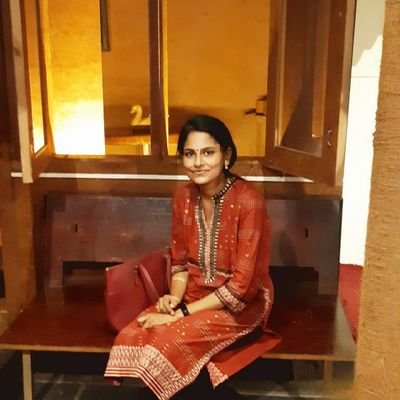
What nonsense
Kanchi Kamakshi
Madurai Meenakshi
Mookambika
Sringeri Sharadha Devi
Vaishno Devi
Kanyakumari... Are all famous Kshetras named after Devi's name. Only fools will hear that devdutt
Why are female deities not given equal space to male gods in our temples asks @devduttmyth . Listen in.
Baba Rampuri retweeted

While INSV Kaundinya proved that ancient stitched hull ships were capable of long voyages, there was still one question that bugged me. Why would the ancients have developed such a design. Stitching is just not the intuitive way to build a ship. Then I found evidence on how neolithic boats were built (this one is from Britain but it was probably a common method). Note that it is built by tying together a frame and then stitching a hide hull on it. So, "stitching" was one way the earliest ship builders started and they just continued down this path. An excellent example of path dependence.
youtube.com/watch?v=ix4Mz7M1…
Europe colonized its own mind before it colonized anyone else's, then exported the result as "modernity".
Bharat's memory survived the export. The Vedas are still kept by heart, the Kumbh still gathers, the guru still teaches face to face. Decolonizing begins there.

How a three-letter suffix colonized the mind of a civilization: rampuri.com/the-three-letter…

Baba Rampuri retweeted

♀ 06. ŠUKRA ~ VENERA
Moć da počnemo ponovo. 🪷
Isplanirao si savršeno veče.
Hranu. Muziku. Prelepu atmosferu.
A onda čuješ:
„Više ne osećam bliskost s tobom.”
Guru nas je pitao da li živimo ono što znamo.
Šukra nas pita šta naša ljubav može da oživi.
To je Šukra ~ Venera.
📜 Varāhamihira ga u Bṛhat Jātaki povezuje sa željom - i daje mu mesto savetnika uz Gurua.
Phaladīpikā dodaje brak, čulno zadovoljstvo, bogatstvo, muziku, poeziju i prijatan govor.
Njegovo ime nosi značenja sjaja, beline i semena - stvaralačke supstance kroz koju se život nastavlja.
A Šukrācārya je učitelj: duhovni učitelj Asura.
U Śiva Purāṇi, Śiva mu daruje Mṛtasañjīvanī - znanje o vraćanju mrtvih u život. Isto predanje govori i o njegovom izlasku iz Śivinog tela kroz semeni put.
Želja. Rađanje. Tajna obnavljanja. 🌱
Sada se vrati tom večeru.
Spuštaš telefon.
Mogao bi da braniš sve što si pripremio.
Umesto toga, pitaš:
„Šta sam prestao da primećujem?” 🤍
Ovde diplomatija postaje umeće približavanja teškoj istini, a da drugoj osobi ne oduzmemo dostojanstvo.
Možeš li da vratiš toplinu u razgovor koji se ohladio? 🤝
Ali i slatkoća može da prikriva izbegavanje.
Da li obnavljaš bliskost - ili govoriš sve što je potrebno samo da bi sačuvao mir? 🪞
Pri tumačenju Šukre razmatram, između ostalog, njegovu snagu, kojim kućama vlada, društvo drugih graha, dṛṣṭi - aspekte - i njegovog dispozitora.
Kroz tu celovitu sliku istražujemo kako se želja, odnosi i sposobnost obnavljanja oblikuju u tvom životu.
Veče se završava.
Godine prolaze.
Šta tvoja ljubav može da ponese kada život postane težak?
Tu susrećemo Šanija - Saturn … ♄
#VedicAstrology #Jyotish