

A brother | @liverpool
Texas, Queensland
Joined August 2019
- Tweets20.6K
- Following2.2K
- Followers994
- Likes29.7K

Skrtel retweeted

In accordance with the directive of His Excellency, Mr Peter Obi, I urge all members of the Obidient Movement to refrain from insulting, attacking, or making derogatory comments about individuals who have decided to leave our movement.
Our political engagement must be guided by values, respect, and decency rather than bitterness. Everyone has the right to make personal choices, while our duty remains to stay committed to the mission of building a New Nigeria.
Let us direct our efforts toward mobilization, organization, and winning the confidence of Nigerians. We will not allow ourselves to be distracted.
A New Nigeria is possible!
-Dr Moses Paul
National Coordinator, Global Obidient Movement

Skrtel retweeted

NEIS is willing to deploy 8,809 Ward Collation agents.
774 Local Government Collation Agents.
We will publish images of the Collation sheets publicly for all Nigerians.
We have the Technology and the Manpower.
Nigerians should unequivocally demand that either @inecnigeria uploads these collation sheets on IREV or grant NEIS collation agents access to get these images from collation centres.


Skrtel retweeted
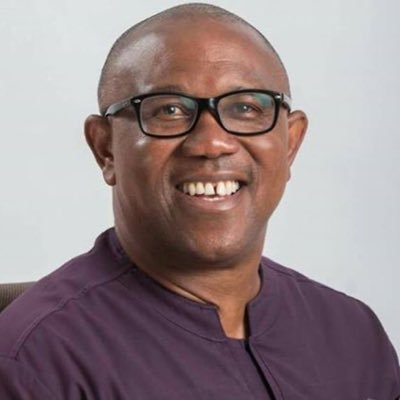
NIGERIANS, GO AND VERIFY (2)
Building the Institutions of the State
Peter Obi
In Series 1, I explained the philosophy that guided our administration in Anambra State: governance as a public trust, anchored on character, competence, capacity, and compassion. I also introduced the Anambra Integrated Development Strategy (ANIDS), our comprehensive framework for achieving balanced and sustainable development across all sectors.
But a development vision, however noble, cannot succeed without strong institutions to drive it. Before the government could effectively deliver on its promises in education, healthcare, infrastructure, security, and other sectors, we had to first restore the machinery of government itself. We could not build a prosperous state on a cracked and unstable foundation.
This was why one of our foremost priorities under ANIDS was to rebuild, strengthen, and reposition the institutions of government. When I assumed office, the physical and administrative architecture of governance was in a deplorable condition. Our task was not simply to construct buildings but to restore the institutions, systems, and structures through which government could function effectively.
We therefore began systematically rebuilding the infrastructure of governance across the executive, legislature, judiciary, civil service, and local government system.
Restoring the Seat of Government
The Government House in Awka, the state capital, had been vandalised and burnt by reactionary forces in 2004. We therefore had to rebuild, re-equip, and furnish it, restoring its dignity and functionality as the seat of executive government.
In the same vein, we rehabilitated the Governor’s Lodge in Amawbia and constructed a new Governor’s Lodge in Onitsha. These investments were intended not merely to provide accommodation but to strengthen executive presence and facilitate effective governance across the state’s major administrative and commercial centres.
Strengthening the Legislature and Judiciary
We rehabilitated the Anambra State House of Assembly Complex in Awka, providing our lawmakers with a more conducive and decorous environment in which to discharge their constitutional responsibilities. We also provided legislators with vehicles to facilitate the effective performance of their legislative duties.
We recognised that a functioning democracy requires strong institutions, including an effective legislature and an independent judiciary, each operating within its constitutional mandate.
In strengthening the judiciary, we provided brand-new vehicles to High Court judges. This was the first time such provision had been made for them in the history of the state. We also provided vehicles to magistrates for the first time since the creation of Anambra State.
These interventions were intended to strengthen the administration of justice, improve mobility, and enable judicial officers to discharge their responsibilities more effectively.
Rebuilding the Civil Service: The Chief Jerome Udoji State Secretariat Complex
Before our administration, many Ministries, Departments, and Agencies (MDAs) operated from scattered rented apartments, while civil servants lacked a centralised and decent working environment. This untidy arrangement undermined coordination, efficiency, and the dignity of public service.
We addressed this situation by constructing the two-phase, ultra-modern Chief Jerome Udoji State Secretariat Complex, comprising Blocks 1 and 2. The project brought the MDAs together under one roof, improved administrative coordination, and provided civil servants with a more suitable environment in which to serve the people.
The complex was named after Chief Jerome Udoji, the first indigenous Chief Secretary (the equivalent of today’s Secretary to the State Government) of the Eastern Region during the First Republic. This was also a recognition of his contribution to public administration and the civil service tradition.
Skrtel retweeted
NIGERIANS, GO AND VERIFY (1)
Introduction: Governance as a Public Trust
Peter Obi
When I took office as Governor of Anambra State, our beloved state was at a critical juncture. Leadership had become increasingly disconnected from the people, and many of the essential institutions needed to support a modern society were weak, ineffective, or absent altogether. We understood that governance could not continue according to established habits. It needed to be reconceived as a solemn public trust founded on transparency, prudence, accountability, and demonstrable results.
Our governing philosophy rested on four principles: character, competence, capacity, and compassion. We understood that leadership was not a platform for self-promotion, political slogans, or the pursuit of personal acclaim. Its purpose was to improve the circumstances of ordinary citizens. It meant converting public resources into concrete benefits and ensuring that government’s foremost responsibility was to serve the people. Achieving this demanded more than good intentions; it required a clear vision, careful planning, and disciplined execution.
Among our earliest findings was that the state lacked a unified development plan to direct its priorities and determine how resources should be allocated. We therefore promptly created the Ministry of Economic Planning to establish the institutional foundation for deliberate, coordinated, and sustainable development. After completing the necessary groundwork and consultations, we launched the Anambra Integrated Development Strategy (ANIDS).
At that time, the Millennium Development Goals (MDGs) were being pursued worldwide across eight clearly defined priorities: eliminating extreme poverty and hunger; achieving universal primary education; advancing gender equality and empowering women; reducing child mortality; improving maternal health; combating HIV/AIDS, malaria and other diseases; promoting environmental sustainability; and fostering a global partnership for development.
We adopted ANIDS as our overarching development philosophy and strategic framework for advancing these objectives, tailoring them to the distinctive circumstances, needs and development priorities of Anambra State. Instead of viewing the MDGs as remote international benchmarks, we worked to convert their aims into practical policies, programs and measurable results that would produce tangible improvements in the lives of our people.
We also undertook a deliberate effort to redefine the state’s identity, changing its public image from ‘Home for All’ to ‘The Light of the Nation’. This was not merely a change in slogan; it reflected our resolve to restore public confidence in government, renew civic pride and show that Anambra could serve as a model of purposeful leadership and development.
The ANIDS Blueprint: A Comprehensive Framework for Development
ANIDS served as the foundation for our commitment to broad-based and balanced development. We did not accept the idea that government could focus on a single sector while leaving others behind. We recognized that education, healthcare, infrastructure, security, agriculture and capable public institutions were mutually dependent. Advancement in one area could not be sustained without commensurate progress elsewhere. Accordingly, we pursued development across every sector, guided by defined priorities, disciplined planning and prudent stewardship of public resources.
Central to this vision was the restoration of the dignity of the Anambra person. We understood that dignity could not be restored through rhetoric alone. It was evident in the condition of roads and other infrastructure, the availability of healthcare, the quality of education, the performance of public institutions and the way government treated its workers, pensioners and traditional institutions.
Skrtel retweeted
Despite mounting attacks by ruling party-sponsored thugs on our entourage, we successfully commissioned NDC campaign headquarters in seven local government areas of Kano.
Yesterday’s event is another clear demonstration of how the people have embraced our message of unity and restoration. It is also why certain elements in Kano are growing increasingly jittery over our rising support in areas they regard as their strongholds.
We shall continue to work together until an Obi/Kwankwaso and NDC victory is achieved. - RMK
Skrtel retweeted
Our aim was to create a state where public resources produced tangible public benefits, institutions existed to serve the people and development was assessed by the lives transformed rather than by the promises made. We therefore began by strengthening the institutions of government, rebuilding their ability to operate effectively and ensuring that they remained accountable to the public interest. Building on these foundations, we advanced development across multiple sectors through careful planning, responsible resource management and leadership grounded in accountability.
In Series 2, we will first consider the measures we took to restore and reinforce the institutions of the state and ensure that government served the people effectively. We will then review our initiatives and accomplishments in education and other essential sectors.
I assure Nigerians that the progress demonstrated in Anambra State was neither a one-time occurrence nor an experiment that cannot be repeated. It reflected a proven model of governance that we are ready to extend to the national level. What we accomplished in Anambra can also be accomplished in Nigeria. With capable leadership, effective planning, responsible management and accountable institutions, Nigeria, too, can work for all its citizens.
Go and verify. -PO
The airport should be closed after the election. No political should be allowed to leave the country. They must face the consequences of their actions towards Nigeria. These people are evil.
20
Skrtel retweeted
ATTACK ON SENATOR KWANKWASO’S CONVOY IN BICHI: I CALL FOR IMMEDIATE INVESTIGATION AND ARREST OF PERPETRATORS
I am deeply saddened by reports of the attack on the convoy of my brother and running mate, Senator Rabiu Musa Kwankwaso, and members of his entourage in Bichi Local Government Area of Kano State.
I strongly condemn this unfortunate incident. Reports indicate that several members of the entourage sustained injuries, while about seven vehicles were vandalised. This is unacceptable and must not be allowed to become part of our political culture.
Democracy is not warfare. Political differences should never be a reason to resort to violence, intimidation or the destruction of property. Every Nigerian, regardless of political affiliation, has the constitutional right to participate in the democratic process without fear of attack.
We must not allow violence to take the place of dialogue, nor intimidation to silence those who hold different political opinions. Our democracy can only grow when we respect one another, uphold the rule of law and recognise that political competition is not a battle against fellow Nigerians.
I therefore call on the Nigeria Police Force and all relevant security agencies to immediately investigate this incident, identify those responsible, including anyone found to have sponsored the attack, and ensure that they are brought to justice. No individual should be above the law, regardless of political position or influence.
I stand in solidarity with Senator Kwankwaso, the Kano State NDC leadership and everyone affected by this incident. I also wish those injured a speedy recovery.
Our commitment to building a new Nigeria remains unwavering. We believe that change must come through peaceful engagement, persuasion, ideas and the ballot, not violence.
Nigeria belongs to all of us. We may belong to different political parties, but we remain one people with a common destiny. No political ambition is worth the life of any Nigerian.
A new Nigeria is POssible. -PO


