

Lab @UCBerkeley for biological and artificial language. PI @begusgasper
Berkeley, CA
Joined March 2019
- Tweets2K
- Following516
- Followers1.4K
- Likes3.3K


Pinned Tweet
We had a whale of a year🐳
We continue to explore language and intelligence in humans, animals, and machines
-We uncovered vowels and diphthongs in sperm whales
-We discussed what this means for law and anima rights
-For the first time, LLMs can do recursion and metalinguistics

Berkeley Biological & Artificial Language Lab retweeted

Too funny: voiceless obstruents favoured after nasals; voiced obstruents favoured after voiceless obstruents; e.g.


“Lexicon against naturalness: Unnatural gradient phonotactic restrictions in Tarma Quechua” by Gašper Beguš, Aleksei Nazarov, Anna Björklund and Blas Puente Baldoceda (Oct. ’26) link.springer.com/article/10…

Berkeley Biological & Artificial Language Lab retweeted
“Lexicon against naturalness: Unnatural gradient phonotactic restrictions in Tarma Quechua” by Gašper Beguš, Aleksei Nazarov, Anna Björklund and Blas Puente Baldoceda (Oct. ’26) link.springer.com/article/10…
Berkeley Biological & Artificial Language Lab retweeted

The paper was 10 years in the making! Read it here:
doi.org/10.1007/s11049-026-0…

Berkeley Biological & Artificial Language Lab retweeted

kha, no sabía de esa restricción del quechua de tarma, locatso

Berkeley Biological & Artificial Language Lab retweeted

What happens to writing when machines can write? How are novelists, poets, and screenwriters responding to AI, and what does it mean for creativity, authorship, and the future of storytelling?
Join us on November 18 at UC Berkeley Sutardja Dai Hall as we explore these questions through our new collection of essays, First Encounters with AI.

Berkeley Biological & Artificial Language Lab retweeted
In Tarma, Peru a very interesting dialect of Quechua is spoken.
We analyzed the recordings and show that the dialect features one of the most intriguing phonotactic restrictions. Stops are voiced after a voiceless stop and voiceless after a nasal.


Berkeley Biological & Artificial Language Lab retweeted
Artificial humanities at the Artificiality Summit in Bend, Oregon


Berkeley Biological & Artificial Language Lab retweeted
Why is philosophy thriving at Harvard amid generally low humanities enrollments


Berkeley Biological & Artificial Language Lab retweeted
We're excited to be able to continue our work (with @begusgasper) on rethinking language, thanks to @schmidtsciences HAVI.
We will test what properties of human language (sound change, dialect, and more) appear in nonhuman communication. This research lays the groundwork for reconceptualizing language as an evolutionary information technology applicable across human, animal, and machine communication.

UC Berkeley researchers are developing AI models that learn language by imitating speech, much like babies do. Their work could make AI more efficient while revealing new insights into how humans and other species communicate.
bit.ly/4BeESMn

Berkeley Biological & Artificial Language Lab retweeted

UC Berkeley researchers are developing AI models that learn language by imitating speech, much like babies do. Their work could make AI more efficient while revealing new insights into how humans and other species communicate.
bit.ly/4BeESMn
Berkeley Biological & Artificial Language Lab retweeted
Thank you for the feature @HarvardMagazine!
We got so many Harvard alumni in this volume we failed to mention Gerardo Con Diaz (08) and Joseph Dumit (Prof) :)


Berkeley Biological & Artificial Language Lab retweeted
Old conceptual frameworks need an update. Very excited to be awarded the Schmidt Sciences HAVI Award for "Rethinking Language" in collaboration with @ninabegus.
Humanities have a bright future!
@schmidtsciences

Berkeley Biological & Artificial Language Lab retweeted
Imagitation it itself imagitation.
Read this great book! @mthvn


Berkeley Biological & Artificial Language Lab retweeted
Doomers unite.
Berkeley Biological & Artificial Language Lab retweeted
Read here:
begus.substack.com/p/pascals…
Berkeley Biological & Artificial Language Lab retweeted
If we believe in AI’s ability to control us, and AI is unable to do so, we lose little. If we don’t believe in singularity, and AI can in fact control us, we stand to lose everything. Wager, then, without hesitation, that AI is (able to control us)!

Berkeley Biological & Artificial Language Lab retweeted
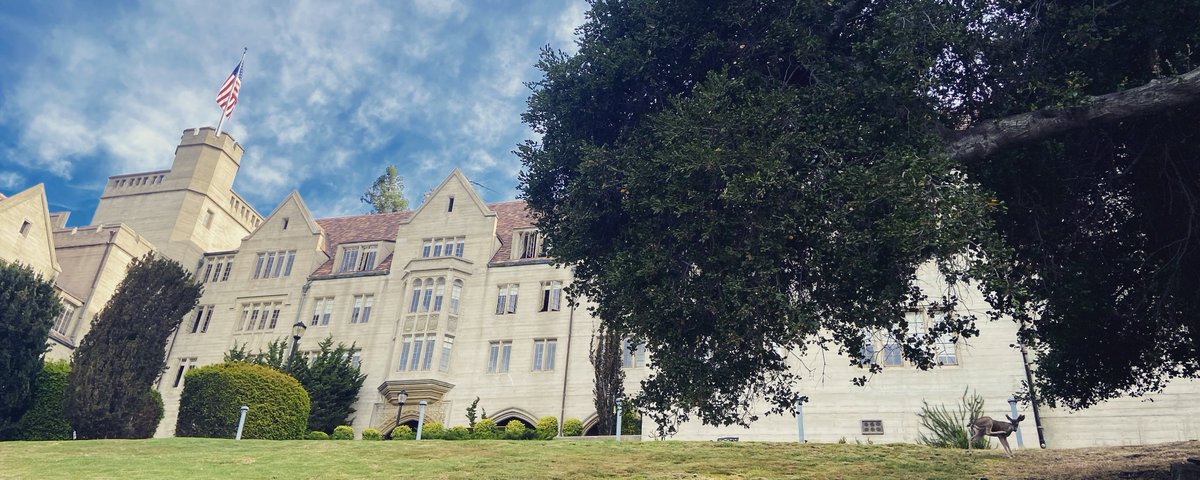
The most transformative education happens when students learn uniquely human skills over meals and tea time
Berkeley Biological & Artificial Language Lab retweeted
And @kyliu99's essay The art of Copying from First Encounters with AI, recently published also in @LAReviewofBooks


Berkeley Biological & Artificial Language Lab retweeted

Very psyched for @ninabegus’s books!
Coming on @interintellect_ 👑

Berkeley Biological & Artificial Language Lab retweeted
Read here:
begus.substack.com/p/the-nex…