📣 Save the date!
🎬iCARE webinar: Capsule Endoscopy & Inflammatory Bowel Disease
🗓️19 November 2026, 19:00 CET
#IBD #iCAREgroup #capsuleendoscopy @SEEDendoscopia @Medtronic @ESGE_news
Begoña Glez Suarez retweeted
Management of C diff infection in patients with IBD - AGA Clinical Practice Update 2026
Portal Vein Thrombosis: The @INASL_Liver Recommendations for Management doi.org/10.1016/j.jceh.2026.… @JCEH_Hepatology
Begoña Glez Suarez retweeted
📣 Resumen de las guías de práctica clínica publicado en JAMA:
Las recomendaciones de 2025 sobre la #ColitisUlcerosa destacan:
👉 Realizar pruebas en heces para detectar Clostridioides difficile antes de establecer el diagnóstico.
👉 Utilizar la calprotectina fecal para el seguimiento de la enfermedad.
👉 Aplicar un enfoque terapéutico escalonado con 5-ASA, corticosteroides y terapias avanzadas.
🔗 ja.ma/4xCFIPS
#EII #SaludDigestiva
European Guidelines on Multidisciplinary Management of Obstructed Defecation Syndrome—ESCP, UEG, ESGAR, EAGEN, ESGENA, ESNM and ESPCG onlinelibrary.wiley.com/doi/… @my_ueg
Begoña Glez Suarez retweeted
Aspectos destacados del consenso Delphi sobre la resección de pólipos de menos de 20 mm:
👉 Documentación fotográfica antes y después de la resección.
👉 Resección con un margen de seguridad de al menos 1 mm.
👉 Utilización de la función de enfoque cercano (near focus) para inspeccionar el lecho de resección.
👉 La tasa de resección incompleta en pólipos de más de 10 mm no debe superar el 10 %.
cghjournal.org/article/S1542…
𝘏. 𝘱𝘺𝘭𝘰𝘳𝘪 infection is an infectious disease, and treatment regimens should ideally be guided by antimicrobial-susceptibility testing whenever possible. 🔗 nej.md/4Bj3O58
Both phenotypic (culture-based) and molecular methods of antimicrobial-susceptibility testing are available (seen in figure). Culture-based testing remains the reference standard because it is the only method that can ascertain the susceptibility of isolates to all antibiotics commonly used for eradication. Molecular antimicrobial-susceptibility testing offers greater efficiency than culture-based testing by eliminating the need for 𝘏. 𝘱𝘺𝘭𝘰𝘳𝘪 culture. Molecular-based testing can be conducted with fresh or formalin-fixed gastric-tissue samples (used for histopathological examination) and successfully cultured isolates. More recently, gastric-fluid samples obtained from a swallowed gastric string have emerged as a cost-effective alternative culture-based testing method. Stool-based molecular antimicrobial-susceptibility testing is now available, which avoids invasive endoscopy. Commercial polymerase-chain-reaction–based kits are now available for identifying 𝘏. 𝘱𝘺𝘭𝘰𝘳𝘪 resistance to clarithromycin and levofloxacin by detecting specific mutations in the 𝘏. 𝘱𝘺𝘭𝘰𝘳𝘪 23S ribosomal RNA and gyrA genes, respectively. A meta-analysis reported high accuracy of these molecular methods for detecting antibiotic resistance in gastric-biopsy samples, with sensitivity and specificity of 96% and 96%, respectively, for clarithromycin resistance and 97% and 99% for quinolone resistance.
Learn more in the Review Article “𝘏𝘦𝘭𝘪𝘤𝘰𝘣𝘢𝘤𝘵𝘦𝘳 𝘱𝘺𝘭𝘰𝘳𝘪 Infection — Advances, Challenges, and the Road Ahead” by Hong Li, MD, PhD, Francis Megraud, MD, and Barry J. Marshall, MD: nej.md/4Bj3O58
Begoña Glez Suarez retweeted
🚨 ¡Nueva Guía ESGE para el Manejo de las Estenosis Biliares! 🚨
@SEEDendoscopia te lo cuenta 🤫
🪡Abrimos hilo🧶
Begoña Glez Suarez retweeted
⭐️ Propuesta para caracterizar los trastornos gastroduodenales mediante mapeo eléctrico gástrico de superficie.
La Clasificación de Auckland define distintos fenotipos a partir del body surface gastric mapping, con el objetivo de mejorar la caracterización fisiológica de estos pacientes y avanzar hacia una evaluación más precisa de los trastornos gastroduodenales.
🔬 Una herramienta con potencial para refinar el diagnóstico y la estratificación clínica.
onlinelibrary.wiley.com/doi/…
#Gastroenterología #Motilidad #Gastroduodenal #GITwitter
Begoña Glez Suarez retweeted
Diagnosis of Coeliac Disease - 🆕 in JAMA
📸: jamanetwork.com/journals/jam…
Begoña Glez Suarez retweeted
Gastric and oesophageal cancer: ESMO Clinical Practice Guideline for diagnosis, treatment and follow-up
@Annals_Oncology
doi.org/10.1016/j.annonc.202…
👉get the latest updates
👉Biomarker testing (e.g. HER2, MSI, CLDN18.2, PD-L1) key
@myESMO @ASCO
Begoña Glez Suarez retweeted
🆕 *ARTÍCULO NUEVO* · 14 de octubre de 2026
🩺 *Diverticulitis: lo que cambia en la guardia con la nueva guía EAES-SAGES 2026*
_Surgical Endoscopy · 8 sociedades internacionales · método GRADE_
💊 *Antibióticos:* en la diverticulitis aguda no complicada, con paciente inmunocompetente y estable, *sin antibiótico de rutina*. No mostraron beneficio claro en reingresos ni en recurrencias.
🔄 *Después de un absceso:* antes (guía 2018) no se operaba de rutina. *Ahora se sugiere sigmoidectomía electiva* cuando se recupera del primer episodio con absceso. Es la única recomendación con certeza moderada. No en frágiles ni inmunodeprimidos.
📆 *Recurrente con síntomas persistentes:* se sugiere *resección electiva* antes que seguir observando: menos recurrencias y mejor calidad de vida.
🔬 *Colonoscopia:* tras un primer episodio no complicado, *no de rutina*. Indícala según la edad y la clínica, si no tiene una en los últimos 5 años o si ya hubo más de un episodio.
🚑 *Complicada que necesita resección de urgencia:* sin shock séptico y con experiencia colorrectal, *anastomosis primaria ± ileostomía* antes que Hartmann o lavado (no en Hinchey IV). Con shock, fragilidad, inmunosupresión o sin esa experiencia: *Hartmann*.
📌 *Para llevar al quirófano*
Se acabaron los automatismos: ni antibiótico para todos ni Hartmann para todos. Son recomendaciones condicionales: se decide con el paciente.
Begoña Glez Suarez retweeted
📘 Ya disponible el MANUAL DEL RESIDENTE DE GERIATRÍA DE LA #SEGG, impulsado por el Grupo de Jóvenes de la Sociedad para apoyar la formación de futuros geriatras.
📖 Consúltalo online: segg.es/media/descargas/SEGG…
#ResidenteDeGeriatria #Geriatría #PersonasMayores
Begoña Glez Suarez retweeted
Effectiveness and safety of thalidomide for gastric antral vascular ectasia (GAVE) related recurrent gastrointestinal bleed in liver cirrhosis
@AnandVKulkarni2
Check out
👇🏽 jcehepatology.com/article/S0…
Begoña Glez Suarez retweeted
📌 Gastric Polyps | @AmerGastroAssn @AGA_CGH 2026
Fundic gland polyps on a PPI. Stop the PPI?
✅ No. Valid PPI use can continue with FGPs
✅ Hyperplastic or adenomatous polyp → test & treat H. pylori
✅ Dysplastic polyp fully resected: re-scope at 1 yr (LGD) or 6 mo (HGD)
#GITwitter #Medtwitter
cghjournal.org/article/S1542…
Begoña Glez Suarez retweeted
Helicobacter pylori is a Gram negative bacterium that causes upper gastrointestinal disease and symptoms.
This clinical update present recent guidelines and evidence on H pylori prevalence, transmission, detection, and management in primary care
bmj.com/content/395/bmj-2026…

ALT This infographic from The BMJ details the detection and management of H. pylori. The visual includes diagrams of H. pylori bacteria and a stomach. Sections cover testing methods, including endoscopy and breath tests, with results leading to possible diagnoses like positive, uncertain, or negative. Infection management options detail antibiotic regimens and emphasize considering local patterns and eradication efficacy. A flow chart outlines empirical treatment decisions based on previous antibiotic exposure. The infographic is colorful, with arrows guiding the process flow, and includes resource links at the bottom.
Especial ilusión hoy 😀. Muy contenta de ver publicada esta entrevista en @lavozdegalicia sobre nuestro trabajo @mruizandreu en microbiota y trasplante fecal. Muchas gracias @inforeuma @hospitalclinic @gasclinicbcn #XIVSimposiodeartritisReumatoide lavozdegalicia.es/noticia/la…
Begoña Glez Suarez retweeted
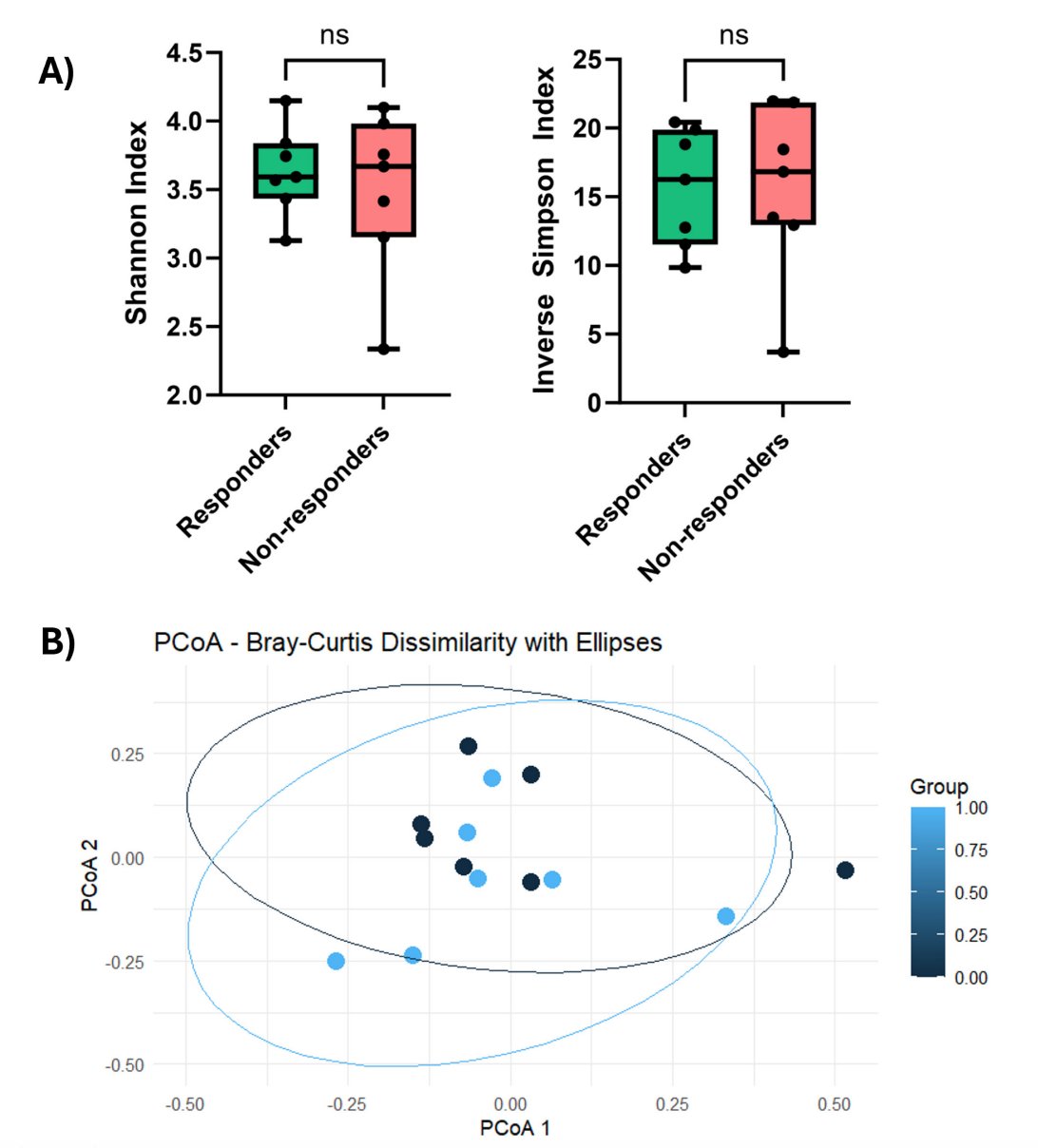
🦠 Gut microbiome composition is associated with response to neoadjuvant chemotherapy in pancreatic ductal adenocarcinoma patients
New #GUTScience journal research by Halle-Smith et al. asks an important question: could the bacteria living in our gut be linked to how well pancreatic cancer responds to chemotherapy?
The researchers found differences in the gut microbiome of patients who responded differently to neoadjuvant chemotherapy. Some of the differences involved bacterial genes linked to how medicines are processed.
Why could this matter for clinicians and patients? 🩺
Pancreatic cancer can be difficult to treat, and patients can respond very differently to the same treatment. Understanding whether the gut microbiome is linked to treatment response could eventually help researchers develop better ways to predict — and potentially improve — how patients respond to therapy.
It is still too early to use the microbiome to guide individual treatment, but these findings add to growing evidence that the microbes living in our gut could be relevant to cancer care.
📖 Read the paper: bit.ly/4f6XRzg
#GUTScience #PancreaticCancer #CancerResearch #GutMicrobiome #Microbiome #Chemotherapy #PrecisionMedicine #TranslationalResearch @druppygill @Gut_BMJ @BMJOpen_Gastro @FrontGastro_BMJ
Begoña Glez Suarez retweeted
Resumen de las directrices de Baveno VIII (2026) relevantes para el sangrado variceal 💡🩸
Begoña Glez Suarez retweeted
Curriculum on management of acute upper gastrointestinal bleeding: ESGE Position Statement
Find the article at: doi.org/10.1055/a-2893-6920
Andrei M. Voiosu et al.
#Endoscopy #Gastroenterology @ESGE_news