
Research Fellow at the Kempner Institute at Harvard University.
Joined September 2018
- Tweets180
- Following363
- Followers1.2K
- Likes516


Pinned Tweet
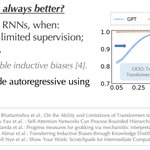
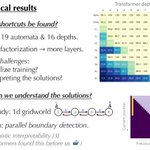
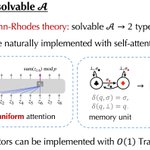
We’re entering a data-scarce regime; but is less data always worse? Our #ICML work shows that small-set training (e.g., with repetition) can be actively leveraged as a useful optimization bias for structured reasoning tasks. Come chat with Jingwen and Ezra in Seoul to know more!

Bingbin Liu retweeted

I am teaching a new class this semester on "AI for scientific computing". The idea is to cover topics around learned surrogates for scientific computing with applications to PDE solving, forecasting, sampling, and selected downstream applications. andrejristeski.github.io/107…
Bingbin Liu retweeted

1/ RL for improving task success has made LLMs remarkably capable. But what happens when the model fails? Turns out, training for graceful failure can be surprisingly tricky!
Very excited to share our new paper: Training Language Models to Fail Gracefully
🧵
Bingbin Liu retweeted

Deep learning is often taught as a sanitized collection of facts and math. But work at the frontier of AI is messy and empirical.
Our new class, Deep Learning Alchemy, aims to teach the art and science of deep learning in the hands-on spirit of Language Modeling From Scratch.
Students build intuition by running experiments on small LMs, then test it through prediction quizzes: given an unseen code diff, can you predict what happens?
deep-learning-alchemy.github…
My co-instructor @kothasuhas and I think there's significant demand for classes that treat students as serious learners who want to be assessed for what they’ve learned, and so we're trying a new exam-heavy approach to the class (7 exams, 85% of the grade, with the remaining 15% in-person discussion assessments).
We’ve designed the class so students can use AI agents to run their experiments and do their assignment, but they then have to demonstrate that mastery on exams without access to the assignment, and any partial credit on the exam has to come through citations to the assignment, incentivizing them to know what’s in their write-up.
The same assignments and quizzes are public for anyone to try (lecture recordings will be released through @StanfordOnline with some delay). We have some very fun assignments and quizzes covering both classic topics (like NQM, run-to-run stochasticity, and scaling laws) and new and timely topics like muP or hyperball. Made by some real experts like @TristanThrush and @wen_kaiyue
Try some quizzes below!

Truly great to see so many people interested in & believing in these topics! Hope everyone had as much fun as I did. See you next year!


Bingbin Liu retweeted

One of my recent favorite works! We use mech interp on synthetic tasks (multi-hop reasoning) to identify potential representation bottlenecks in vanilla looped transformers, leading to imperfect generalization!
Based on this understanding, we designed and tried this new arch and greatly improved generalization. Though it is only a small step forward, I do believe mechanistic understanding will bring more help to better model arch design!
Shout out to our great collaborators @HengyuF @TianyuGuo0505 @zhuhl98!

Frontier labs are rumored to be adopting looped Transformers for their potential to unlock implicit reasoning. But can looped Transformers really master it?
We find a bottleneck that keeps looped Transformers from perfect implicit reasoning. Using mechanistic interpretability, we show how looping helps implicit reasoning, why it still struggles to generalize, and how to fix it.
We introduce DiscoLoop: a residual design for looped Transformers that improves implicit reasoning.
🧵 Long thread ahead 👇
Join us at MOSS tomorrow!
There's been lots of discussion about what one can meaningfully contribute w/o huge resources (e.g., in academia). We hope MOSS can offer some answers and inspire more conversations! 🌱
(panel poll results for those interested: form.typeform.com/reports/01…
MOSS @COLM_conf is happening tomorrow (Fri, Oct 9)!
Join us for talks and discussions on how small-scale research and experiments can advance both scientific understanding and algorithm insights. 💡
📍 Hilton Union Square, Theater 84
sites.google.com/view/moss-c…

Bingbin Liu retweeted

The most profound paper of my PhD so far. We truly did something special to make LMs play/explain chess, needing both architectural & algorithmic innovation (natural-language analogue of the Alphazero algorithm) + applicable to many other domains. Please read on and share!
1/10

Bingbin Liu retweeted

What privileges should we provide to the teacher in On-Policy (Context) Distillation? From my internship @awscloud , we find that simple, instance-independent instructions could outperform instance-specific gold privileges especially in OOD evaluations, even though they contain much less information.
Paper: arxiv.org/abs/2609.32201

Bingbin Liu retweeted

I’ll be at #COLM presenting this work on Thursday afternoon.
I also just wrapped up my #Anthropic fellow project on backdooring LLM agents via data poisoning (releasing soon)!
Now on the job market for roles in AI safety, alignment, & interpretability, as well as broader model training and evals.
DMs are open :)

Interestingly, one attention head can be important across five ICL task families!
Our original thread gave an in-depth mechanistic analysis of addition ICL (quick video recap 👇). We've now generalized this to four more ICL task families, spanning both arithmetic tasks and semantic tasks!
Our paper “Understanding In-context Learning of Addition via Activation Subspaces” has been accepted to COLM 2026! 🎉
See more details in thread.
(1/N)
Bingbin Liu retweeted

Can LLMs generate novel research ideas? We propose Priced Guidance to quantify this via compression!
We lower bound P(LLM forecasts a future paper’s idea X). Instead of sampling ideas until X is matched, the LLM plays “20 Questions” to recover X, charging each hint by surprisal.

We'd love your opinion! The quick poll below decides what our @MOSS_workshop panel will debate.
Please vote and share! 🌱
Help us shape the panel at MOSS @COLM_conf !
We've put together a quick poll. Questions with the most split opinions will become panel discussion topics.
Vote: form.typeform.com/to/UOyzADc…
See more info on our website: sites.google.com/view/moss-c…
Bingbin Liu retweeted
Interestingly, one attention head can be important across five ICL task families!
Our original thread gave an in-depth mechanistic analysis of addition ICL (quick video recap 👇). We've now generalized this to four more ICL task families, spanning both arithmetic tasks and semantic tasks!
Our paper “Understanding In-context Learning of Addition via Activation Subspaces” has been accepted to COLM 2026! 🎉
See more details in thread.
(1/N)
3->5, 4->6, 9→11, 7-> ?
LLMs solve this via In-Context Learning (ICL); but how is ICL represented and transmitted in LLMs? We build new tools identifying “extractor” and “aggregator” subspaces for ICL, and use them to understand ICL addition tasks like above. Come to @interplaywrkshp at COLM to learn more!

Bingbin Liu retweeted

Excited to introduce Puro-2B, along with its fully open recipe that lets you train a Qwen2-1.5B-level LLM on RTX 5090 GPUs for less than $5090!
As someone who has always been curious about why LLMs work so well, one of the biggest challenges today is that we not only lack a good theory, but are also losing the ability to run controlled training experiments at scale, systematically vary key factors, and gather the empirical evidence needed to understand how LLMs learn from data.
Training LLMs has simply become too expensive.
There are now a few great open or almost open training recipes for models with billions of parameters, but reproducing them can still cost hundreds of thousands of dollars. As this makes many basic questions about LLMs inaccessible to academic labs, we really hope to bring this cost down far enough that academic labs can train and study genuinely capable models from scratch.
Puro is a full-stack engineering effort to reduce training cost, which mixes engineering and research across data, optimization, numerical precision, hardware, and training strategy. It also builds on some of our own previous research:
📈 Curriculum Model Averaging (CMA): data curriculum designs have to work together with moderate learning rate decay and model averaging (arxiv.org/abs/2511.18903)
◉ Hyperball / MuonH: an optimizer wrapper that constrains weight and update norms, and directly controls the effective (angular) step sizes for stable and efficient training (arxiv.org/abs/2606.16899)
There is still a long way to go, and we would be very happy to hear your feedback and ideas!


Bingbin Liu retweeted

Which state-tracking problems can transformers length generalize on?
Transformers' performance on different finite-state tasks varies drastically, even when the tasks are structurally similar. Now, for the first time, we can precisely predict when length generalization occurs.

Bingbin Liu retweeted

announcing the NeurIPS 2026 workshop on *Transitioning from Pre-training to Post-training*!🍓
come bring your theory, empirics, & methods to enable better foundations, mechanics, & evaluation for LLM training!
submit your work by 29th August!🗓️
pretrain2posttrain.github.io…
🧵

Bingbin Liu retweeted

1/8 How well does the simplest model in optimization theory, the quadratic, actually describe LLM pretraining? Surprisingly well. We linearize a 150M model at checkpoints throughout training and the local Taylor expansion tracks the true loss for up to 10% of the training budget.
Bingbin Liu retweeted
A question on synthetic data generation: If we want a language model to solve k-step arithmetic problems (such as a+b*c-d=?), with operands from 1 to 100, which training distribution should we use?
A. Uniform distribution: Sample these k operands uniformly from 1 to 100
B. Power law: randomly shuffle 1-100 and impose an artificial power law. Sample these k operands according to this power law.
⚡Our ICML 2026 (spotlight) paper shows: Option B is better! Surprisingly, the same idea extends far beyond this simple example to many reasoning tasks that require implicit composition of multiple atomic skills, including multi-hop QAs and synthetic GSM problems.
📄Paper: arxiv.org/abs/2604.22951
📝Blog: zixuan-wang-dlt.github.io/po…

Bingbin Liu retweeted

I'm in Korea at ICML this week and excited to present 4 papers on pretraining!
theme is "how to do pretraining for continual learning"
(short thread)

Bingbin Liu retweeted

Presenting our work at the #ICML26 Oral session:
Prescriptive Scaling Reveals the Evolution of Language Model Capabilities
We study a practical question for language models:
given a pre-training compute budget, what downstream performance can we reliably expect after post-training?
📍 #ICML Oral Hall C
🕧 Thu, Jul 9, 4:30 PM–4:45 PM Local Time
