







Binx retweeted

Sorry everyone... We're announcing a 0-Day vuln in QUIC that allows anyone to remotely turn off a server running these libraries. I swear we didn't plan this.
foxio.io/blog/header-accordi…

Binx retweeted

🚨 Wasmtime component async-lifted callback result count is unvalidated, causing a native stack buffer overflow.
> Unvalidated async callback returns allow ~16KB guest data write to native stack, enabling potential code execution. Fixed in 48.0.4/49.0.2.

ALT Image: 🚨 Wasmtime component async-lifted callback result count is unvalidated, causing a native stack buffer overflow. > Unvalidated async callback returns allow ~16KB guest data write to native stack, enabling potential code execution. Fixed in 48.0.4/49.0.2.
Binx retweeted

There must exists an app with PHP, deployed on Railway, with calls to cURL, with other services written in node that use Brotli compression running on a couple day old Linux, with their code self managed on GitLab
They are having a hell of a week
Binx retweeted

OVH supply chain compromise. Attackers took over a developer's GitHub account and replaced existing OVHcloud CLI release binaries with backdoored versions.


Binx retweeted

wow this is bad!
ENTIRETY of PingCap database used by linkedin, flipkart, airbnb etc. has been copied and stolen due to customer credentials being stored directly in support tickets (LOL)
Attackers ran exfiltration directly on their cloud (LOL) pipeline ran for 22 days, exfiltrating data every 6 hours and NO ONE noticed. Worse, PingCap denies all of it.
Average SRE salary is $300,000 at PingCap btw


Binx retweeted

always on hot mic functionality btw.
PLUS: automatic content recognition, geo positioning, network mapping, a targeted ads service, 4 distinct drm services, user profile building and so much more juicy telemetry!
just you, God, a $3000 TV and samsung + their 400 partners!
more to come, screenshot below is of a file called security-policy.xml

Binx retweeted

To make this more clear: Microsoft says a China-aligned group used an open-source agent framework to hit 2,250+ Microsoft 365 tenants at 2,900 sign-in attempts a minute after the ConnectWise breach. In some cases it got privileged access in under 3 hours.
This is one of the first publicly documented cases in which a state actor has scaled up attacks using AI agents at machine speed.


Whats happening right now is probably way worse than the Hugging Face incident.
AI-powered attacks are hitting real organizations while major platforms disclose breaches and critical flaws.
- Microsoft reports AI agents targeting hundreds of organizations, reaching privileged cloud access in under three hours in multiple cases. It attributes the ConnectWise compromise to the same group.
- CrowdStrike documented four operators running successful AI-agent campaigns. One compromised at least 15 Argentine healthcare organizations.
- PHP2Shell: AI helped turn longstanding PHP flaws into working exploits. Cloudflare’s CEO reports millions of exploitation attempts. Their AI involvement is unknown.
- Railway disclosed possible access to customer secrets. LiteLLM shipped a backdoored release. Zeabur confirmed another breach and is shutting down.
- GitLab patched a maximum-severity flaw affecting 12 years of releases. Node.js patched a serious code-execution vulnerability, with Vercel deploying firewall protections.
Feels like a turningpoint.


Binx retweeted

NOW THE DNS HAS RCE WHAT THE FUCK

is it time to turn the internet off yet
kb.isc.org/docs/cve-2026-943…

Binx retweeted

is it time to turn the internet off yet
kb.isc.org/docs/cve-2026-943…
Binx retweeted

Regarding potential attacks on energy, food, and water infrastructure, the threat is quite real. Someone is currently probing infra and feeling it out, it is an active threat. Even a little preparation can be helpful, just in case. This comes from the joint cybersecurity advisory released by the NSA and partner agencies on August 19:
'The threat actors are conducting reconnaissance and capability development against U.S.-based Siemens PLC installations using Al-generated exploitation scripts disguised as legitimate monitoring tools. The actors leverage Internet scanning services to find Internet-exposed PLCs running outdated software or that are otherwise poorly protected. The U.S. critical infrastructure sectors most targeted by this threat activity include Critical Manufacturing, Energy, Water and Wastewater, Chemical, Food and Agriculture, and Commercial Facilities. This is not a theoretical risk - it is an active threat. Depending on the specific circumstances, exploitation of poorly protected PLCS could lead to disruption of critical industrial processes, safety incidents, downtime or equipment damage, compromise of sensitive data, compliance violations, and cascading impacts across interconnected systems.'
'Using Al to generate exploitation scripts represents an evolution in threat actor capabilities, dramatically reducing the technical expertise and time required to develop working ICS exploitation scripts and malicious tools. In addition, Al enables adversaries to rapidly leverage additional attack vectors and adapt to defensive measures. Threat actors can easily collect public information about vulnerabilities and weaknesses, find exposed and exploitable PLCs, and use Al-generated scripts to act on that information. If PLCs are exposed to the Internet, they are at high risk for exploitation.
Threat actors are leveraging open source industrial automation libraries - specifically snap7.d11/python-snap7 - combined with Al-assisted scripting to create custom tools that mimic legitimate OT monitoring solutions. These tools provide read/write access to Siemens S7 Series PLC memory, configuration data, and ladder logic programs via the S7comm protocol.'


It seems like we're in a pretty hot moment cybersecurity wise 😬 If you're reading this website, you probably know more than most of the people in your life about what's happening! they're not talking about any of this stuff on the news, it's too arcane and weird and sudden. It is on us.
Good time to call or text your family and friends, have some cash on hand, have a meetup point in your neighborhood for if the Internet goes down entirely, etc.
The full prepper mode for shit hitting the fan is probably something like what Andreas posted here but you can get 80% of the way with 20% of the effort. Think about what that would mean for you in your situation, and the people you care about, and talk to them about it sooner than later.
And as always, the most important part of prepping is having a strong support network and caring for each other. "Going off grid" isn't the move, it just makes you isolated and you have to do everything yourself. We are social animals. Community is our superpower 🫡🫡🫡
Binx retweeted

What to do when your cloud provider is breached, from a former cyber insurance adjuster:
If your provider just disclosed a breach, you have to assume you've been exposed.
And every instinct you have about what to do next is probably wrong. So here's what you should actually do:
When you first hear about the hack, even if you doubt you were exposed, you need to get on it. Right away.
I don't care if you're on a date, or at your son's college graduation.
Get to a computer and start rotating every secret…everything. When someone asks later how fast you responded, you want the answer to be "immediately," with timestamps to prove it.
You're going to want to put as little in writing as possible. I get the instinct.
Do the opposite.
Document everything, obsessively. If your provider has locked things down and you can't rotate something yet, write that down too, with the time you tried. If you're using agents to investigate (and you should be, spread wide across everything), keep every trace and make them write down everything they find.
This will feel wrong in your soul. Do it anyway. If this ever turns into a claim, if you can show you did everything you were supposed to, minute by minute, you will survive.
You might tell yourself it's just names and emails and nobody cares. But this is wrong. All customer data counts.
I've watched companies lose millions just because someone could see data they shouldn't have.
You're going to want to wait for your provider to finish investigating before communicating with your own customers. Don't.
Figure out what information may have been exposed, even if you’re not sure yet who it belongs to, and what obligations you have under your contracts / applicable law. Your cloud provider’s investigation doesn’t change the fact that you have your own obligations to meet. And learning about a deadline after you’ve missed it is a very expensive lesson.
Bookmark this. I hope you never need it, but with everything happening lately, there's a real chance you will.


Binx retweeted
Whats happening right now is probably way worse than the Hugging Face incident.
AI-powered attacks are hitting real organizations while major platforms disclose breaches and critical flaws.
- Microsoft reports AI agents targeting hundreds of organizations, reaching privileged cloud access in under three hours in multiple cases. It attributes the ConnectWise compromise to the same group.
- CrowdStrike documented four operators running successful AI-agent campaigns. One compromised at least 15 Argentine healthcare organizations.
- PHP2Shell: AI helped turn longstanding PHP flaws into working exploits. Cloudflare’s CEO reports millions of exploitation attempts. Their AI involvement is unknown.
- Railway disclosed possible access to customer secrets. LiteLLM shipped a backdoored release. Zeabur confirmed another breach and is shutting down.
- GitLab patched a maximum-severity flaw affecting 12 years of releases. Node.js patched a serious code-execution vulnerability, with Vercel deploying firewall protections.
Feels like a turningpoint.
Binx retweeted

Some stats on #php2shell. In the 10 hours before it was publicly announced, across the @Cloudflare network we saw thousands of attempts to exploit it. That jumped to tens of thousands in the 45 minutes post announcement, hundreds of thousands within 2 hours, and millions now.
Binx retweeted

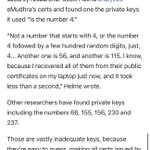
So basically, today PHP got two critical bugs that let anyone run code on your server without even logging in, which is bad, and then the details leaked before the patch was even out, which is worse, and it works on WordPress and MediaWiki and Magento and Joomla and Laravel, and Censys says like 1.5 million servers are running a version with no fix, so the NSA was like "take your system offline," and the FBI was like "take your system offline," and CISA and the UK and CERT-EU were all like "take your system offline," and then the Prime Minister of Japan, the actual Prime Minister, posted at 5:55 in the morning telling 48.8 million people to take their system offline, so everyone took their system offline, like the Dutch cybersecurity agency took its own website offline, and the Dutch parliament went offline, and the Port of Rotterdam went offline, and Finland and France and Denmark started pulling government sites, and Wikipedia went down, and Archive.org went down, and Asana and GOG and Something Awful went down, and the University of Vienna's webmail went down for some reason, and that's just PHP. Because GitLab also dropped a CVSS 10.0, which is the highest score they give out, for a bug that's been there since 2014, so that's every self-hosted GitLab for twelve years, and then LiteLLM 1.107.0 got hijacked and shipped a credential stealer and a remote access trojan in every single wheel and the Docker images, including latest, and you didn't even have to import it, just installing it was enough, and it's the second time this year, and then Railway paused every deployment on the entire platform because someone got into the environment variables, so now everyone has to rotate every secret they've ever stored there, and TiDB Cloud said someone was walking around inside with stolen credentials for basically a month and an extortion group says they took 10.6 terabytes, and Zeabur got breached for the second time in two months and is just shutting down, like the whole company, and Node.js patched remote code execution and a TLS bypass, and CISA says Plex is being actively exploited, and someone took over 300 Tor exit relays to steal SSH passwords, and SafePay ransomware has hit over 600 critical infrastructure orgs, and India's biggest bank filed a data loss incident, and Japan has been in an official state of emergency in cyberspace since October 9, which honestly explains the 5:55 AM post. Oh, and eMudhra, a certificate authority that's issued over 60 million certificates, whose entire job is proving websites are who they say they are, was supposed to be using private keys that are random numbers over a hundred digits long, and one of them was 4. Just 4. And the others were like 66 and 237. Anyway, it's Wednesday.


