

@MIT trained Neuroscientist interested #BioAI, #NeuroAI, #Neuro_Aging 🧠⚡🤖 https://xitter.cf/t.co/mrNBAVydzT 🎯 [email protected]
Houston, Texas, United States
Joined April 2023
- Tweets3.3K
- Following8.7K
- Followers16.7K
- Likes7.8K


Pinned Tweet
Friends and colleagues often ask, “What are the top 100 important "AI in Biology" papers that provide broad insights into the field?” 📚🔬 While narrowing it down to exactly 100 is no small feat, I’ve curated a list of foundational and impactful #BioAI papers. I'm sure the list would exceed more than 100 given the relentless expansion of this thrilling field! Please follow this thread for key insights, and please feel free to suggest any papers I may have missed!
With my background and interests, I prioritize papers in #AgingBiology, #CellBiology, and #Neuroscience. I’ll keep this thread pinned to my profile and update it regularly. I encourage everyone to add more papers from their own expertise—let’s make this interactive and foster engaging discussions! Here is a collection of essential #AIbio papers. #100_AIBio_Papers #AIBio_papers #AIBio_Chat #AIneuro_papers #AI_AgingBio_papers

Three reasons why AI is not conscious and perhaps never will be
nature.com/articles/d41586-0…

Functional architecture of the human insula
nature.com/articles/s41586-0…
Summary:
1/5 — Pain and sensory information are spatially organized
The dorsal–posterior insula encodes nociceptive (pain-related), temperature, and other somatosensory signals in an organized manner. This suggests that the brain maintains structured representations of bodily sensations rather than processing all sensory inputs as a single, undifferentiated signal.
2/5 — The brain integrates information across the body
The ventral–posterior insula has access to somatic information from multiple body regions. This broader integration may help the brain construct a more comprehensive representation of the body's physical state, beyond sensations originating from a single location.
3/5 — Bodily sensations connect with emotions
The mid-anterior insula is associated with visceral sensations and anxiety states. This finding highlights the close relationship between internal physiological signals and emotional experience—a central aspect of interoception, the brain's ability to sense and interpret the body's internal condition.
4/5 — The anterior insula links perception to action
The anterior–polar insula showed little response to direct electrical stimulation but robust activation during salience detection and changes in behavioral strategy. This suggests that its role extends beyond representing bodily sensations to helping the brain respond to important events and adjust behavior.
5/5 — A pathway for cognitive modulation of pain
The anterior insula has strong connections with the prefrontal cortex, including the anterior cingulate cortex. The study reveals that it can directly influence other insular regions while receiving comparatively weaker, indirect inputs from them.
This asymmetric organization provides a potential electrophysiological mechanism through which higher-order cognitive processes can shape pain perception and bodily awareness.
The big picture: The insula is not a single-purpose brain region. Its four-part functional architecture links sensory information, internal physiological states, emotions, and cognitive control.
By combining intracranial electrical stimulation, task-based EEG, and cytoarchitectonic mapping in 87 participants, the researchers move beyond identifying which brain regions activate to investigating how they causally influence one another.
#Neuroscience #BrainResearch #Pain #Interoception #NeuroAI

arxiv.org/abs/2609.40303
Summary :
🚨 Do AI agents really need complex harnesses?
A new study on autonomous ML engineering agents finds that, under equal time budgets and using the same frontier LLM, sophisticated open-source harnesses offer no advantage over a simple coding agent with read, write, and bash access.
The takeaway: The model may matter more than the machinery around it.
Multi-agent orchestration, retrieval subagents, and elaborate workflows may add complexity without improving performance on current ML engineering benchmarks.

@BioAI_Neuro retweeted
Cognitive computational neuroscience
nature.com/articles/s41593-0…
1/ Move beyond brain mapping.
Mapping which brain regions activate during a task is not enough to explain cognition. We need computational models that reproduce behavior and explain how neural activity generates perception, learning, decision-making, and action. The goal is to understand the mechanism, not just the location.
2/ Build models that perform cognitive tasks.
Allen Newell argued that understanding cognition requires constructing systems that actually perform the functions we want to explain. A theory of decision-making, for example, should predict choices under different conditions—not merely describe them verbally. Simulations help test whether proposed mechanisms work together to produce intelligent behavior.
3/ Integrate three disciplines.
Cognitive science explains the computations underlying thought; computational neuroscience investigates how neural circuits implement those computations; AI develops algorithms that perform complex tasks. Each provides different constraints. Combining them could produce models that are simultaneously behaviorally effective, computationally explicit, and biologically grounded.
4/ Neural networks are a bridge between brains and AI.
Deep neural networks learn hierarchical representations that can resemble those observed in biological sensory systems. Research has shown that networks trained for object recognition can predict aspects of visual cortical representations. However, predictive similarity does not prove that the brain uses the same algorithms. Models must also be tested against neural and behavioral evidence.
5/ Biological neurons offer more than artificial units.
Most conventional artificial neural networks use simplified units that combine inputs and apply nonlinear transformations. Biological neurons exhibit action potentials, dendritic computations, recurrent signaling, oscillations, and complex temporal dynamics. Incorporating these features into task-performing models may reveal computational principles that simpler AI architectures overlook.
6/ Neural decoding is not a complete explanation.
Decoding asks what information can be extracted from neural activity. Encoding models predict neural responses; representational similarity analysis compares patterns of activity; connectivity models examine interactions. These methods constrain theories, but they do not necessarily explain how the brain transforms information to solve a task. Mechanistic models must connect representations to computation and behavior.
7/ Bayesian inference offers a theory of perception and reasoning.
The brain must interpret noisy sensory information using prior knowledge about the world. Bayesian models formalize this process by combining prior beliefs with incoming evidence. Generative models go further by representing how hidden causes produce observations. They offer a framework for studying uncertainty, causal reasoning, concept formation, and the ability to learn from limited experience.
8/ Learning and control require multiple strategies.
Reinforcement learning provides a framework for understanding how actions and feedback shape future behavior. Model-free approaches learn values or policies from experience; model-based approaches use an internal model to evaluate possible outcomes; episodic approaches reuse specific past experiences. Understanding how biological brains combine these strategies could inform more adaptive AI systems.
9/ Combine bottom-up and top-down approaches.
Bottom-up neuroscience begins with neurons, circuits, and measured activity. Top-down approaches begin with a cognitive function and ask what computations are required to perform it. Neither is sufficient alone. Strong theories should explain how biological mechanisms support meaningful behavior—and use behavioral requirements to identify which neural mechanisms matter.
10/ The future is an integrated NeuroAI.
A major challenge is to connect three levels: computational goals, representations and algorithms, and neurobiological implementation. This requires collaboration across neuroscience, cognitive science, mathematics, and AI, along with shared datasets, models, tasks, and evaluation methods. The ultimate ambition is to build systems that perform intelligent tasks while explaining how brains learn, represent knowledge, and adapt.
The big idea:
The next leap in AI and neuroscience may come from treating the brain not simply as a source of data, but as a system whose computational principles can be tested through models that connect neural mechanisms to intelligent behavior.

@BioAI_Neuro retweeted
Real-time reinforcement for human-machine interface control
cell.com/neuron/fulltext/S08…
Summary
1. Real-time reinforcement improves motor performance: Personalized, closed-loop reinforcement feedback enhances force control during human–machine interface tasks.
2. Rapid learning: Fewer than 20 reinforcement trials produce immediate improvements in motor control.
3. Long-term retention: Improvements can persist after training, although retention gains were not observed after short training in chronic stroke patients.
4. Greater benefits with limited sensory feedback: Reinforcement is most effective when visual or somatosensory feedback is reduced.
5. Benefits for stroke patients: Real-time reinforcement improves online force control in chronic stroke patients under conditions of limited visual feedback.
6. Compensates for reduced feedback: Reinforcement helps maintain motor control when sensory information is sparse.
7. Promotes successful action selection: Reinforcement encourages individuals to repeat and exploit motor actions that produce successful outcomes.
8. Translational potential: This strategy could improve rehabilitation and control of human–machine interfaces, particularly for people with motor disabilities.

@BioAI_Neuro retweeted
Programmable design of functional proteins from natural language
nature.com/articles/s41586-0…

Cognitive computational neuroscience
nature.com/articles/s41593-0…
1/ Move beyond brain mapping.
Mapping which brain regions activate during a task is not enough to explain cognition. We need computational models that reproduce behavior and explain how neural activity generates perception, learning, decision-making, and action. The goal is to understand the mechanism, not just the location.
2/ Build models that perform cognitive tasks.
Allen Newell argued that understanding cognition requires constructing systems that actually perform the functions we want to explain. A theory of decision-making, for example, should predict choices under different conditions—not merely describe them verbally. Simulations help test whether proposed mechanisms work together to produce intelligent behavior.
3/ Integrate three disciplines.
Cognitive science explains the computations underlying thought; computational neuroscience investigates how neural circuits implement those computations; AI develops algorithms that perform complex tasks. Each provides different constraints. Combining them could produce models that are simultaneously behaviorally effective, computationally explicit, and biologically grounded.
4/ Neural networks are a bridge between brains and AI.
Deep neural networks learn hierarchical representations that can resemble those observed in biological sensory systems. Research has shown that networks trained for object recognition can predict aspects of visual cortical representations. However, predictive similarity does not prove that the brain uses the same algorithms. Models must also be tested against neural and behavioral evidence.
5/ Biological neurons offer more than artificial units.
Most conventional artificial neural networks use simplified units that combine inputs and apply nonlinear transformations. Biological neurons exhibit action potentials, dendritic computations, recurrent signaling, oscillations, and complex temporal dynamics. Incorporating these features into task-performing models may reveal computational principles that simpler AI architectures overlook.
6/ Neural decoding is not a complete explanation.
Decoding asks what information can be extracted from neural activity. Encoding models predict neural responses; representational similarity analysis compares patterns of activity; connectivity models examine interactions. These methods constrain theories, but they do not necessarily explain how the brain transforms information to solve a task. Mechanistic models must connect representations to computation and behavior.
7/ Bayesian inference offers a theory of perception and reasoning.
The brain must interpret noisy sensory information using prior knowledge about the world. Bayesian models formalize this process by combining prior beliefs with incoming evidence. Generative models go further by representing how hidden causes produce observations. They offer a framework for studying uncertainty, causal reasoning, concept formation, and the ability to learn from limited experience.
8/ Learning and control require multiple strategies.
Reinforcement learning provides a framework for understanding how actions and feedback shape future behavior. Model-free approaches learn values or policies from experience; model-based approaches use an internal model to evaluate possible outcomes; episodic approaches reuse specific past experiences. Understanding how biological brains combine these strategies could inform more adaptive AI systems.
9/ Combine bottom-up and top-down approaches.
Bottom-up neuroscience begins with neurons, circuits, and measured activity. Top-down approaches begin with a cognitive function and ask what computations are required to perform it. Neither is sufficient alone. Strong theories should explain how biological mechanisms support meaningful behavior—and use behavioral requirements to identify which neural mechanisms matter.
10/ The future is an integrated NeuroAI.
A major challenge is to connect three levels: computational goals, representations and algorithms, and neurobiological implementation. This requires collaboration across neuroscience, cognitive science, mathematics, and AI, along with shared datasets, models, tasks, and evaluation methods. The ultimate ambition is to build systems that perform intelligent tasks while explaining how brains learn, represent knowledge, and adapt.
The big idea:
The next leap in AI and neuroscience may come from treating the brain not simply as a source of data, but as a system whose computational principles can be tested through models that connect neural mechanisms to intelligent behavior.

Real-time reinforcement for human-machine interface control
cell.com/neuron/fulltext/S08…
Summary
1. Real-time reinforcement improves motor performance: Personalized, closed-loop reinforcement feedback enhances force control during human–machine interface tasks.
2. Rapid learning: Fewer than 20 reinforcement trials produce immediate improvements in motor control.
3. Long-term retention: Improvements can persist after training, although retention gains were not observed after short training in chronic stroke patients.
4. Greater benefits with limited sensory feedback: Reinforcement is most effective when visual or somatosensory feedback is reduced.
5. Benefits for stroke patients: Real-time reinforcement improves online force control in chronic stroke patients under conditions of limited visual feedback.
6. Compensates for reduced feedback: Reinforcement helps maintain motor control when sensory information is sparse.
7. Promotes successful action selection: Reinforcement encourages individuals to repeat and exploit motor actions that produce successful outcomes.
8. Translational potential: This strategy could improve rehabilitation and control of human–machine interfaces, particularly for people with motor disabilities.
Programmable design of functional proteins from natural language
nature.com/articles/s41586-0…
Entire Massachusetts fired up with PhD. I used to be one of the data points :)


@BioAI_Neuro retweeted

The next breakthrough in medical AI might come from a model that was never built for medicine.
That’s the story I shared at Meta’s Open Science Summit:
🔬 SAM → MedSAM: we adapted general image segmentation to identify anatomy and disease across medical images.
🫀 JEPA → EchoJEPA: we built on video representation learning to study the beating heart, training on 18M ultrasound videos.
Huge credit to @JunMa_AI4Health (MedSAM), @alifmunim (EchoJEPA), and our incredible collaborators.
Honored to present at @Meta's HQ in Menlo Park and great to reconnect with old friends and meet new ones!
And a big shoutout to @AIatMeta for its leadership in open-source AI. Sharing powerful models gives researchers around the world the foundations to tackle problems far beyond their original purpose. Our work is one example of that impact. @alexandr_wang
You can’t predict who will build the next breakthrough on your research. Making it open gives them a chance.
Papers + code (all open source!) 👇
MedSAM: github.com/bowang-lab/MedSAM
EchoJEPA: github.com/bowang-lab/EchoJE…


This is just amazing ! Brain region maturation rates and mental illness link !!!

The speed at which regions of the brain mature during early adolescence can forecast the emergence of mental-health conditions up to four years before symptoms develop
go.nature.com/47yuVfc

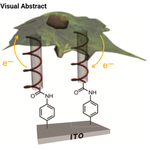
Tailoring 3D Single-Walled Carbon Nanotubes Anchored to Indium Tin Oxide for Natural Cellular Uptake and Intracellular Sensing
pubs.acs.org/nalefd/article/…
Objective: Develop a platform for real-time monitoring of intracellular events using vertically aligned single-walled carbon nanotubes (VASWCNTs).
Cell model: Used RAW 264.7 mouse macrophages as the eukaryotic cell system.
Device fabrication: Cultured cells on indium tin oxide substrates functionalized with VASWCNTs.
Direct cellular interface: Demonstrated spontaneous penetration of VASWCNTs into cells without applying external force.
Intracellular sensing: Demonstrated detection of methylene blue, a redox-active molecule, within the cellular environment.
Key innovation: Established the feasibility of directly interfacing VASWCNTs with living cells for electrochemical sensing.
Potential applications: Enables future studies of intracellular redox activity, cellular physiology, and real-time electrochemical monitoring.

@BioAI_Neuro retweeted
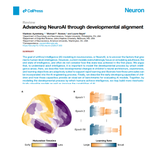
Advancing NeuroAI through developmental alignment
cell.com/neuron/home
SUMMARY:
1. Model the development of intelligence, not just its adult state. Current AI models primarily aim to replicate adult-level abilities. NeuroAI should also investigate how intelligence develops from infancy to adulthood to understand the mechanisms that produce sophisticated cognition.
2. Build AI architectures inspired by brain development. The human brain develops hierarchically, with sensory regions maturing before higher-level association areas. AI could adopt this principle by training early layers first and progressively developing higher-level layers, potentially improving robustness and learning efficiency.
3. Use developmental learning as a curriculum. Children encounter information in a natural progression from simple to complex. Training AI with gradually increasing complexity, such as blurry-to-clear images or simple-to-complex visual experiences, may improve generalization, robustness, and data efficiency.
4. Learn from children's limited but meaningful experiences. Unlike AI models trained on enormous datasets, children learn remarkably well from relatively few experiences. Training models on realistic, child-centered sensory data and age-appropriate experiences may help reduce their dependence on massive datasets.
5. Incorporate curiosity-driven learning and exploration. Children actively seek information that is neither too easy nor too difficult to understand. AI models could use predictive learning, information gain, and the ability to select their own experiences to develop more efficient and adaptive learning strategies.
6. Treat developmental milestones as benchmarks for AI. Children's perceptual and cognitive abilities emerge in a characteristic sequence. Evaluating whether AI models acquire similar capacities over training—not merely whether they achieve adult-level performance—could reveal whether their learning mechanisms resemble those of humans.
7. Use NeuroAI to discover the mechanisms of intelligence. By manipulating neural architecture, training experiences, and learning objectives in AI models, researchers can test which factors are necessary or sufficient for particular cognitive abilities. This approach can also help explain brain development, identify mechanisms of dysfunction, and inform future clinical research.
8. Integrate architecture, experience, and learning objectives. These three factors interact throughout development and should not be optimized independently. A developmentally informed approach could produce AI systems that are more biologically plausible, robust, energy-efficient, and capable of generalizing beyond their training data.
Central message: To understand and reproduce human intelligence, NeuroAI must study not only what the adult brain can do, but also how the developing brain acquires those abilities. Childhood development offers a powerful blueprint for building more capable and biologically grounded AI systems.
