

Biology of Sport is a peer-reviewed journal of sports & exercise sciences published since 1984. Impact Factor: 6.4|Q1, CiteScore: 10.7|Q1 Chief: @ZmijewskiPiotr
- Tweets1K
- Following916
- Followers5K
- Likes1.9K






ALT Amraoui M, Skjold SH, Wei X, Krustrup P, Jordet G. Starters and substitute players’ appearance and performance in penalty shootouts in major international football tournaments for men and women before and after the 5+1 substitution rule. Biology of Sport. 2027;44(1):239-246. doi:10.5114/biolsport.2027.165057.


ALT Trapletti M, Mazzoni S, Trecroci A, Bazzoni M, Esposito F, Riboli A. Match-to-match variability during whole and peak official match locomotor demands in top-class football players across sexes and age-categories. Biology of Sport. 2027;44(1):247-258. doi:10.5114/biolsport.2027.165697.


ALT Galiano C, Harper DJ, Nakamura FY, Asian-Clemente J. Deceleration and eccentric training for muscle damage protection and recovery in football: A narrative review with practical applications. Biology of Sport. 2027;44(1):259-272. doi:10.5114/biolsport.2027.165698.


ALT Lu Z, Bao Y, Guo J, et al. The whole day matters: a compositional perspective on daily movement behaviours and fundamental motor skills in preschool children. Biology of Sport. 2027;44(1):131-148. doi:10.5114/biolsport.2026.159561


ALT Materne O, Philippaerts R, Depluvrez Y, et al. A stratified ecological model of injury etiology in professional football: a context‑driven “game model” of injury risk constraints management and foresight reasoning under uncertainty. Biology of Sport. 2027;44(1):149-170. doi:10.5114/biolsport.2027.165058.


ALT Smoliga JE, Oliva V, Novosád A, Suja M, Harper DJ. Deceleration specific isometric exercises acutely enhance change of direction performance in male youth academy soccer players. Biology of Sport. 2026;43:1253-1259. doi:10.5114/biolsport.2026.159569.


ALT Nisbet D, Mandorino M, Zmijewski P, Morgans R. Context-dependent effects of environmental conditions on match running performance in elite soccer. Biology of Sport. 2027;44(1):59-73. doi:10.5114/biolsport.2027.164648.


ALT Moreno-Perez V, Courel-Ibañez J, Coso JD, et al. Rethinking recovery after hamstring muscle injury in elite football: speed exposure normalised to maximal speed reveals hidden sprint reductions after return to play. Biology of Sport. 2027;44(1):75-83. doi:10.5114/biolsport.2027.164649.


ALT Castellano J, López-Del Campo R, Resta R, Hileno R. Tell me the match context, and I’ll tell you how much the team will run, or should have run: an update and divisional extension of a predictive running model for Spanish professional football. Biology of Sport. 2026;43(1):1725-1733. doi:10.5114/biolsport.2026.164806.


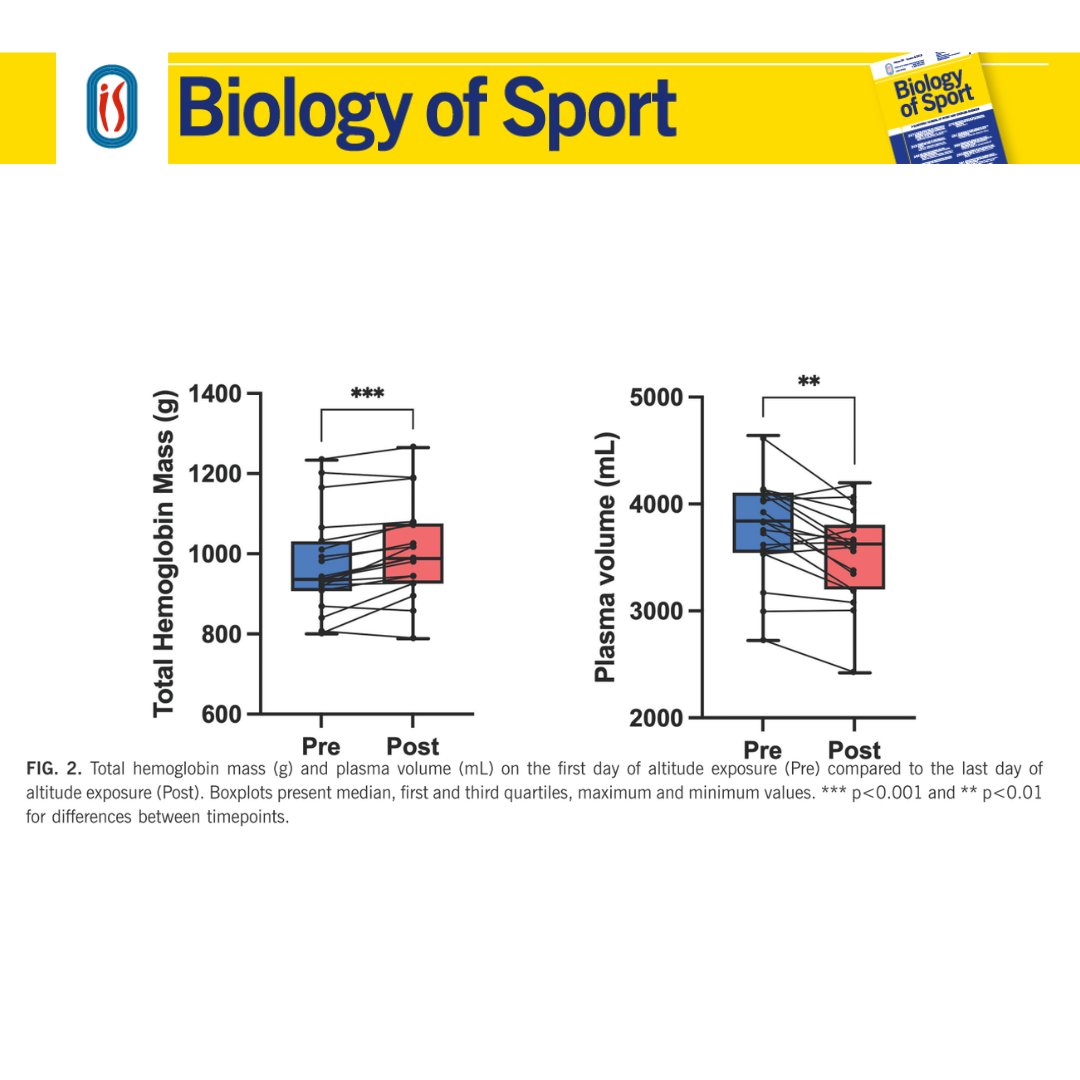
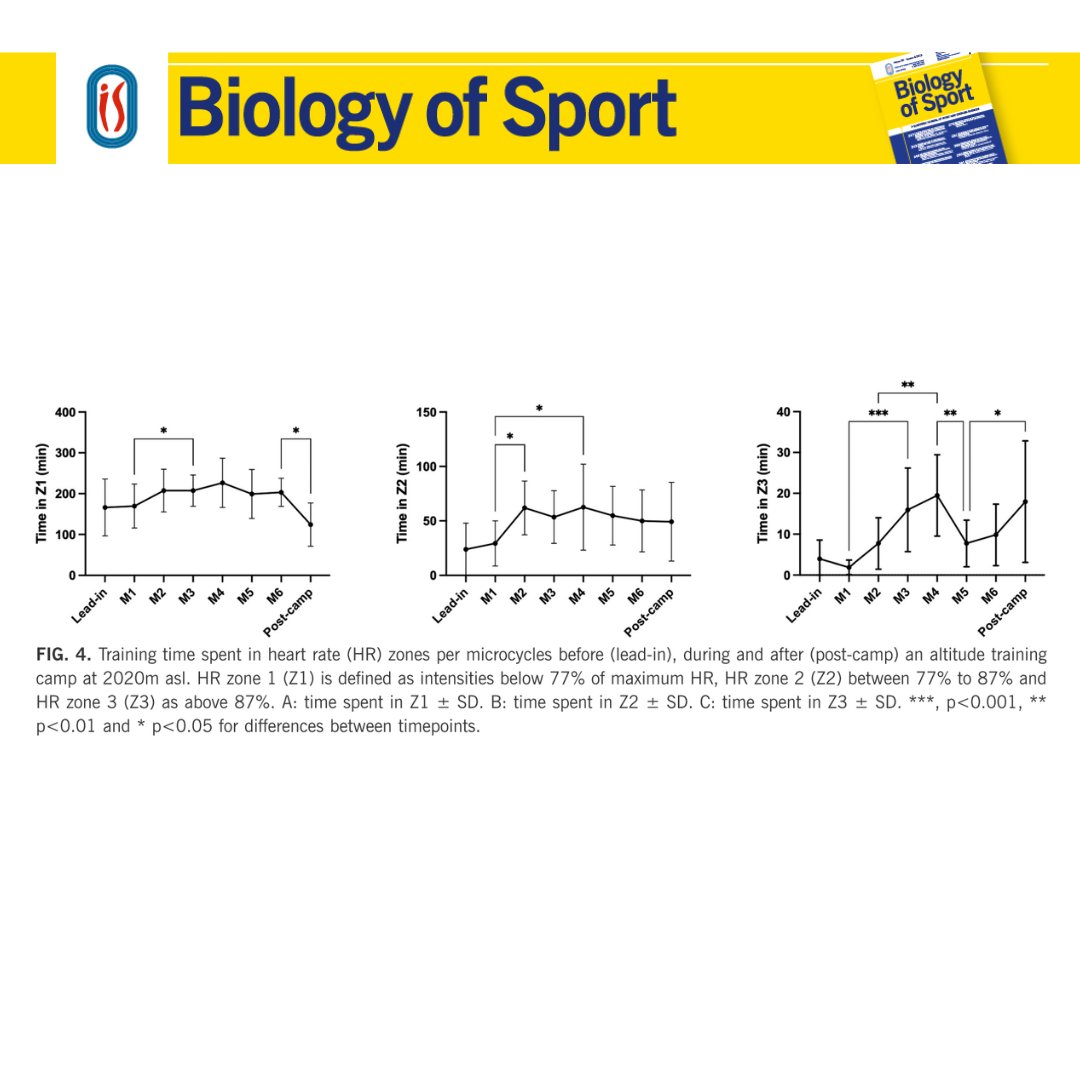
ALT Moreillon B, Krumm B, Mettraux L, et al. Power to heart rate ratio as a metric to optimize altitude training in professional cyclists. Biology of Sport. 2026;43(1):1651-1661. doi:10.5114/biolsport.2026.162049.


ALT Song J, Zhao G, Chen Z, Fu J. Associations of exercise snacks with sarcopenia and all-cause mortality: A national cohort study. Biology of Sport. 2026;43(1):1615-1639. doi:10.5114/biolsport.2026.163369.


ALT Chen Z, Qiu M, Sansone P, Gómez M, Zhang M. Analysis of key performance indicators influencing offensive effectiveness during clutch moments in elite international men’s basketball. Biology of Sport. 2026;43(1):1663-1675. doi:10.5114/biolsport.2026.163367.


ALT Liu S, Huang Y, Shen Y. Is generative artificial intelligence catalyzing a paradigmatic transformation in sport science? – Evidence from a mixed-methods systematic review. Biology of Sport. 2026;43(1):1693-1712. doi:10.5114/biolsport.2026.162050.


ALT Dergaa I, Barbaria S, Dhahbi W, Zmijewski P, Chamari K, Ben Saad H. Toward autonomous artificial intelligence agents in sports science: a modular framework for development, validation, and implementation. Biology of Sport. 2026;43:1353-1426. Doi:10.5114/biolsport.2026.161708.


ALT Cortez A, Folgado H, Brito J, et al. Performance profiles and match-to-match variability of the kinematic most demanding passages in elite men’s football: analysis of the FIFA World Cup Qatar 2022. Biology of Sport. 2026;43(1):1713-1723. doi:10.5114/biolsport.2026.160856.


ALT Dergaa I, Morgans R, Chamari K. What determined match outcomes at the 2026 FIFA World Cup? An explainable machine learning analysis of penalty area precision and composure under pressure. Biol Sport. 2026;43:1677–1692.


ALT Bastias E, Otte FW, Vaughan J, Hörtin D, O’Sullivan M. The influence of task constraints on football players’ performance: non-linear trends during goalkeeper training. Biology of Sport. 2026;43(1):1579-1588. doi:10.5114/biolsport.2026.163368.


ALT Trabelsi K, Boukhris O, Chebbi S, et al. What evidence supports primary prevention strategies for sport-related concussion? An umbrella review. Biology of Sport. 2026;43(1):1589-1614. doi:10.5114/biolsport.2026.161108.


ALT Gurton WH, Gough LA, Lynn A, Ranchordas M. Prevalence, implementation, and barriers of sodium bicarbonate supplementation in team sports. Biology of Sport. 2026;43(1):1523-1531. doi:10.5114/biolsport.2026.156235.


