

Evolutionary Biologist 🇪🇸 | Genomics Specialist 🧬 | Postdoc @ IOZ-CAS 🇨🇳 | Adaptive Evolution & Speciation of 🐟🐦🐝🐸🦎
Beijing, China
Joined June 2011
- Tweets1.9K
- Following266
- Followers276
- Likes274





Pinned Tweet
How does a cavefish (🐟) with a duplicated genome (🧬🧬) adapt to life in darkness? Our new study in @molecology reveals a key mechanism: its two subgenomes follow distinct evolutionary paths. This genetic division of labors accelerates diversification. onlinelibrary.wiley.com/doi/…

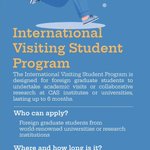
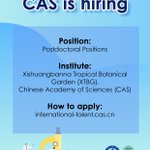
‼️ Are you interested in coming to China 🇨🇳 for a 1–6 month short-term research visit? 👉 The Chinese Academy of Sciences is now inviting international graduate students for academic visits or collaborative research, with monthly funding and travel support! ✈️📚😊

Santi Montero-Mendieta retweeted

New story on the Avian Hybrids blog!
Flipping the script: Another inversion in the Common Quail genome
avianhybrids.wordpress.com/2…
Based on the Molecular Ecology study by Sara Ravagni, Santiago Montero-Mendieta and their colleagues | #ornithology

Very happy to have my second first-author paper in Molecular Ecology this year! 🥳🎉

Out in MEC!
New study by @Biomendi, @Baocheng_Guo, et al. reveals how a #cavefish 🐟 with a duplicated genome 🧬 adapts to life in darkness. Results show that each subgenome follows a distinct evolutionary path.
@WileyEcolEvol
🔗: buff.ly/oJUwpBk
📷: Yahui Zhao

Very happy to see our paper at the website of @IRBioUB


📢 Our paper "Large Inversions Shape Diversification and Genome Evolution in Common Quails" is now out in Molecular Ecology! @molecology 🐦🧬 onlinelibrary.wiley.com/doi/…

Using a de novo genome, we reveal ancient inversions forming adaptive "islands" 🏝️ that accelerate evolution in common quails. Protecting these genomic "engines" may safeguard the species’ adaptive potential amid climate change. Full story on my website 👇 santiagomonteromendieta.gith…
🔗 I'm happy to share the updated version of my website: santiagomonteromendieta.gith…

Santi Montero-Mendieta retweeted

How does a plankton-eating fish evolve into a fast-growing, fish-eating predator? 🐟🤔 We are excited to share our new study in Nature Communications @NatureComms and answer this question! 1/n

Great talk by @tmarquesbonet today at Institute of Zoology (IOZ-CAS), Beijing 🇨🇳 ~ His research on the genomic variation of primates is truly impressive!


Excited to see the #SMBE2025 website up! As a postdoc at IOZ living in Beijing, I’d more than happy to help fellow researchers with any questions or tips about China 🇨🇳 Let’s connect and share ideas!

We are delighted to announce the launch of the official #SMBE2025 website: smbe2025.org/
Key dates can be found on the website.
We would like to remind you that the portal for submitting symposia proposals will be open on September 20th, 2024.
@SMBEmeetings

China extends visa exemption entry for citizens from 12 countries (including Spain, Germany, France, Italy, ...) until the end of 2025: mp.weixin.qq.com/s/42Q0Elpcs…
I've been living in Beijing 🇨🇳 for over a year now. My top tip for non-Mandarin speakers coming to China is to grab a VPN! 🛜 Tested a few, but WannaFlix has been the most reliable so far 👏 Feel free to use my affiliate link: wannaflix.com/aff.php?aff=82… #ChinaLife
I'm so looking forward to this one!

Santi Montero-Mendieta retweeted

Need help with my next lecture. Here is a list of animals. Tell us which most impacted human history, and why
1-dog
2-cat
3-pig
4-sheep/goat
5-cattle/zebu/buffalo
6-chicken/turkey
7-flea/lice
8-lama/guanaco
9-horse/donkey/mule
10-camel/dromedary
11-rat
12-mosquitoe
Please RT
Happy to share my incredible postdoc experience at IOZ-CAS! 🐠🔬🇨🇳 Grateful for the opportunity to be a researcher in China, where I've been embraced by the warmth of its people and vibrant culture. A truly unforgettable journey! Here is my story: international-talent.cas.cn/…

New study on Azorean common quails reveals a distinct lineage with unique traits, including small size and dark throat pigmentation. Chromosomal inversions contribute to migration loss, but not all Azorean quails possess them. This research sheds into island evolution @molecology

Island, endemism, chromosomal inversion, coexistence of lineages, isolation, Azores, common quail... EVOLUTION
🔍More in the newly published Ravagni et al. 2023 Mol Ecol "Evolutionary history of an island endemic, the Azorean common quail"
onlinelibrary.wiley.com/doi/…
#EVOLQUAIL


If any talented scientist (at professor level or above) is interested in establishing scientific cooperation with the Chinese Academy of Sciences (CAS 🇨🇳), applications for the PIFI program are still open (Deadline: 2023 April 30th)

Santi Montero-Mendieta retweeted

SW China's Yunnan discovered 19 herpetological species last year, including 11 amphibians & 8 reptiles. The province has recorded a total of 211 amphibians & 243 reptiles by the end of 2022, demonstrating its rich biodiversity resource, said Kunming Institute of Zoology, CAS


