

save what matters from every book you read
Joined May 2024
- Tweets8.9K
- Following348
- Followers74.3K
- Likes7.3K

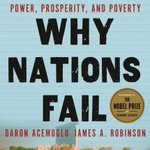






Nogales is one city cut in half by a fence. On the Arizona side, the average household earns about $30,000 a year. On the Mexican side, it’s about a third of that. If you haven’t read Why Nations Fail by Daron Acemoglu and James Robinson, you don’t know why some countries get rich. The people on both sides of that fence share the same ancestors, the same food and the same weather. What’s different is the rules they live under. Some rules let ordinary people own property, start businesses and keep what they earn. Others are built so a small elite can take everything. Geography and culture can’t explain why South Korea is about ten times richer than North Korea. Only the rules can.


How old is too old to start over? Colonel Sanders spent years building a restaurant in Corbin, Kentucky. Then the government moved the highway. The travelers stopped coming. In 1956, he sold the restaurant at auction for $75,000. After paying his debts, he was in his mid-60s and living on a $105 Social Security check each month. He had one thing left: a fried chicken recipe. So he got in his car and drove from restaurant to restaurant, cooking his chicken for the owners and asking them to sell it. His deal was a nickel for every chicken they sold. Many said no. By 1964, more than 600 restaurants were selling Kentucky Fried Chicken. That year, he sold the company for $2 million. His face is still on every bucket. Your age is not an excuse.


Napoleon once dared an entire regiment to kill him. In February 1815, he escaped from exile on the island of Elba. He was 45. He landed in the south of France with about 1,000 men. The King sent the army to stop him. Marshal Ney, one of Napoleon’s old generals, promised the King he would bring him back in an iron cage. Near Grenoble, Napoleon met a regiment that had been ordered to stop him. He walked out in front of them and said: “Soldiers of the 5th, I am your Emperor. If there is one among you who wants to kill his Emperor, here I am.” Nobody fired. The soldiers shouted “Long live the Emperor!” and joined him. So did Ney. On March 20, Napoleon entered Paris. The King had already fled. He took back France without fighting a single battle. People follow the man who isn’t afraid.


A 20-year study found the average expert predicted the future about as well as a dart-throwing chimpanzee. Superforecasting by Philip Tetlock and Dan Gardner shows what the few people who actually can predict do differently. Tetlock tracked 284 experts making about 28,000 predictions. The famous ones did worse than the unknown ones. Then the US intelligence community ran a forecasting tournament, and Tetlock entered with thousands of ordinary volunteers. The best of them beat professional analysts who had access to classified information. What set them apart wasn’t IQ or credentials. They broke big questions into small ones. They thought in percentages instead of yes or no. They changed their minds often, in small steps. And they kept score. Everyone makes predictions every day about money, jobs and people. This is the best book there is on making better ones.


If the only reason you’re staying in your job is that it feels safe, read this. In 1994, Jeff Bezos was 30 and had a great job at a hedge fund in New York. He wanted to quit and sell books on the internet. His boss took him on a two-hour walk through Central Park. He told Jeff it was a good idea, but a better idea for someone who didn’t already have a good job. Jeff imagined himself at 80, looking back on his life. He said: “I knew that if I failed I wouldn’t regret that, but I knew the one thing I might regret is not ever having tried.” He quit. His wife drove them across the country while he typed the business plan. He started Amazon in a garage. He told his parents there was a 70% chance they’d lose the money they put in. You will regret not trying far more than failing.

An ordinary journalist trained for one year and won the US Memory Championship. Moonwalking with Einstein by Joshua Foer is the story of how he did it. In 2005, Foer went to cover the contest as a reporter. The competitors told him they weren’t born with special memories. They had learned a technique. So he tried it. He practiced for a year, came back in 2006 and won. He memorized a shuffled deck of cards in 1 minute and 40 seconds, a new US record. The technique is about 2,500 years old. Greek and Roman orators used it to give long speeches without notes. It is the most useful book on memory you will ever read.


Poor Charlie’s Almanack is the best book on thinking clearly I’ve ever read. Charlie Munger was Warren Buffett’s partner for decades and one of the best investors who ever lived. This book collects his speeches. In one of them, he lists 25 ways the human mind tricks itself into bad decisions. In another, he explains that about 80 or 90 big ideas from different fields carry most of the weight in life, and that you should learn them all. His most famous advice is “Invert, always invert”: to work out how to succeed, first ask how you would fail. He once said that he and Buffett got ahead mainly by “trying to be consistently not stupid, instead of trying to be very intelligent.” It will change the way you make decisions.


Thomas Edison’s response to the worst night of his career was six words long. In December 1914, a fire broke out at Thomas Edison’s factory in West Orange, New Jersey. Chemicals exploded. Building after building went up in flames. Years of work, records and equipment were gone in one night. Edison stood outside and watched it burn. Then he told a reporter: “I’ll start all over again tomorrow.” He was already rich. He was already famous. He had every reason to stop. But the next morning, he was back at work. Within weeks, parts of the factory were running again. Never waste time mourning what you lost, just start rebuilding.

You haven’t read a truly great novel until you’ve read The Leopard. It was written by a Sicilian prince in the last years of his life. Every publisher he sent it to rejected it. He died in 1957 without ever seeing it published. A year later it came out and became one of the best-selling Italian novels ever written, and it won Italy’s top literary prize. The story follows a proud Sicilian prince watching his whole world fall apart as Italy is unified in 1860. It’s a book about pride, change and growing old, and every page of it is beautifully written.
