

Programmer, motorcyclist, pilot. Far too analytical for my own good.
Kerikeri, NZ
Joined February 2009
- Tweets95.9K
- Following375
- Followers1.5K
- Likes483





Huh, VERY unusual for me to hear a SOUTHBOUND jet at altitude over my general daytime household noise and music etc. Usually ther're coming from Vanuatu / Japan / Korea / Shanghai and are quietly descending into Auckland. I very often hear the departures to those places. But this one is RNZAF and climbing at 1600 FPM after some shenanigans.

There are one or two things I disagree with Joanne on, but not these.

If you believe free speech is for you but not your political opponents, you're illiberal.
If no contrary evidence could change your beliefs, you're a fundamentalist.
If you believe the state should punish those with contrary views, you're a totalitarian.
If you believe political opponents should be punished with violence or death, you're a terrorist.
Bruce Hoult retweeted

Starlink, Starshield, GPS, and the Claims About “Hacking”: A Technical Explanation
A post accusing Ukraine of “hacking” #Starlink is spreading rapidly on this platform.
The technical claims in that post are incorrect. They seem based on a collection of rumors circulating on Telegram, including information from Russian channels.
Unfortunately, this post and others like it are receiving an enormous number of likes and reposts.
That's why I believe it's important to address these claims with clear technical explanations rather than allow misleading information to spread unchecked.
This is a fairly detailed post, but I think the distinction matters.
Some of the technical information below comes from my own research and detailed analysis of Starlink terminal firmware, particularly its GPS, PNT, and velocity-processing systems.
#⃣ 1. What are Starlink and Starshield?
People still frequently confuse the two.
Starlink is SpaceX's commercial satellite internet service, designed for consumers, businesses, and other commercial users.
Starlink supports operation in motion, but the permitted speed depends on the service plan, equipment, and geographic region.
Under commonly available commercial plans, the maximum authorized operating speed is 160 km/h (100 mph).
In Ukraine, Starlink terminals are subject to a specific speed restriction: they cannot operate at speeds above approximately 75–80 km/h.
This Ukraine-specific restriction was introduced less than a year ago, in coordination with Ukrainian authorities, to prevent Starlink terminals from being used on drones.
Starshield is SpaceX's government-focused product and service family, based on Starlink technology and developed for national security applications.
It includes secure communications, Earth observation, and hosted payload capabilities.
Some Starshield systems involve dedicated government spacecraft and infrastructure. However, Starshield communications services can also use the underlying Starlink satellite network.
This distinction is important: Starshield does not necessarily mean a completely separate physical satellite constellation or entirely different user terminal hardware.
SpaceX develops and operates the underlying Starlink infrastructure. The U.S. government procures Starshield capabilities through contracts, with ownership and operational control depending on the particular system and arrangement.
The division of authority between SpaceX and the U.S. government has become especially relevant following the October 2026 incident.
Unlike ordinary commercial Starlink service, Starshield configurations used for military operations in Ukraine have supported substantially higher operating speeds.
#⃣ 2. Is Starshield available in Ukraine?
Yes. Starshield is operational in Ukraine and is extensively used by the Ukrainian military.
Starshield service has been used in Ukraine since approximately mid-2023. Subsequent U.S. government contracts and public reporting also confirm its availability.
The United States has procured Starshield services specifically to support Ukrainian military operations.
An October 2026 U.S. Senate letter explicitly confirms that Ukraine receives Starshield services procured by the U.S. government.
Therefore, the idea that Ukraine is somehow obtaining Starshield capabilities by secretly modifying commercial terminals fundamentally misunderstands how these services are provided.
How does the Ukrainian military use these services?
The Ukrainian military uses both commercial Starlink and Starshield.
Commercial Starlink is widely used because of its availability, relatively low cost, and excellent performance. For stationary installations and many other applications, commercial service is entirely sufficient.
Starshield is used for specialized military applications, including drones and other platforms requiring reliable connectivity at higher operating speeds.
These are capabilities provided through the Starshield service itself, not necessarily through unauthorized modifications to commercial Starlink hardware.
Using Starshield for its intended and authorized military applications is not inherently a violation of its service terms.
#⃣ 3. Regarding the October 2026 incident
Beginning on October 13–14, Ukrainian military units encountered unexpected speed restrictions affecting Starshield connectivity.
Terminals that had previously operated at substantially higher speeds began losing connectivity at approximately 160 km/h, with some reports describing interruptions at even lower speeds.
These restrictions disrupted military operations, particularly those involving high-speed unmanned systems.
The consequences were serious. Ukrainian officials reported that the restrictions interfered with drone operations, including efforts to intercept russian attack drones.
The decision-making process remains disputed. Neither SpaceX nor the U.S. government initially accepted responsibility for imposing the restrictions. Subsequent reporting and statements from U.S. lawmakers raised questions about who authorized the changes and which organization had the ability to implement them.
As of October 24, Ukraine's Ministry of Defense has officially reported that Starlink/Starshield connectivity is once again stable at speeds exceeding 400 km/h.
#⃣ 4. Does Starshield require separate hardware?
Not necessarily.
This is one of the most important points in the entire discussion.
Starshield is a government-focused service and technology family. In the case of satellite communications provided to Ukraine, existing Starlink terminal hardware can be provisioned to use Starshield service.
In December 2024, Bloomberg reported that a Pentagon contract would provide Starshield access to an additional 2,500 Starlink terminals already deployed in Ukraine, on top of 500 terminals previously covered.
The contracts therefore provided service for a total of 3,000 terminals.
In practice, compatible commercial Starlink hardware can be reassigned to Starshield service through the appropriate authorization and provisioning process.
This requires approval. It is not something that a customer can simply enable through the ordinary Starlink application.
Are there specialized Starshield terminals?
Yes.
For example, there is a specialized variant of the Starlink Mini known internally as `mini1_rugged`.
Based on my hardware research, this model uses an improved GNSS receiver, the Teseo V, instead of the receiver found in the regular Mini.
However, despite having repaired and examined numerous terminals and maintaining contact with people working with this equipment, I have not encountered evidence of this specific variant being supplied to Ukraine.
The Starshield terminals I have encountered or received information about in Ukraine are based on regular Starlink hardware.
Some terminals arrive already configured for Starshield service. Others can be provisioned for it through the appropriate channels.
The key point is simple:
A regular Starlink terminal operating under an authorized Starshield service configuration is still a Starshield terminal from the service perspective. It does not need to be physically modified or “hacked” to obtain that service.
#⃣ 5. Why does a Starlink/Starshield terminal require GPS?
Three years ago, I published an article explaining why GPS is important for Starlink terminals and how to improve GPS reception on the hardware available at that time: olegkutkov.me/2023/11/07/con…
Some of the technical details in that article are now outdated, but the fundamental principles remain relevant.
A Starlink terminal requires sufficiently accurate position and timing information for network synchronization, beamforming, and other aspects of normal operation.
Location information can also be used for geographic service authorization.
Invalid or spoofed GPS data may interfere with these processes. Depending on the magnitude of the error and the firmware's ability to detect it, the terminal may lose connectivity or become unable to operate normally.
Modern firmware also includes mechanisms to detect suspicious or inconsistent GPS information.
When GPS data is considered unreliable, the terminal may attempt to use an alternative source of positioning, navigation, and timing (PNT) information derived from Starlink's own satellite constellation.
However, this fallback mechanism is not guaranteed to work reliably under every operating condition.
This distinction helps explain why some hardware modifications focus on improving GPS reception or supplying more reliable positioning data, rather than bypassing Starlink's network authorization mechanisms.
#⃣ 6. What is Starlink PNT?
Starlink PNT is a positioning, navigation, and timing capability that derives information from signals transmitted by Starlink satellites.
By combining satellite measurements with known orbital information, a terminal can estimate its position and movement independently of a conventional GPS receiver.
Starlink firmware contains the necessary functionality to process these measurements and use them as an alternative positioning source.
Initially, this functionality was more of an experimental feature. It was interesting from an engineering perspective, but its accuracy and reliability were limited.
Over time, it has improved significantly.
Modern implementations can provide useful positioning information, including when a terminal is moving.
There are still measurement errors, uncertainties, and limitations, but Starlink-derived PNT can serve as an alternative when GPS is unavailable or unreliable.
Nevertheless, conventional GNSS remains an important and generally preferred source of positioning and timing information in current terminal designs. For now.
Can the terminal operate without GPS?
Under certain conditions, yes.
Starlink firmware provides a gRPC request called `dish_inhibit_gps`, which controls whether GPS is used as a position source.
When GPS use is inhibited, the firmware can attempt to rely on alternative positioning information.
A similar situation occurs when GPS data becomes unavailable because of hardware or communication problems.
However, disabling GPS does not guarantee that the alternative positioning solution will be sufficiently accurate or available.
It also does not automatically change the terminal's service permissions.
#⃣ 7. How does a Starlink terminal determine its moving speed?
The GPS receiver is a primary source of position and velocity information.
Proprietary NMEA messages, including `TMPV`, carry information the terminal's motion-processing logic uses.
The firmware does not necessarily trust these measurements without additional validation.
The firmware can filter GPS-derived velocity and compare it with information from other available sources, including Starlink-derived positioning.
The terminal also contains an inertial measurement unit (IMU), whose acceleration measurements can help evaluate movement and detect inconsistencies.
The firmware applies thresholds and consistency checks to these measurements.
These mechanisms run internally and aren't exposed as user-configurable settings.
If GPS measurements differ significantly from the expected values or fail validation, the firmware can reject them.
However, GPS validation and service-speed enforcement are two different things.
Rejecting GPS data does not automatically mean that the terminal has exceeded the permitted operating speed.
The terminal's service configuration determines whether operation at a particular speed is authorized.
When the relevant speed policy is violated, the terminal may report a condition such as: `MOVING_TOO_FAST_FOR_POLICY`
This distinction is essential when evaluating claims about GPS modification.
Simply changing GPS-reported velocity does not automatically change the terminal's authorized operating speed or eliminate the firmware's internal validation mechanisms.
As explained earlier, appropriately provisioned Starshield service supports high-speed operation without the same restrictions imposed on ordinary commercial configurations.
Therefore, no additional “hacking” is required to obtain high-speed capability when that capability is already authorized as part of the service.
Reliable GNSS reception remains desirable, however.
This is one reason specialized terminal designs may incorporate improved receivers, such as the Teseo V used in the `mini1_rugged` variant.
It also explains the existence of solutions intended to improve GPS reception or provide a more reliable PNT input.
**Improving positioning reliability is not the same thing as bypassing service authorization.**
#⃣ 8. How does Starlink geofencing work?
There are two important factors: geographic service authorization and physical RF coverage.
Understanding the difference is essential.
Geographic service authorization
Starlink uses geographic information to determine where service is available and whether a particular terminal is authorized to operate.
The system uses logical geographic regions rather than relying exclusively on the physical boundaries of satellite beams.
H3 is one geographic indexing system relevant to this discussion. It divides the Earth's surface into hierarchical hexagonal cells that represent geographic locations and regions.
Geographic indexing provides a convenient way to manage coverage and service policies, but an H3 cell should not be confused with a physical satellite beam.
Network authorization can depend on several factors, including geographic location, service configuration, terminal identity, and applicable restrictions.
A terminal may be physically capable of receiving a satellite signal while still being denied access to the service.
This is an important distinction when discussing restricted territories, including russia.
Receiving a Starlink signal does not necessarily mean the terminal is authorized to connect to the network.
Physical RF coverage
Satellite beams cannot perfectly follow national borders or the boundaries of geographic indexing cells.
An RF beam has a physical footprint determined by the satellite antenna, beam steering, operating conditions, and geometry.
Its boundaries are not perfectly sharp.
Consequently, a beam may illuminate areas on both sides of a national border even though the service is authorized on only one side.
This is a normal characteristic of satellite communications, not evidence that geographic service restrictions have been disabled.
The role of GPS in geofencing
The terminal's reported location provides another source of information for determining whether it is operating in an authorized region.
The network can use terminal positioning information, together with its own authorization rules, to determine whether service should be permitted.
When operation is prohibited, the terminal may receive an appropriate disablement code from the network.
These mechanisms should be understood as parts of a broader service authorization system, rather than as a single GPS check controlling everything.
Can geofencing be bypassed by supplying modified GPS coordinates?
This question requires some nuance.
Changing the location reported by a GPS receiver may influence positioning-dependent decisions, but it does not automatically override network authorization.
Starlink also has other information available to evaluate terminal operation, and its firmware includes mechanisms for detecting inconsistent positioning data.
Large discrepancies can disrupt normal positioning and beamforming calculations, trigger validation failures, or cause the terminal to lose connectivity.
Most importantly, changing GPS coordinates does not by itself grant a terminal permission to use a service or geographic region for which it is not authorized.
#⃣ 9. So what exactly is being called a “Starlink hack”?
This is where much of the confusion comes from.
The modifications being discussed online are primarily related to improving GPS reception or providing the terminal with reliable positioning and timing information.
These are technical solutions intended to improve connectivity and stability, particularly when the terminal is moving or operating in an environment with GPS interference.
They do not automatically bypass Starlink's speed restrictions, geographic limitations, or network authorization mechanisms.
As explained earlier, regular Starlink hardware can also operate under an officially authorized Starshield service configuration, which supports high-speed military applications.
Neither improving GPS reliability nor using an authorized Starshield service constitutes hacking Starlink.
It's important to understand these differences before making accusations based on photographs, rumors, or incomplete technical information.
#⃣ Conclusion
Starlink and Starshield use closely related technologies, but they are different services with different capabilities and restrictions.
Regular Starlink hardware can operate under an officially authorized Starshield service configuration. No special hardware modifications are required.
Improving GPS reception or providing reliable positioning data does not mean bypassing Starlink's network restrictions.
Using Starshield for authorized military operations is not hacking. Neither is improving a terminal's GPS reliability.
My goal is simply to explain how these systems work and clear up the confusion surrounding them.
Technical accusations should be based on evidence, not rumors.
#starlink #starshield #gps
Interesting that while they welcome it, Russian newspapers don't have a lot of confidence in Trump's current anti-Zelenskyy rhetoric.

First full two week period of the new Electric Kiwi tariffs that started on 19/9: daily charge up from $1.15 to $1.60, 7AM-11PM rate up from 38c to 45c, but 11PM-7AM rate down from 32c to 18c (which is hoooge).
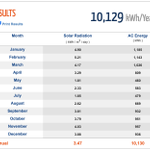
Result: 223.02kWH of grid power for NZ$45.42 of which $22.40 is the daily charge. Average cost 20.36 c/kWh incl daily charge, 10.32 c/kWh just for the electricity, or 6.47 c/kWh including the 132.52 kWh from my 2.64kWp of solar panels (effectively 3.6 hrs/day in still early spring)

Bruce Hoult retweeted

This is still one of my favorite photos. It is the first time they mated starship with the heavy booster. Neither flew, they were just mock-ups for fit.


Lenticulars in Northland rn ... is that real? Can't see any sign from Hukerenui due to too much local low level cloud. @WeatherWatchNZ

Spring is springing (so will the clocks in 10 days), the little red Honda adventure/exploring bike passed the safety inspection and is ready for summer. I’ve had this one just over six years (since the start of COVID). In another six years I’ll be 70, hope I’ll still be using it then, and long after. I own another bike with 4 1/2 times the engine size but this little guy is so fun.


Wow I wish I knew about this sooner! Free site that returns machine-readable (JSON) weather data for any location and any day past or near future.
All kinds of hourly weather data is available from sun to cloud to wind to UV index. Even, as shown here, total solar power (direct and diffuse) per m^2 of solar panels at a tilt and azimuth you specify. Just multiply by your array area and efficiency and you're set to go for solar planning.
Here it is for a point not a million miles from me ... a long walk or a short bicycle :-) I'm post-processing it with a simple "jq" script to make it useful at a glance.
api.open-meteo.com/v1/foreca…
@WeatherWatchNZ


Flight of the Conchords were right about Business Socks.

a lab in the netherlands scanned couples during orgasm and stumbled onto the strangest finding in sex research.
when women wore socks, the orgasm rate jumped from 50% to 80%
the researchers weren't studying socks. the scanning room was cold, some women complained, socks were offered. suddenly the success rate exploded and the team realized they'd accidentally run the most important experiment of the study
the mechanism showed up right on the brain scans. female orgasm requires the amygdala, the brain's fear and threat detection center, to power down. cold feet kept the threat system quietly online. warm feet let it switch off. that tiny bit of physical discomfort was enough to block the entire cascade
- her brain cannot climax and scan for problems at the same time. the systems are neurologically mutually exclusive
- socks are a stand-in for the real variable: comfort. temperature, privacy, no time pressure, no risk of interruption, nothing pinching or hurting. every small discomfort is a tax on the fear center
- this is why the same technique works one night and fails the next. the variable that changed wasn't your hands. it was her nervous system's threat level
- the environment is doing foreplay before you touch her. warm room, locked door, no rush, phone away
men study techniques for years and lose to a cold room. her nervous system decides if orgasm is possible before your skills ever enter the conversation. handle the amygdala first. the socks were never about socks
Just got notification my power prices are changing on Electric Kiwi "MoveMaster" in the Northpower (Whangarei) region from Sep 19.
Daily charge: $1.15 -> $1.60
7-9 AM, 5-9 PM weekdays: $0.6375/kWh -> $0.6036
11 PM - 7 AM: $0.3187 -> $0.1810
Other: $0.3825 -> $0.4527
Mixed bag. $164/year more in fixed charges hurts. Slight reduction in peak rates, but I already use zero power in those times (run on battery).
It's nice to finally have a real night rate. Before the 9-5 price was only 20% more than night, meaning there was zero benefit in charging batteries at night to use during the day as the round trip loss of AC->DC->battery->DC->AC is right around 20%.
Now with 9-5 rates at 2.5x the night rate that's worth charging batteries for, maybe even buying more.
Charging before 5 PM to use in 5-9 PM is now less attractive ... peak will now be 1.33x day, until now it's been 1.67x day.
This is going to make it much harder to know how much to charge batteries at night. Until now the main thing was just to have enough in the battery to get through the 7-9 AM peak, see how solar production went during the day, and top up before 5 PM as needed.
Now a 4-5 PM top up is barely going to be worth it compared to just seeing how it goes between 5-9 PM and switching back to grid power if needed ... which I've previously regarded as a disaster if it happens (very very rarely if I start from 100% charged).
There will now be a premium on forecasting how much solar production there will be next day, before bed time, especially in winter where it's probably going to pay to have 100% battery charge at 7 AM while until now I've used 60%, which becomes 15%-25% at 9 AM, allowing plenty of room for a good sun day to charge the battery and if it doesn't then oh, well, just top up to 100% in 4-5 PM.
I think maybe now I have to get more battery and try to use zero grid power all the way from 7 AM to 9 PM every day. Need to do some calculations.
Numbers crunched with the help of @grok and the last 12 months of half-hourly power usage data. It's now worth expanding battery from the current 6.144kWh to ~10kWh which will both 1) prevent full battery by 12-1 PM and wasted sun the rest of the afternoon, and 2) start winter days at 100% battery at 7 AM and get as far towards 9 PM as possible without using grid power at all. With 3.5-4.5 kWh used between 7 AM and when the sun starts working well (best case) 10-11 AM in winter, and then typical 5-6 kWh of solar production there's no chance of the battery hitting 100% again.
That's midwinter. Now in August I'm getting more 8-11 kWh solar days (but not always). Having 4kWh of available battery capacity at 10 AM, plus usage during the say, is plenty to absorb that. And on the rare worst days with 0.5 or 1 kWh of solar production ... I can switch to using grid power between whenever the battery drops to 6 kWh left and 5 PM.
EP3800-48V 75 Ah 3840 Wh expansion battery ordered ... looks like ~4 year payback on that, assuming no power price increases. Looked at Micromall's 100 Ah battery for $1999 but it's only very slightly cheaper at NZ$400/kWh vs $429/kWh for Pecron's own ecosystem supported pre-integrated battery.
Well ,that's the first outage here for a while. I've only got the 6kWh battery at 60% because I'm expecting a good solar day tomorrow. It's going to last 20 hours running the fridge and internet and computers, or 3h20m running the heat pump as well. Decent solar production starts in 8 hours. I guess I can keep the place warm for 2 hours and if power isn't back then I've still got 8 hours of power for everything else.
