

Korean New Zealander 🇰🇷🇳🇿 A man who loves nature, enjoys the humanities and history, and finds pleasure in the simple, everyday thoughts of life!
대한민국
Joined September 2026
- Tweets89
- Following1.7K
- Followers1K
- Likes9.1K







After lunch this afternoon, the sky suddenly became quite noisy; looking up, I realized it was the "Black Eagles"—an aerobatic team flying the T-50B, a supersonic advanced trainer jet that is the pride of the Republic of Korea Air Force. They are well-known for performing spectacular air shows in many countries around the world. I feel an immense sense of pride, as the very first leader of this team happens to be a friend of mine.


A long time ago, I visited Juwangsan Mountain in Cheongsong, Gyeongbuk, with my wife. The mountain is stunning, and its unique rock formations are truly magnificent. As a national park, Juwangsan is characterized by deep gorges and striking rock formations created by the accumulation of volcanic ejecta. Because the mountain’s landscape rises like a folding screen, it has long been referred to as "Seokbyeongsan" (meaning "Stone-Screen Mountain"). It serves as a hub for key attractions within the Cheongsong UNESCO Global Geopark.
Unique Rock Formations and Geological Landscapes: The area features a succession of distinctive volcanic rock formations, including the towering crags behind Daejeonsa Temple, the columnar joints at Geupsudae, and the Yongchu Gorge—which looks as though the rocky mountain itself has been split apart. Waterfalls and Valley Trails: A quintessential route is the Juwang Valley trail, which begins at Sangui, passes Daejeonsa Temple, and leads to Yongchu Waterfall (the first waterfall), Jeolgu Waterfall (the second waterfall), and Yongyeon Waterfall (the third waterfall). The section between Sangui and Yongchu Waterfall has a gentle incline, making it perfect for a leisurely walk, while the paths extending further—or those heading toward the peaks of Jubong and Gamebong—offer a more challenging hiking experience.


In Sejong City, you can visit Sejong Lake Park, an artificial lake. It is an urban waterfront park spanning a total area of approximately 697,246 square meters (about 210,000 pyeong). The lake itself covers about 322,800 square meters and holds approximately 508,000 tons of water.
The park features an 8.8-kilometer walking path and a 4.7-kilometer bicycle path. A key highlight is the network of themed islands within the lake, which are connected to the waterfront paths, making it an ideal place for a leisurely stroll or a bike ride.


It has already been 35 years since I, after getting married, visited my sister-in-law’s family in Haeundae, Busan, with my wife and children. Perhaps the reason Busan suddenly came to mind is that the southern part of the country is less cold during the winter? This seems like a perfect opportunity to introduce Busan. As South Korea’s second-largest city and its primary trading port, Busan is a coastal hub for tourism and culture, where blue seas, steep mountains, traces of modern Korean history, and a vibrant, contemporary urban landscape all come together. Iconic local delicacies include *dwaeji-gukbap* (pork and rice soup) and *milmyeon* (wheat noodles)—dishes that emerged from the hardships experienced by refugees during the Korean War and have since become quintessential "soul foods" of Busan. You can also enjoy fresh, seasonal raw fish and seafood at places like Jagalchi Market or Millak Raw Fish Town. Furthermore, the city is famous for its street food, such as the *ssiat hotteok* (seed-filled sweet pancakes) and *eomuk* (fish cakes) found at BIFF Square, as well as the diverse array of treats available at the Bupyeong Kkangtong Night Market.


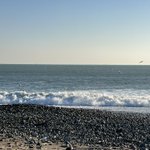
The air by the sea at dawn in winter is so cold that it seems to drain every bit of warmth from one’s body. Yet, it holds a certain charm—a peculiar allure that feels as though it resets a heavy mind and spirit. The sun rises with cautious grace, only to soon reveal a majestic, unapproachable presence, embracing the entire expanse of the sea.


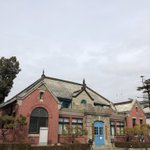
Gunsan is a port city that encompasses both a downtown area—densely packed with modern cultural heritage from the period of Japanese colonial rule—and the Gogunsan Islands, a collection of beautiful islands in the West Sea. Following its opening as a port in 1899, it served as a major hub for the export of rice from the Honam Plain to Japan during the colonial era. Because the painful history and the realities of daily life from that period remain intact, the entire city center functions as a living museum of modern history.
Notably, sites such as the former Gunsan Customs building, a traditional Japanese-style house (the Japanese-style house in Sinheung-dong), Dongguksa Temple—the only Japanese-style Buddhist temple in Korea—and the Modern History Museum are all located within walking distance of one another.


Every year around this time, my wife and I would go on a trip to see the winter sea. However, our travels have been put on hold since last year, when our daughter was hospitalized and began receiving treatment for a rare condition called neuromyelitis optica. I truly hope we can resume our winter seaside trips and once again experience the unique charm of that cold, biting wind.


Animals that hibernate, like squirrels, are likely busy gathering nutritious food to prepare for their long winter sleep. I truly hope they stay well-fed throughout the winter, enjoy a peaceful, uninterrupted slumber, and emerge healthy when spring arrives and new leaves begin to sprout.


When winter arrives in Korea, Jeju Island—located in the south—naturally comes to mind as a travel destination. Jeju has long been known as "Samdado," or the "Island of Three Abundances," referring to its abundance of stones, women, and wind. I spent my honeymoon on Jeju Island 38 years ago, and I haven’t returned since. However, I would love to visit again sometime in the near future.


New Zealand, where I lived for a long time, is a lovely country—a second home and a place that feels just like a hometown to me. As you travel from the airport toward Auckland along the motorway, Cornwall Park—a key landmark—comes into view, featuring a striking tower that stands tall atop a small hill. While Auckland is a bustling commercial hub, it also possesses a warm and inviting charm. Since the seasons there are the exact opposite of those in Korea, now is the perfect time to visit.


