

Centre for Science and Environment is a public interest research and advocacy organisation based in New Delhi.
New Delhi, India
Joined July 2014
- Tweets15.2K
- Following619
- Followers27.1K
- Likes1.9K








📢 Happening tomorrow!
As part of Agenda for Survival 2026, CSE’s Environment Education team is hosting 'Communicating for Impact', an online session for young writers exploring clean energy and just transition.
More than 40 students have spent the past few months learning from CSE and external experts and producing articles on these themes. To bring the programme to a close, three seasoned journalists and writing professionals will share their experiences, practical advice and real-world examples of impactful environmental storytelling.
🔒 Participation by invitation only.
@jayashreenandi @jayantabasuenv @rameshmenon100

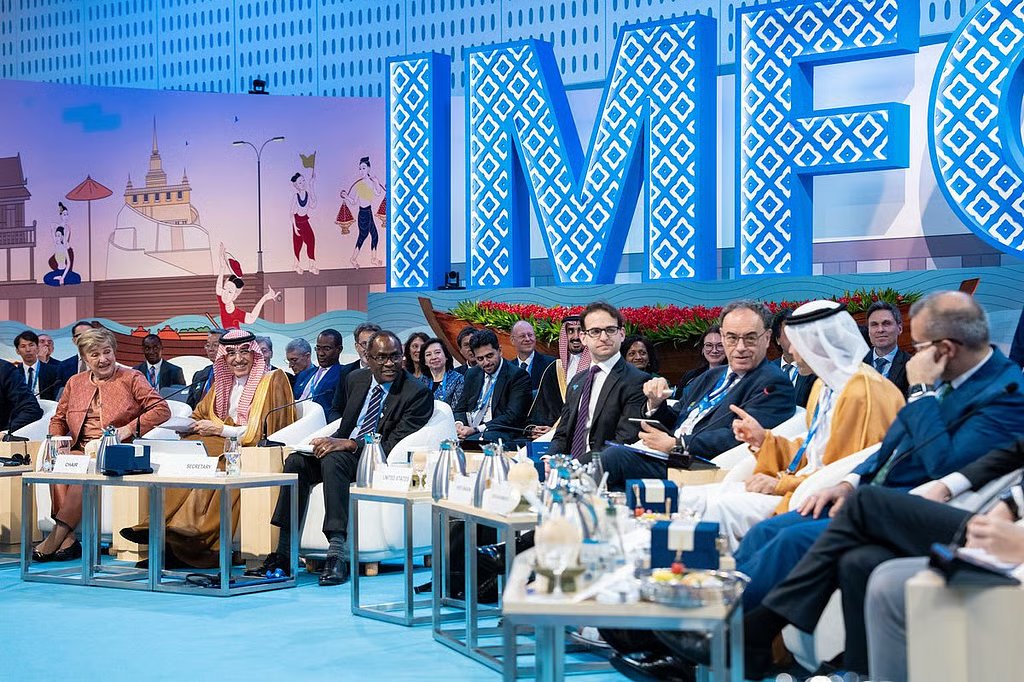
The first Xingu Finance Talks, convened by the COP30 Presidency on the sidelines of the IMF-World Bank Annual Meetings in Bangkok, brought climate negotiators and finance actors into the same room.
The aim was to further discussions on practical pathways for aligning financial flows with climate goals in line with Article 2.1(c) of the Paris Agreement. @SehrRaheja from the @CSE_Climate team attended the talks.
In her latest article for Down To Earth, she covers the proceedings and what lies ahead on the road to #COP31 in Antalya👇
downtoearth.org.in/climate-c…
India’s cement and steel industries are growing rapidly. But at what carbon cost?
Together, these two sectors emit over 600 million tonnes of CO₂ every year. As production expands, cutting emissions will be critical to meeting India’s climate commitments.
In this reel, Sayantan Haldar, co-author of CSE’s new reports Cementing Transition and Forging Transition, explains how energy-efficient technologies can help decarbonise these industries.
Here are the links to the report.
Cementing Transition: The Role of Energy Efficiency in Decarbonising India’s Cement Sector: cseindia.org/cementing-the-t…
Forging Transition: Decarbonising the Indian Iron and Steel Sector through Energy Efficiency: cseindia.org/forging-transit…
India spends ₹1.71 lakh crore on fertiliser subsidies. Yet, our soils remain nutrient-deficient. So, are we missing something fundamental about soil health?
In the new episode of The Sunita Narain Show, she explores why the answer to healthier soil may lie in the millions of living organisms beneath our feet.
Watch now: youtu.be/bwuCl7BKqKE
@sunitanar @down2earthindia @JoelMichaelhps @rajeshwari_s14 @GauriAr16029422 @chhavi_mahaur

Energy security is a priority as India expands its solar energy capacity. But large-scale solar projects can also threaten common lands that local communities depend on for grazing and their livelihoods. When land rights are overlooked, these communities risk losing access to these vital resources.
@CSEINDIA will confront this governance gap directly during our capacity-building workshop, Conflict & Commons: Community-Centred Land Governance for Renewable Energy.
We are featuring independent journalist @SafeenaWani from Jammu and Kashmir to lead an expert session. Her reporting exposes the reality of state encroachment. She will examine how green infrastructure development systematically bypasses local consent and pastoral rights.
Know more about the workshop here: cseindia.org/conflict-common…

How are companies claiming 100% waste collection? How can we claim that five years’ worth of plastic waste has been removed? If the system is working so well, why do we still see plastic everywhere?
In the latest episode of The Sunita Narain Show, she questions the claims being made under India’s plastic waste management system.
Watch the full episode: youtu.be/xzkWZ2CmJE8
AI can write a report, summarise a study and generate content in seconds. But how do we know if the information it gives us is correct?
Knowing how to use AI is one thing. Knowing when to question its answers, verify the facts, make sense of data and communicate what we find is just as important.
These are skills that researchers, journalists, communicators and development professionals need today.
@CSEINDIA is organising the Global Online Certificate Course: AI, Data and Fact-Checking for Effective Research and Communication.
The course will help participants explore how AI can support their work, how data can make their communication more effective, and how fact-checking can help them separate reliable information from misinformation.
To know more and to sign up for the course, visit: cseindia.org/global-online-c…

Are India’s seasons changing? Unseasonal rain damaging crops before the monsoon. Severe heatwave conditions in Himachal Pradesh in the first week of March. Cold-wave events extending into the post-monsoon period.
India’s extreme weather patterns are raising questions about the timing, intensity and distribution of weather disasters.
Down To Earth's Climate India 2026 e-atlas examines extreme weather events across India, tracking their occurrence and the associated loss and damage. Drawing on five years of daily weather-event tracking, it offers a season-by-season, month-by-month and region-by-region assessment of the damage caused by extreme weather.
Join us for the launch of Climate India 2026, featuring @sunitanar @richiemaha and @KiranPande4976 to explore the findings:
us02web.zoom.us/webinar/regi…

What exactly is an EPR certificate, and how does it put a value on plastic recycling?
Under India’s plastic waste management system, each tonne of plastic recycled generates an EPR certificate. Since 2022, 17 million such certificates have been generated, with an estimated trade value of ₹2,500 crore.
In the latest episode of The Sunita Narain Show, she explains how the system works, what happens when companies fail to meet their recycling targets, and the proposal to make these certificates tradable. Full video: youtu.be/xzkWZ2CmJE8
@sunitanar @down2earthindia @JoelMichaelhps

Marine litter needs more than awareness. It needs ideas that lead to action.
We are excited to launch The Marine Pitch, a student contest to identify a marine litter problem and pitch creative, practical solutions.
The contest is part of the @CSEINDIA's GSP Marine Marshals Programme, a free, three-month online engagement programme for students in Grades 6–12 from Green Schools Programme network schools.
We strongly encourage students from coastal schools to participate and bring forward ideas to tackle the marine litter challenges in their communities.
The contest launches on Oct 30, 2026. Stay tuned for more information!
Learn more about the Marine Marshals Programme 2026: cseindia.org/marine-marshals…


What is behind the toxic haze engulfing Singapore and Malaysia?
In this video, @bluewrit of @down2earthindia explains how forest and peatland fires in Indonesia, fuelled by unusually dry conditions, are driving the recurring pollution crisis across Southeast Asia.
Watch the full video: youtu.be/WJS4ObftSmY
Read this piece by Akshit to know more about Indonesia wildfire: downtoearth.org.in/climate-c…
From native rice varieties, camel milk to wild mahua flowers and lesser-used spices, India’s agricultural biodiversity is rich, but getting these foods onto our plates isn’t easy.
In this reel, Vibha explains why connecting these foods with consumers remains a challenge, and how some enterprises are working to bring them back to our plates.
Our new report, The Agrobiodiversity Economy, looks at 10 such enterprises and explores the policy changes that could help support biodiversity conservation and strengthen rural livelihoods:
cseindia.org/the-agrobiodive…
CSE experts @aygoswami and @LimayeAdwait respond to the @UNEP’s Emissions Gap Report 2026: The Point of Return, highlighting the need to accelerate emissions reductions, scale up policies that work and ensure the Global South does not bear a disproportionate share of the burden of climate action.
The UNEP report warns that the chance of limiting warming to 1.5°C with no or limited overshoot is gone.
Swipe through to read their perspectives on the way forward.
We have also broken down what the report says about the 1.5°C threshold, the implications of current climate pledges and the urgent emissions cuts needed to limit warming. Read our breakdown here: linkedin.com/feed/update/urn…


Last week, we kicked off a poll series based on our new book, Climate Change Challenge: A Quiz Book for Curious Kids. Here's your second question.
True or False? Greenhouse gases are essential for the survival of humans and other living beings.
100%True
0%False
2 votes • 1 daysHow do annual climate negotiations shape global climate law and governance?
Our online course, Global Climate Law and Governance: Regulations, Policy and Emerging Frontiers, brings together experts to explore the legal principles, diplomatic negotiations and processes shaping global climate action.
Swipe to meet more of the experts joining us. →
▶️ @AnaMulio, Climate Diplomacy and Resilience Expert
▶️ Tejas Rao, Research Director, Centre for International Sustainable Development Law, @Cambridge_Uni
▶️@SusanAnnSamuel1, Postdoctoral Research Fellow, International Climate Politics, @UniversityLeeds
Last chance to register! The course begins on October 22, 2026.
Sign up now: cseindia.org/otprograms/regi…
Learn more about the course here: cseindia.org/global-climate-…


PM-KUSUM’s next phase: What should India get right?
Phase 1 of PM-KUSUM has seen the deployment of 11.8 lakh standalone solar pumps and 2,200 MW of decentralized solar capacity nationally. As Phase 1 draws to a close, lessons from the ground are helping identify the priorities that should shape the next phase of the programme.
The experience so far points to several priorities that need closer attention: scalability of feeder-level solarisation, local grid stability, dual-use agrivoltaics and accessible rural financing models.
As discussions around the redesign take shape, capturing the ground-level perspectives of diverse stakeholders is vital to identifying what needs to change to make projects financially viable, bankable and accessible to farmers.
Join @CSEINDIA for a webinar to discuss the lessons from Phase 1 and what India must prioritise in the next phase of PM-KUSUM: us02web.zoom.us/webinar/regi…
Check out the speakers below. 👇
