

Data Scientist during the day, Policy Analyst at odd hours. Views are my own.
Accra
Joined March 2010
- Tweets157K
- Following1.7K
- Followers14.2K
- Likes1.5K




Pinned Tweet
Over the last year, unemployment in Ghana has worsened. It's even worse compared to 2017 levels. Share of salary/wage employment in total employment has also declined. And I still cannot verify the 'jobs created' by govt from public data. My latest article alfredappiah.com/posts/2024-…

Coming into office to meet a mountain of arrears, deferred debt that would eventually need to be repaid, and an IMF program that had gone off track were all major challenges. And even after stabilizing the economy, and getting things largely under control in the first year, the second year starts with significant increases in global crude oil prices that could derail your disinflation path.
Has the definition of a major challenge changed?

Election 2028: Finance Minister Ato Forson has not faced any major challenge yet. DDEP is the reason why there is calmness in the economy he is running.
- Kofi Bentil, Vice President, IMANI Africa, comparing Ato Forson to Dr Bawumia ahead of 2028 general election
#TheKeyPoints #TV3GH
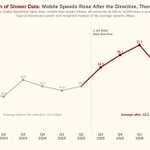
Mobile data in Ghana is cheaper since the sector minister's directive in July 2025. With help from the Wayback Machine, I compared MTN's published prices before and after, and in cedis per gigabyte, the cut is real.
On every MTN bundle, you now get about 14% more data for the same money. Most of that came from the directive, and a little more came from the VAT changes in January. The minister said data is 10 to 15% cheaper, and MTN's prices back him up. Credit where it is due.
But the job is not finished.
The directive mostly took us back to 2023. MTN raised data prices twice that year, the second time by 15% in November. The July 2025 directive reversed that November increase, so the small bundles are back to their mid-2023 prices.
That still leaves them about 16% more expensive per GB than in January 2023. The 399 cedi bundle, on the other hand, is fully back to its January 2023 level of 214GB. People who can spend 399 cedis at once got all the way back. People buying 1, 2 or 5 cedi bundles did not.
The next push should be for bigger cuts on the small bundles, the 1, 2, 5 and 10 cedi bundles most people can actually afford. That is where most ordinary users buy, and it is where a cut would make the biggest difference to daily life.
Good progress so far. Now let's make it count for the people at the bottom.


Before we spend more public money on Year of Return, Beyond the Return or December events, we need to answer some basic questions. What were we trying to achieve and to what extent have we achieved it? And how much has it cost us so far?
In 2019, Ghana had about 108,000 more visitors than the pre-Year of Return trend would suggest. The government said the Year of Return brought in $3.3 billion. But that was total tourism receipts for the year, from every visitor, including people who would have come anyway. Even on the government's own figures, the extra visitors are worth about $317 million. We still don't know the full cost.
If we are not clear on what we want to achieve, or how far we are getting, how do we know public money is really needed? How do we know some of these things wouldn't have happened anyway?
Last year people said government didn't do enough for December. Yet December arrivals rose 11% in 2025, recovering from almost no growth in 2024. It was the rest of the year that stayed flat. Average spend per visitor did fall, likely because a stronger cedi made Ghana more expensive in dollar terms and visitors cut back or stayed shorter.
So what was it for? More celebrities? Clubs open till 7am? Investment and people resettling here? What does the data tell us?
If it's about jams, I would argue that the private sector could organise that without state money. The real work is making Ghana worth visiting all year round.


Formalizing small-scale mining is the right direction. Turning unlicensed miners into licensed, trained and financed cooperatives is better than chasing them with soldiers.
But we have been here before. Community mining was meant to regularize these miners. Issuing large numbers of small-scale licences was also meant to regularize them. Neither ended galamsey.
A key problem was that the pace of formalization outstripped the state's capacity to supervise it. Licences were issued faster than sites could be inspected. In several places, community mining drew allegations of becoming a front: excavators, outside financiers and the same destructive methods, now operating under a community banner. A licence without inspection becomes a permit to do the same thing with a stamp on it.
Then there is the scale of the problem. Estimates often put the number of people directly involved in small-scale mining at around a million, with several million more depending on it. Which inspection system in Ghana can monitor a million miners across thousands of sites? For formalization to work, not everyone currently mining can be absorbed. Some will have to exit, especially those in water bodies, forest reserves and unviable areas. That needs a clear cutoff date and real support to move into other work.
So what have we learned that makes this attempt different? I would like to see answers to a few questions:
- Was community mining ever independently evaluated, and what did it find?
- How many inspectors are there, and how many sites can they realistically cover?
- How will the number of cooperatives be matched to that capacity?
- How will outside financiers and equipment owners be kept out?
- What happens to miners who cannot be formalized?
- Will results be published, site by site, for the public to scrutinize?
This does not mean I am against formalization. I support it. But past failures should shape this attempt, and we need to see exactly how. Otherwise we risk licensing galamsey instead of ending it.
I’m beginning to support @yaron__zango’s call for the state to own the ASM operations though. The only challenge I have is the potential capture by cronies which could potentially undo the whole thing. There were reported cases of partisan capture in the community mining schemes.
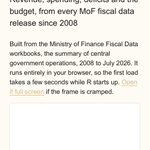
My blog now has a second dashboard for you to explore Ghana's fiscal data going back to 2008.
Pick any year and you get a plain-language summary of what the government collected, spent and borrowed. You can chart any revenue or spending line by year, quarter or month, in cedis, as a share of GDP or as a share of revenue.
You can also compare what was budgeted with what was actually collected or spent, see how much of the revenue went to wages, interest and statutory transfers before anything else was funded, and track which taxes carry the budget.
You can also download all the data as a csv to explore in your own environment.


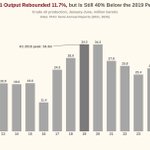
Ghana's petroleum revenue watchdog, PIAC, has released its half-year report on petroleum revenue management. One of the highlights is a recovery in oil output compared to last year. Ghana produced 20.6 million barrels in the first half of 2026, up 11.7% from 18.4 million barrels in the same period of 2025. Jubilee and Sankofa drove the increase, while the TEN field continued to decline.
Petroleum receipts increased by 52%, from US$370 million to US$561 million. The increase was driven mainly by higher crude prices and a 37% rise in corporate income tax. Ghana's 2026 budget assumed a benchmark price of US$76.22 per barrel, but the price the state achieved on its cargoes this year averaged US$92.81 on the back of the global crude price increase. That should help offset some of the fiscal costs of the relief government is providing to consumers at the pump.
Still, petroleum output is far from its 2019 peak. First-half production is about 40% below the 34.3 million barrels produced in the first half of 2019. Higher prices can lift revenue for a while, but they cannot make up for falling volumes. PIAC is calling for a framework to attract investment into the existing fields, especially TEN, and the upstream sector will need significant new investment to get anywhere near those levels again.


I watched the full discussion, and it was very interesting.
@BBSimons’ central argument, as with many other issues, is that we fail to learn from our past mistakes. We keep trying to solve the same problems over and over without making meaningful progress.
So, what exactly will be different with the AI data centre?
The minister’s response included the fact that this is a Cabinet-backed decision. But that’s not really a solid answer. I can’t think of many major policies that would be implemented without Cabinet backing.
I think it’s easy to interpret positions like Bright’s as pessimism. But the questions he raises are important because our policy history shows that we have failed at many things.
What exactly are we doing differently this time, and how robust is the plan?
Before we even move to implementation, share the details, including the sequencing, and let’s debate the alternatives.
The usual rebuttals are that “we have to start from somewhere” or that “it’s too theoretical”. But if we haven’t made much progress by doing more of the same, isn’t that a cue for us to change course?


When you look at longer time series of Ghana's fiscal performance, there is a lot to think about.
In the first seven months of 2008, interest payments took about 11% of the revenue Ghana collected. By 2020 and 2021, they took half. COVID-19 alone does not explain that. The interest share had already climbed from 30% in 2016 to 41% in 2019, before the pandemic hit.
The debt restructuring changed that. The interest share fell from 48% in 2022 to 23% in 2023. In January to July 2026, it was 17%, the lowest since 2012.
Interest is one of three bills that come before anything else gets funded. The others are wages and the transfers to statutory funds like the Common Fund, GETFund and NHIF. From 2017 to 2022, these three took more than all the revenue collected. In 2020, they took 131%. In 2026, they took 74%, the lowest since 2013.
This progress deserves support. Tighter commitment controls, arrears clearance and the fiscal rules in the PFM Act are what will keep it from slipping. Holding that discipline as restructured interest rates rise and elections return will decide whether 17% stays the floor.


Nkrofuo kuta job numbers ooo.
His own ministry's 2025 budget estimates put YEA beneficiaries at 143,187 at end-2024. A 566.67% increase on that base means about 954,000 beneficiaries, or roughly 811,000 more young people engaged.
That would be almost half of Ghana's estimated 2 million unemployed. We would have seen a single digit unemployment rate too.
Yet he also reported 100,628 beneficiaries as of September 2026, which is lower than the 2024 figure. For his percentage to work, he would have started from a base of about 15,000.
Which is it? YEA should publish the base it used and a breakdown of beneficiaries by module.


Youth Employment Agency Chief Executive Officer, Malik Basintale, says current employment levels initiated by the Agency, represents a 566.67% increase over what he inherited in January 2025.
#GovernmentAccountabilitySeries
About seven months into GoldBod running the gold trade under its own law, I want to share some observations as someone who has followed the institution closely. On balance, I am encouraged by what I have seen but there’s always room for improvements.
Many of the risks raised when GoldBod was set up are being addressed. The Bank of Ghana no longer finances the trade. GoldBod now raises its own cedi funding, buys the gold, and sells the dollars it earns to commercial banks and to the Bank of Ghana for reserves. In September alone, it generated $1.87 bn in foreign exchange, beating its target. It sold $701m to banks and passed $1.17 bn to the Bank of Ghana for reserves. It is a big shift from a programme that once leaned on the central bank's balance sheet.
GoldBod has also worked on improving trading efficiency. It moved its buying price from the forex bureau rate to the interbank rate, and it now buys at a discount to that rate. This directly reduces the exchange rate losses that hurt the earlier domestic gold purchase programme.
Transparency continues to improve as I have frequently highlighted. GoldBod now sells dollars to commercial banks twice a week through its GoFX platform and publishes the results, often with the rate. So far this month, it has sold about $667m to banks. The public can now follow this in close to real time.
On price risk, GoldBod says it hedges a share of its stock, something the earlier programme did not do. That matters in a year when gold went above $5,000 an ounce in January and is now just over $4,100. Hedging protects the state from the worst of those swings.
Despite these reforms, volumes have generally kept pace with last year. GoldBod exported 85.4 tonnes of small-scale gold between January and 20 October this year, compared with about 81.7 tonnes in roughly the same period last year.
There’s also work being done towards getting one LBMA refinery in Ghana with Goldbod supplying gold to refineries that were largely dormant for years. Goldbod reports that close to 30% of ASM gold purchases this year are refined locally.
A few things would strengthen public confidence further. Sharing more on how much stock is hedged and on what terms. Sharing more information on sources of financing. And completing the track and trace system GoldBod is procuring, so that it keeps illegally sourced gold out of the supply chain.
With the Bank of Ghana stepping back from FX intermediation, GoldBod's dollar supply now matters more to the market, which makes these steps more important.
GoldBod has come a long way in a short time. If it can continue to grow volumes and keep opening up its books, it has a real chance to become a model for how a resource-rich country captures more value from its own gold.
We want the entity to succeed!


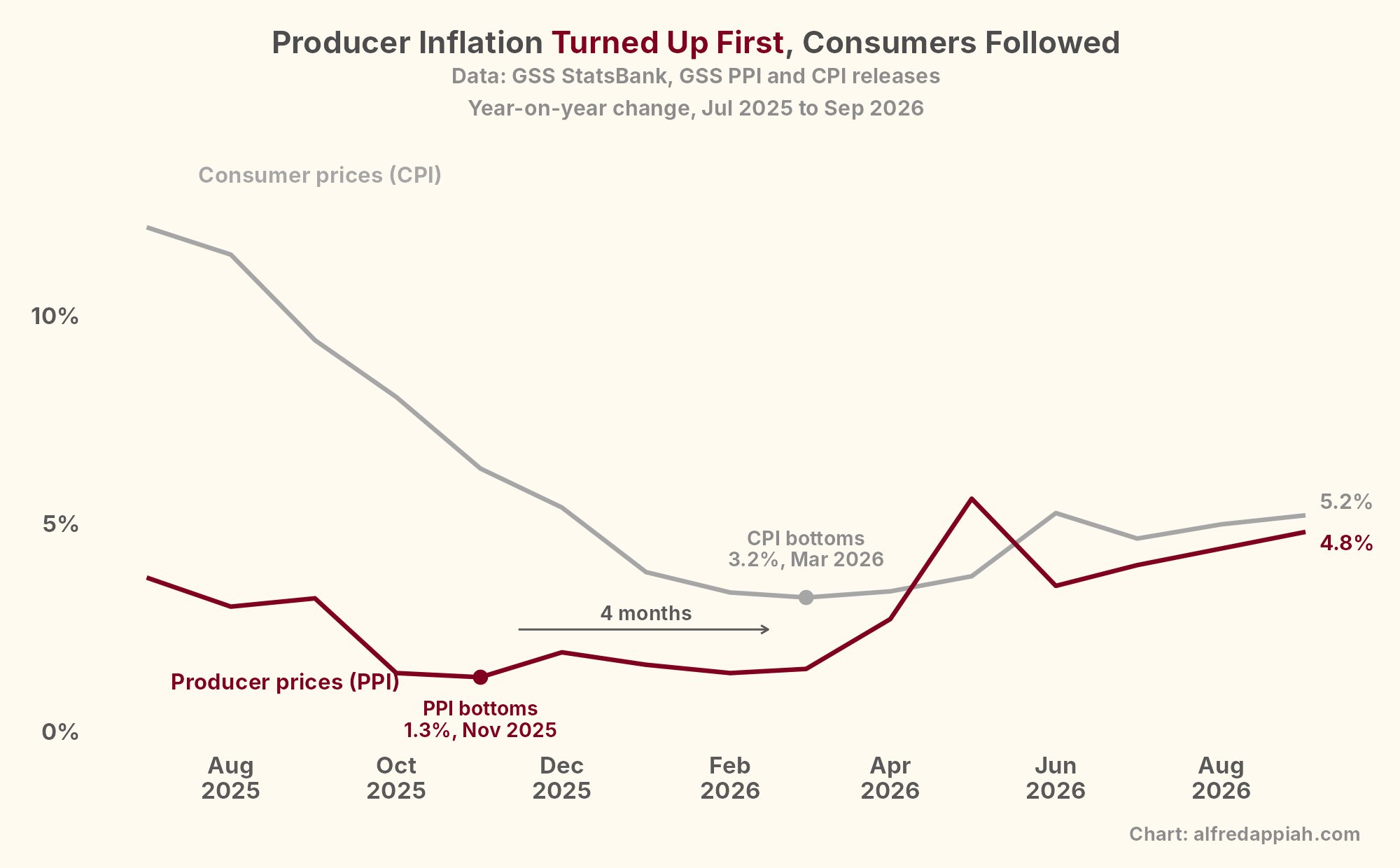
Producer prices in Ghana are rising again. The Ghana Statistical Service says producer price inflation was 4.8% in September 2026, up from 4.4% in August. It is the third straight monthly increase, from 3.5% in June. On a monthly basis, producer prices rose 1.3% between August and September.
The producer price index (PPI) tracks what local businesses get paid for the goods and services they produce. That covers mining, manufacturing, utilities, construction, transport and other services. It is the price at the factory gate, before goods reach the shops.
Two sectors are doing most of the work. Mining and quarrying added 2.4 of the 4.8 points, and manufacturing added 1.6. Together that is 4 points, about 83% of the total. Crude oil and gas extraction prices are up 18.3% on a year ago. Manufacturing inflation jumped from 3.6% to 4.6% in one month, led by leather, fabricated metals, furniture and machinery.
Why does this matter to Ghanaian consumers? Producer prices tend to show up in consumer prices a few months later. When it costs more to make, process and move goods, businesses pass some of that on. Looking at Ghana's data since 2009, consumer inflation lines up most closely with producer inflation from two to three months earlier. The link has been much stronger since 2020.
So what does this mean for consumer inflation outlook in Q4? Producer inflation has climbed every month since June, and that pressure has not fully reached consumers yet. October also has a low base. Consumer prices fell 0.4% in October 2025, so even a normal monthly increase this October will push the annual rate up. If prices rise at their recent pace of about 0.6% a month, October inflation could be above 6%. November and December maybe slightly below that, partly due to base effects.
There are things that could soften this. The suspension of the d-levy should help ease fuel and transport costs. A relatively stable cedi as Goldbod continues to supply forex to the market would also help.


The first question that came to mind when I read that the Phase 2 deal was being signed was: what happened to Phase 1?
I expected this government to wind down the entire petroleum hub project. So far, it has mainly drawn money from the Unified Petroleum Price Fund (UPPF) to pay salaries, buy good and services, and sign mega deals that have gone nowhere.
The UPPF exists to ensure uniform fuel prices across the country. You pay into it every time you buy fuel. Why, then, is it funding a fiasco like this?
It makes you wonder what the actual policy relevance of the UPPF is. And the lack of proper accountability makes it even more concerning. 😊


Megaproject politics and policy in Africa fascinate me.
The "Petroleum Hub" supposed to be sited in Jomoro in Ghana's Western Region has held my fascination since 2019 when the project officially commenced.
I have always shared the anxieties of some Jomoro residents that without vigilance the whole project could degenerate into one massive land-grabbing exercise (see link in the thread).
Those fears were heightened when in 2024, phase 1 of the project officially commenced with a shadowy "consortium" with zero capacity to raise the $12 billion required.
2 years on, even the $100 million required for land compensation hasn't been raised. Needless to say, not a single steel pipe has been laid for any petrochemical complex.
Yet, the Petroleum Hub entity, which now has state-paid staff, has, predictably, proceeded to launch phase 2 at the cost of, wait for it, $28 billion.
Except of course that there will be no $28 billion.
The lead investor that has been wheeled in this time is called Global Sphere. Its UAE-based founder, Abdullah Al-Sayegh, has been running the show since 2001 with precious little to show for it.
More than a decade ago, it announced the $30 billion Hanoi Wall Street. The City shelved the plans after Global Sphere failed to prove capacity.
Its $300 million solar factory in Huế broke ground in January 2013 and was abandoned by October.
The rest of the record is littered with announcements and "no shows". $10 billion in Egypt including a refinery, and over $50 billion in South Sudan. A $200 million cement plant and $785 million of projects with Hanoi's Hanel (2012). A $204 million hotel at El Alamein (2015).
In all, more than $90 billion over fourteen years, and not one megaproject successfully executed.
The rest of the consortium inspires even less confidence.
The money partner is a bank in name only. Doubletree Capital Bank is a mailbox operation at the Apollo Business Center in Beverly Hills (but phone number in Fresno) without a banking license. Its principals (Hong Choi and Michael Choi) have no verifiable links to megaproject financing.
Doubletree's advertised approach is to "monetise" sovereign guarantees, a highly risky prospect for Ghana.
The main face of the consortium is a former Malian civil servant. Until January 2025, Mr. Boubacar Belco Bah was deputy head of Mali's state telecoms-access fund. A position he rose to from the internal audit unit. Until he and his boss were "relieved" of their posts in early 2025. Whereupon he promptly transformed into a mega fund-raiser.
The only footprint of Mr. Bah's "AMS Technologies" is a nondescript renewables play near Bamako.
(Some sources link the same Kati project to Somacoth SA, which was barred by the AfDB for fraud in 2025. What a curious coincidence!)
If Ghana keeps packaging unviable deals, it will keep attracting non-investors.


The most recent national data on sexual violence and reporting in Ghana comes from the 2022 Demographic and Health Survey, and it shows how deep the silence runs.
One in seven Ghanaian women aged 15 to 49 has experienced sexual violence. Six percent experienced it in the year before the survey alone. Among women who suffered physical or sexual violence, half never sought help and never told anyone. When the violence was sexual alone, only about one in four sought help. Most of those who did turned to family rather than to the institutions meant to protect them.
Behind each of these numbers is someone who weighed the shame, the fear of not being believed, and the cost of speaking, and decided it was safer to carry it alone.
The 19 girls of Obuasi SHTS have shown tremendous courage by speaking up. We hope they get all the support they need.


Joy News and the Minority raised bigger questions, and this release doesn't answer any of them:
- The records provided don't add up to the total number of people the ministry says were evacuated.
- Some payments have no signature.
- Some people appear to have been paid more than once.
- There are no receipts for the chartered flights, the largest single cost of the evacuation.
On the one issue the release does address, which I considered minor, the new data doesn't support the explanation. I had suggested myself that passport expiry dates were entered as dates of birth. But none of the 15 dates on the payment lists matches the passport expiry dates the High Commission has now released.
In five cases, the date on the list has the person's correct birth day and month but the wrong year. In two others, it looks closer to the passport issue date.


The Ministry of Foreign Affairs released the evacuation data mostly as scanned PDFs, with handwritten names, dates of birth and signatures. Imagine analysing that in the pre-AI era.
You'd first have to find OCR software able to read about 200 pages, including the handwriting. Standard tools would struggle with low-resolution scans like these, so you'd probably end up typing everything into a spreadsheet yourself, row by row.
What a time!
To be clear, I'm not criticising the format. I think it was deliberate, so the public can see the original documents and not just figures someone typed into a spreadsheet.
The Foreign Affairs Minister has more questions to answer after the analysis by the Joy News research team led by @IsaacKofiAgyei. The questions include inconsistencies in the total number evacuated, people who were paid without signing, and duplicate payments.
Some of the issues may be honest data entry errors. Take the 14 records with impossible dates of birth, either in the future or dates like 31st February. Some evacuees may have entered their passport expiry date as their date of birth, which is easy to do under those circumstances. It is also not material: 14 out of 1,964 records, under 1%.
Still, the ministry should have had a quality assurance process to catch errors like these before payments were made.
The Minister should make another appearance on national TV alongside the Minority's representative, moderated by someone like Kofi Agyei who has gone through the data in detail. The public deserves a proper accounting.

Alfred retweeted

*GHS49.7m spent to evacuate Ghanaians from South Africa?* Live on @JoyNewsOnTV at 1PM
