

Complete HubSpot ecosystem coverage under one roof. Strategy, systems, integrations, data, and CX—delivered with unified and deeper enterprise capabilities.
San Diego, CA
Joined August 2016
- Tweets3.2K
- Following1.1K
- Followers802
- Likes2.3K


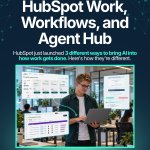
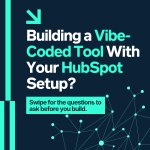

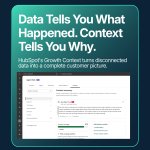
For HubSpot admins and RevOps leaders whose teams are building tools with AI coding assistants: 🤖
Read the full article on the security and ownership risks of vibe-coded business tools: hubs.ly/Q04Cp0K60
#HubSpot #RevOps #AIGovernance #APISecurity

The best sales tech stack isn't the one with the most tools. It's the one where every tool makes the shared customer picture more accurate.
Let reps innovate—but make integration, data ownership, and security part of the design from day one.
Read ;👇👇
campaigncreators.com/blog/wh…

If a custom tool is necessary, build it around a clear source of truth.
Keep customer and deal records in the CRM. Use scoped API permissions, map important outputs to the right records, prevent duplicate updates, and test failed syncs before rollout.
Before building another sales tool, ask:
Can HubSpot already handle the workflow with scoring, sequences, playbooks, or automation?
Does the tool need its own database?
Which outputs must sync back to the CRM?
Who owns security, maintenance, and updates?
Picture a rep using a custom AI app for account research, lead scoring, and meeting prep.
The tool works brilliantly—until the findings never reach HubSpot.
AI can build a sales tool in hours. But if the insights stay outside your CRM, your revenue team may end up less informed—not more productive.
Vibe-coded tools are changing how reps work. The real challenge is making sure that work still connects to the customer record.
The order you set up HubSpot’s sales agents decides how much your team trusts what they produce.
Read the full guide and the metrics to track at each stage: hubs.ly/Q04ChwB00
#HubSpot #SalesAutomation #AIAgents #RevOps

Start small. Choose one process that currently runs in spreadsheets—like client onboarding or webinar coordination.
Map the workflow, clean up the CRM data, then use AI to build and automate the right pieces. Expand once the process works.
👇👇
campaigncreators.com/blog/hu…

But AI-powered workflows are only as reliable as the data behind them.
Before automating, make sure your CRM has:
Accurate ownership and deal stages
Clean company and contact records
Clearly defined processes
Guardrails for what agents can change or escalate
Imagine a deal closes—and onboarding starts without someone copying details into another tool.
A project can pull in CRM records, build handoff documents from deal history, and route requests based on actual deal properties.
The real advantage isn’t another project board. It’s connected execution.
HubSpot Work projects bring together:
Tables to track progress
Documents to capture knowledge
Forms to collect requests
AI agents to automate recurring tasks
All in one workspace, connected to CRM data.
Your CRM holds the customer data. But does it hold the work that happens around it?
Client onboarding, webinar planning, deal desk requests, and content pipelines often live in disconnected spreadsheets and tools.
HubSpot’s agents can now carry a deal from the first buying signal to collected payment, with people stepping in where real judgment is needed. 🤖
If you are planning where agents fit in your revenue process, this is a good place to start.
Read: hubs.ly/Q04CgSGb0


The bigger opportunity is connecting paid AI search with organic AEO.
Use campaign data to identify which buyer questions generate pipeline. Then build useful content around those topics to strengthen your organic visibility in AI answers.
👇👇
campaigncreators.com/blog/ho…

Don't optimize only for clicks.
A ChatGPT campaign with a higher cost per click could still generate better opportunities if it reaches buyers with stronger intent.
Measure:
→ Cost per qualified lead
→ Opportunity conversion rate
→ Cost per opportunity
Here's where CRM hygiene becomes a growth lever.
For meaningful attribution, teams need:
→ Consistent lifecycle stages
→ Accurate contact-to-deal associations
→ Reliable campaign tracking
→ Correct consent data
→ Conversion events beyond form fills
The real value isn't just running another ad campaign.
It's connecting the entire journey:
→ ChatGPT ad engagement
→ Lead capture
→ CRM contact creation
→ Automated follow-up
→ Opportunity creation
→ Revenue attribution
Your buyers are already using ChatGPT to research vendors.
Now, B2B marketers have a new opportunity: connect ChatGPT Ads to HubSpot and track the journey from ad engagement to pipeline and closed revenue.
The bigger opportunity is connecting paid AI search with organic AEO.
Use campaign data to identify which buyer questions generate pipeline. Then build useful content around those topics to strengthen your organic visibility in AI answers.
👇👇
campaigncreators.com/blog/ho…