

Southampton FC. "Dream on till you can dream". DeFi | L1/L2 power user | DePIN | testnets | intraday perps | 14 vet Building with @YOM_Official
Montenegro
Joined December 2018
- Tweets11.3K
- Following378
- Followers232
- Likes9.4K







Pinned Tweet
Hey everyone, haven’t been around here much lately.
Over the past few weeks I’ve been focusing on @Dreamer_MNE - that’s where all the action is now: crypto analytics, opinions, projects and real back‑and‑forth chat.
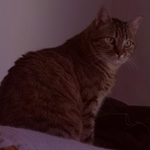
Plus my Kisi the cat in the morning :) 🐈
I’d love to see you over there. I always reply to active followers - with comments, likes and proper conversation.
Head over there - you won’t regret it.
Captain Saint 🇲🇪 retweeted

After the latest hack, and all the ones before it, I'll say one thing: don't keep all your crypto in one place.
Self-custody? You can get hacked.
CEX? Binance, Bybit, take your pick. Any of them can get hit.
DeFi? Protocols get hacked often enough.
Even cold wallets aren't some magic exception, as we've all found out this year.
So yeah, any of us could be next.
Spread your funds around. Different wallets, exchanges, DeFi protocols, cold storage, etc.
More accounts, more hassle, more time. Lovely.
But if one place gets hacked, at least you haven't lost the whole bloody lot in one go.
🅳iversification.


Captain Saint 🇲🇪 retweeted

New York, September 24th, 2026, Chainwire
The world is racing to rebuild how money settles. Konnex is making sure machines that move are part of it.
Full article:
markets.businessinsider.com/…

Captain Saint 🇲🇪 retweeted
The world's largest asset manager just described machine-to-machine commerce:
Agents paying for compute on programmable rails, in stablecoins.
Konnex is building this for physical AI.
Robot labor priced in open markets, settled in stablecoins, proven on-chain.


Our latest research paper explores the growing connection between AI and digital assets and explains why broad AI adoption may drive new demand, utility and applications across the digital asset economy. blackrock.com/us/individual/…


Harsh truth.

CT no longer discovers new chains. It installs itself on them.
Well, this is where we’ve ended up.
Over the last few years, crypto has quietly built something close to a portable operating system for speculation.
Trading terminals. Launchpads. Meme trenches. NFT whitelists and mints. Farming. Scanners. Bots. Influencers. Mercenary liquidity.
Point the stack at a fresh chain and, increasingly, it just boots.
@base was an early version of this. BALD arrived before the public mainnet did. Friend. tech followed almost immediately afterwards. The machinery was still primitive, but the instinct was already there.
@monad had enormous hype, but proved a less convenient fit. Too much ecosystem-specific ceremony, testnet farming, roles and airdrop expectations. Plenty of people came, but it never became quite the same plug-and-play trench machine.
@RobinhoodCrypto is the current stop.
And apparently the caravan is already packing for the next one.
@arc doesn’t even open its public mainnet until tomorrow. Circle calls it an “Economic OS for the internet”, built around stablecoins, payments, FX and institutional finance.
Naturally, CT has spent the run-up preparing launchpads, meme trenches, trading terminals and NFT mints.
You have to admire the efficiency. The institutional financial system isn’t even through the front door and the trench bacchanalia is already arranging the furniture.
That’s the real change.
Today the CT caravan doesn’t need to fall in love with a new technology or understand a new economic system. It needs something much simpler: fresh territory, liquidity, cheap execution, a bridge, launchpads, scanners and enough people believing everyone else is coming too.
Then the whole portable operating system for speculation can move in.
And let’s call that what it is: migration, not adoption.
It can produce spectacular TVL, volume and fees. It can even make a new chain genuinely successful.
But moving the same crowd from one casino floor to another does not create new users.
If volunteering as somebody else’s exit liquidity is your thing, I won’t interfere. If meme trenches, mints and pop speculation are your idea of glorious trash and chaos, I certainly won’t spoil the fun.
But crypto still has other models.
#Bitcoin can provide self-custodied settlement. #Litecoin can quietly move value cheaply without needing a new meta every fortnight. #Stellar can move value and stablecoins across borders without turning every transaction into a spectacle. DeFi can lend, exchange and settle assets without turning every interaction into a token launch.
Less exciting, perhaps.
Rather closer to why crypto existed in the first place.
So when the next chain produces spectacular week-one numbers, don’t ask how many members of the caravan arrived.
Ask how many genuinely new users came with them - and what is still being used after the caravan leaves.
🆃ourism.

Harsh truth.
CT no longer discovers new chains. It installs itself on them.
Well, this is where we’ve ended up.
Over the last few years, crypto has quietly built something close to a portable operating system for speculation.
Trading terminals. Launchpads. Meme trenches. NFT whitelists and mints. Farming. Scanners. Bots. Influencers. Mercenary liquidity.
Point the stack at a fresh chain and, increasingly, it just boots.
@base was an early version of this. BALD arrived before the public mainnet did. Friend. tech followed almost immediately afterwards. The machinery was still primitive, but the instinct was already there.
@monad had enormous hype, but proved a less convenient fit. Too much ecosystem-specific ceremony, testnet farming, roles and airdrop expectations. Plenty of people came, but it never became quite the same plug-and-play trench machine.
@RobinhoodCrypto is the current stop.
And apparently the caravan is already packing for the next one.
@arc doesn’t even open its public mainnet until tomorrow. Circle calls it an “Economic OS for the internet”, built around stablecoins, payments, FX and institutional finance.
Naturally, CT has spent the run-up preparing launchpads, meme trenches, trading terminals and NFT mints.
You have to admire the efficiency. The institutional financial system isn’t even through the front door and the trench bacchanalia is already arranging the furniture.
That’s the real change.
Today the CT caravan doesn’t need to fall in love with a new technology or understand a new economic system. It needs something much simpler: fresh territory, liquidity, cheap execution, a bridge, launchpads, scanners and enough people believing everyone else is coming too.
Then the whole portable operating system for speculation can move in.
And let’s call that what it is: migration, not adoption.
It can produce spectacular TVL, volume and fees. It can even make a new chain genuinely successful.
But moving the same crowd from one casino floor to another does not create new users.
If volunteering as somebody else’s exit liquidity is your thing, I won’t interfere. If meme trenches, mints and pop speculation are your idea of glorious trash and chaos, I certainly won’t spoil the fun.
But crypto still has other models.
#Bitcoin can provide self-custodied settlement. #Litecoin can quietly move value cheaply without needing a new meta every fortnight. #Stellar can move value and stablecoins across borders without turning every transaction into a spectacle. DeFi can lend, exchange and settle assets without turning every interaction into a token launch.
Less exciting, perhaps.
Rather closer to why crypto existed in the first place.
So when the next chain produces spectacular week-one numbers, don’t ask how many members of the caravan arrived.
Ask how many genuinely new users came with them - and what is still being used after the caravan leaves.
🆃ourism.
Captain Saint 🇲🇪 retweeted

LitVM's LiteForge testnet is live 🔥
For the first time, the Litecoin ecosystem has access to smart contracts, DeFi, and Web3 applications — running on LitVM, powered by zkLTC.
The next chapter of Litecoin starts now.
🌐 Explore: testnet.litvm.com/
Captain Saint 🇲🇪 retweeted
Hey everyone, haven’t been around here much lately.
Over the past few weeks I’ve been focusing on @Dreamer_MNE - that’s where all the action is now: crypto analytics, opinions, projects and real back‑and‑forth chat.
Plus my Kisi the cat in the morning :) 🐈
I’d love to see you over there. I always reply to active followers - with comments, likes and proper conversation.
Head over there - you won’t regret it.
The token was never the product. It was the exit.
And look, this isn't even about bad projects - most altcoins didn't fail because nobody used the protocol. Some of them had real fees, real users, real traction. The token just had no claim on any of it.
People blame liquidity. Blame the market. Blame timing. But the structure was always the same - VCs in early at prices you never saw, supply distributed before the narrative even reached you, public entry timed to someone else's exit.
So even when everything goes right for the protocol, nothing has to go right for you. That's not broken. That's the design.
The projects worth actually watching are the ones where token performance is mechanically tied to protocol success. Fees distributed, buybacks, real value capture. They exist. There just aren't many of them.
You mentioned something to a friend. An hour later, an ad appeared.
Everyone knows the feeling, and it's no coincidence, obviously. That's the normal operating mode of the internet in 2026. Every interaction feeds a profile somewhere.
@QANAT_IO calls this the silent digital crisis - and their WEB X. OS is designed to make data exploitation structurally impossible rather than just contractually prohibited. There's a meaningful difference between a privacy policy that promises something and an architecture that enforces it.
One of those actually works.
Piques your interest? Then hop into the project Discord: discord.gg/VZbB9nv2
🤖 Made with AI

The regulatory window in the US is open. Probably the widest it's ever been.
Sure, the CBDC ban until 2030 is getting all the attention. Fair enough - it's a clean political signal. But it's not the story worth following closely right now.
The CLARITY Act is. Bipartisan support, markup expected in April, real prospect of finally drawing the line between securities and commodities. That's the legislation DeFi has been waiting years for - not because it's friendly, but because clarity beats ambiguity every single time.
Paul Atkins telling the crypto community to show up for elections is worth noting too. A sitting SEC Chair framing regulation as a voter issue is a different kind of signal than anything his predecessor ever sent.
The window exists. Whether the industry does anything useful with it is the open question.
$73K flirted. Then froze.
Morning, lads. My Kisi the #cat reporting in.
Today she’s calm and alert, like she’s weighing which paw to put down next. 🐱👀
$BTC nearly brushed $73K on the Iran ceasefire chatter but couldn’t push through and’s bobbing around ~$71K this morning - market had a go, then paused to think.
Like Kisi: up, attentive, undecided. Not a breakout, just indecision. 🐾☕️

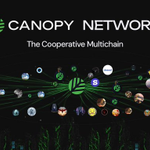
Cooperative vs competitive multichain is the frame that actually matters.
Every isolated L1 is fighting for the same liquidity, the same validators, the same developers. That’s a zero‑sum game.
@CNPYNetwork flips it: recursive security means new chains don’t fragment the ecosystem - they strengthen it. Incentives align so that interoperability isn’t just a narrative, it’s baked into the design.
That’s why calling it a “blueprint for healthier interoperability” undersells it. If the execution holds, it’s incentive design that determines what gets built long‑term - and Canopy is showing how cooperation can outcompete competition.

Trust the code, not the crowd.
Right, here's a new one worth watching: Aeredium (@aeredium) - the world's first L1 where machines enforce the rules, verifiable infra built for scale. At least they're promising it.
• Quantum‑proof
• 24‑hour bank‑to‑crypto settlement
• 13M+ TPS
• Positive slippage
If you care about provable guarantees over promises, this is different. DYOR. Not financial advice.
Join the Reward hub - link in the 1st comment 👇


By the way, a thought: Wall Street’s wrapped Bitcoin in ETFs and boardroom memos, but that isn’t the same as millions of normies actually giving a toss.
Institutional legitimacy has sprinted ahead of everyday curiosity, yet most narratives act like the crowd’s back.
Until app downloads, small on‑chain txs and street chatter rise together, this rally is being carried by structure, not a retail renaissance.
Let's not confuse suits for streets.
ETHGlobal finalist, 88.5% request growth, live comparison page roasting Tavily and Firecrawl publicly.
Confident week for a team that could've just posted the metrics and called it done. Auto-upgrade in v0.3.0 means nodes stay current without anyone lifting a finger - small detail, very good UX decision.
The product is clearly doing the talking now.
@SelanetAI

This week at @SelanetAI w/ @DeltaV_xyz
Weekly Milestones
•Selanet selected as an ETHGlobal finalist for its agent-based browser automation
•Agent Node v0.3.0 released (points, referral, auto-upgrade)
Growth
•Users: 1,606 (+7.9% WoW)
•Browse Requests: 32,928 (+88.5% WoW)
•Node Installs: 3,842 (+2.7% WoW)
New Features
•Agent Node v0.3.0
(point system, referral system, auto-upgrade, Selanet naming unification)
•Referral system (API integration, gRPC connection, UI added)
Product
•Browse API upgrades (network idle detection, improved JS/SPA handling)
•Landing page revamped (real-browser positioning, live comparison)
Landing Page Changes
•Hero section updated to emphasize "real browser" differentiation
•Live comparison added: Tavily vs Firecrawl vs Selanet (side-by-side results)
•UI/UX improvements
Ecosystem
•SIX Network partnership
•Twitter ads launched targeting CN regions and founding members