
Broad interest in Pharmacokinetics and pharmacodynamics, systems pharmacology, monoclonal antibody, cancer resistance, evolution theory. Opinions are my own
Univ of North Carolina CH
Joined June 2018
- Tweets834
- Following619
- Followers327
- Likes4.3K




Yanguang (Carter) Cao retweeted

News in Phase I trial reform (‼️)
The HHS and the FDA are making strides. The latest development: new reforms on manufacturing standards and implementing an expedited Phase I pathway are in the agency’s Unified Agenda and RINs have been assigned.
Important signals, because it means these ideas are moving from aspiration toward binding regulation (RINs are regulation identification numbers, meaning the reforms have been assigned "codes").
But first, why does this matter?
As I've argued many times, accelerating Phase I trials is one of the highest-leverage things the US can do to speed up biomedical innovation. Phase I is the first time a drug is given to humans. It's where scientific promise meets clinical reality, and where the most valuable evidence in all of drug development, real in-human data, first gets generated. It's also the point where small biotechs live or die, since crossing successfully from preclinical to clinical is what unlocks the next round of investment and starts the flywheel turning.
The problem is that the US is slow at this. Getting to a first-in-human trial here takes 18 months to two years and several million dollars before a single patient is dosed. Australia does the same work 6 to 12 months faster and roughly twice as cheaply, with no loss of safety. And it has been doing this for three decades!
How is this possible? Again and again, the US picks process over efficiency. Chemistry, manufacturing and controls (CMC) requirements are a clear example: because the regulatory guidance is vague, sponsors overengineer their manufacturing to stay safe, which for some complex products like cell therapies can leave a drug ten times more expensive than it needs to be.
This is the backdrop behind Operation TrialBlazer, the department-wide push HHS launched on June 22. It includes proposals for phase-appropriate CMC expectations and an Expedited Phase I pilot built around Qualified Research Institutions.
Now, the promise of this initiative seems to be materializing in the form of formal regulatory process, which hopefully means these changes will stick around. It’s an important step toward a durable regulatory framework to give industry stakeholders certainty.
So what are the two proposed regulatory actions?
0910-AJ30 (amending 21 CFR Parts 56 and 312) is the expedited-IND and Phase I piece: the IRB and IND changes that would let eligible trials start on a faster timeline, much closer in spirit to Australia's model.
0910-AJ31 (amending Parts 210 and 211) modernizes good manufacturing practice for advanced, distributed, and point-of-care manufacturing. These are the flexible, small-batch production requirements that early-stage and personalized therapies would most benefit from.
The full text isn’t out yet but keep an eye on the NPRM under RIN 0910-AJ30 for Phase I changes. There will be a chance to comment soon. In the meantime, the Operation TrialBlazer RFI is open now: comments on the Expedited-IND pilot are due July 22, 2026 (Docket FDA-2026-N-4699), so weigh in. federalregister.gov/document…

Yanguang (Carter) Cao retweeted

🔥 Published today, and just in time for summer conferences, here are your guidelines for presenting badly

Yanguang (Carter) Cao retweeted

Calling all graduate students and post-docs! Join @DPMP_UNC for their Future Leaders Launchpad on May 6!
Take part in networking opportunities, a career blueprint mapping, an interactive industry & academic panel and more!
Register today: hubs.ly/Q045TKV30


Yanguang (Carter) Cao retweeted
An intranasal flu antibody can protect against both #influenza A and B in mice and nonhuman primates and is safe in humans, according to new preclinical experiments and two phase one clinical trials. @annabeuk @HarvardChanSPH scim.ag/4aaNIOo

Yanguang (Carter) Cao retweeted

FREE Websites for Downloading PhD Thesis
1. Open Access Theses and Dissertations
↳ oatd.org/
2. Open Thesis
↳ openthesis.org/
3. DART-Europe E-theses Portal
↳ lnkd.in/d4SUFCTX
4. ProQuest Dissertations & Theses
↳ proquest.com/
5. MIT Theses
↳ lnkd.in/dMs-PuYs
6. Digital Library of Theses & Dissertations
↳ ndltd.org/
7. Caltech Thesis
↳ lnkd.in/dZ6f8T5J
8. British Library
↳ bl.uk/
9. Electronic Theses & Dissertation Centre
↳ etd.ohiolink.edu/
10. Harvard DASH
↳ dash.harvard.edu/

Yanguang (Carter) Cao retweeted

I just read a paper that completely broke my brain.
It describes a system that solved an AI task with over 1,000,000 sequential steps... with ZERO errors.
Using AI models that are known to be flaky and make mistakes.
How is that even possible? 🤯
We all know LLMs have an error rate. Even 99.9% accuracy is a death sentence for long tasks.
Imagine you need 1,000 correct steps in a row. With a 99.9% success rate per step, your chance of finishing the whole thing is only ~36%.
At a million steps? Forget it. It's statistically impossible.
So for years, the race has been to build bigger, "smarter" models to get that per-step error rate closer to zero. We're trying to build a perfect genius.
But this paper ("Solving a Million-Step LLM Task with Zero Errors") does the complete opposite. It's a total paradigm shift.
Here's the "holy shit" moment:
Stop trying to make the AI perfect. Instead, build a system that's immune to its imperfections.
How?
Smash the problem into the tiniest possible pieces. (They call it Maximal Agentic Decomposition).
Have a team of simple, cheap AIs vote on the answer for each tiny piece.
It's less like hiring one world-class chef and praying they don't have an off day, and more like designing the McDonald's kitchen.
The system guarantees the burger is the same every time, even if any individual worker could mess up.
The reliability comes from the process, not the person.
They tested this on the Towers of Hanoi puzzle—a classic benchmark where AIs fail spectacularly as the task gets longer.
They set it up for 20 disks. That requires 1,048,575 perfect moves in a row.
(seriously, over a million steps)
A single AI trying this would be a comedy of errors.
But their system of "micro-agents" voting on every single move... nailed it. Flawlessly.
And the plot twist? The most expensive, "state-of-the-art" models weren't even the best for the job. A smaller, cheaper model (gpt-4.1-mini) was more cost-effective because the tasks were so simple.
This is a huge deal for AI safety, too.
A single, god-like AI is a black box. It's unpredictable.
But a system of a million simple agents? You can inspect it. You can audit each step. The agents have no grand "worldview"—their entire existence is to solve one tiny puzzle and then disappear. It's controllable.
So next time you're building something with an LLM, maybe stop asking "how can I prompt the model to be smarter?"
And start asking: "How can I design a system where it's okay for the model to be dumb?"
The real power isn't just in the model. It's in the architecture you build around it.
This isn't just about AI. It's a fundamental lesson in engineering and problem-solving.
You don't always need perfect components to build a perfect machine. You just need a damn good design.
...which makes you wonder what else we're trying to solve by chasing individual perfection instead of building better systems.

Yanguang (Carter) Cao retweeted

Causal DAG is a really neat approach to generate high-quality reasoning process reward at scale, without relying on LLM judge! 💯
Great job @WanjiaZhao1203 @AquaHorseM
@ShiJingzhe41415 w/ awesome collaborators👏

Yanguang (Carter) Cao retweeted

🚨 BREAKING: IBM launches a free Python library that converts ANY document to data
Introducing Docling. Here's what you need to know: 🧵


Yanguang (Carter) Cao retweeted

Stanford's FREE Courses on AI & ML:
❯ CS221 - Artificial Intelligence
❯ CS229 - Machine Learning
❯ CS230 - Deep Learning
❯ CS234 - Reinforcement Learning
❯ CS229M - ML Theory
❯ CS224N - NLP with Deep Learning
❯ CS224U - NL Understanding
Course links inside:
Yanguang (Carter) Cao retweeted

Phase I Study of 131I-Metaiodobenzylguanidine With
Dinutuximab 6 Vorinostat for Patients With Relapsed or
Refractory #Neuroblastoma: A New Approaches to
Neuroblastoma Therapy Trial.
Learn more. brnw.ch/21wTXaZ

Yanguang (Carter) Cao retweeted
Bayes' Theorem is a fundamental concept in data science.
But it took me 2 years to understand its importance.
In 2 minutes, I'll share my best findings over the last 2 years exploring Bayesian Statistics. Let's go.


Yanguang (Carter) Cao retweeted

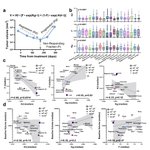
Our latest on aging, where we reveal an unexpected link between healthspan and equality of lifespans.
By @y1fanyang, out now @NatureComms

Thrilled to share a new paper with @UriAlonWeizmann , “Compression of Morbidity by Interventions That Steepen the Survival Curve” where we reveal an unexpected link between healthspan and uniformity of lifespans. (1/6) nature.com/articles/s41467-0…

Yanguang (Carter) Cao retweeted
This illusion where you see a 3 dimensional cube even though it’s not there,
Anamorphosis
📹Sonhos com Dimensão


Yanguang (Carter) Cao retweeted

New Research: Guselkumab binding to CD64+ IL-23–producing myeloid cells enhances potency for neutralizing IL-23 signaling frontiersin.org/articles/10.… #FrontiersIn #Immunology
