

Neurointensivist @baptisthealthAR | Trained @utsw_ncc and @NGMCGME | Love Tennis🎾and Teaching 👨🏫 with interest in Academia
Dallas, TX
Joined December 2019
- Tweets1.4K
- Following620
- Followers407
- Likes9.4K




Pinned Tweet
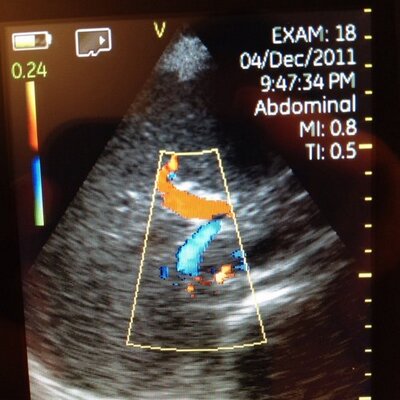
Finally my new #POCUS #IMPOCUS @kosmosplatform device is here :) :)
Thank you #POCUS community for helping me find the perfect device :)
#CriticalCare #vexus #FOAMed
#MerryChristmas


Chail Shah, MD retweeted

Carroll et al: Low-Dose Buprenorphine Initiations During Opioid and Sedative Weaning in Mechanically Ventilated Neurocritical Care Patients: A Retrospective Pilot Cohort Study
Link: link.springer.com/article/10…
@neurocritical #neurocritcare

Chail Shah, MD retweeted

In this featured article, Emma D. Frost, MD, Marco Salzar, MD, and Swarna Rajagopalan, MD, MS, FCCM, discuss how ultrasound-guided occipital nerve blocks may improve procedural precision and outcomes in neurocritical care patients.
🔗 Learn more: bit.ly/4gnxOEQ

Chail Shah, MD retweeted

Pondering how to remember pontine syndromes?
Don’t become despondent about syndromes of the pons!
Here’s an easy way remember the basic parts of pontine syndromes:
Pontine lesions are usually vascular and are either from an infarct in the AICA territory (lateral) or paramedian branches of the basilar artery (medial)
Lateral & medial pontine syndromes can be remembered by the easy mnemonic THE PONS, w/ “THE” representing lateral syndromes & “PONS” representing medial syndromes
LATERAL SYNDROMES:
T = Temperature (spinothalamic = loss of pain & temp contralateral body, trigeminal nucleus = ipsilat face)
H = Horner’s (sympathetic pathway)
E = Equilibrium problems (spinocerebellar = ataxia of ipsilateral arm & leg)
MEDIAL SYNDROMES:
P = Proprioception (medial lemniscus = loss of contralateral vibration & proprioception)
O = Ophthalmoplegia (MLF = internuclear ophthalmoplegia)
N = Nonmobile (corticospinal tract = weakness of contralateral body)
S = Sixth nerve (Sixth nerve nucleus = loss of ipsilateral CN 6)
There are many different syndromes that vary by what exact structures are involved, but if you always remember THE PONS, you can easily pontificate about pontine lesions!

Chail Shah, MD retweeted
This retweet is an endorsement 😁
Lentz equation:
✨ PEEP = BMI / 3 ✨
Stop underpeeping high-BMI patients and then expecting them to be easily extubated.

We learn from Olivia Serigano about a clever method for setting PEEP in the obese by dividing the BMI by 3. icuscenarios.com/lightning-r…
#medtwitter #FOAMcc #FOAMed #pulmcc #pulmcrit @SkylerLentz
Chail Shah, MD retweeted

Clinical Neuroimaging, official open access journal @asneuroimaging is now indexed in DOAJ
@WileyGlobal Editorial Leadership Team @nbavar @teachplaygrub , Board, #peerreviewers for making this milestone possible.
Next up @webofscience @PubMedOnline
🤖 Made with AI

Chail Shah, MD retweeted

In patients who present with moderate traumatic brain injury, the post traumatic seizure rate was 15.2% highlighting a potential role for expanding seizure prophylaxis to these patients.🧠
shorturl.at/To4jU
#SCCMNeuro #NeuroICU #NeuroX #NeuroTwitter
🤖 Made with AI

Excited to share our latest publication!
Blood Pressure Variability in Acute Ischemic Stroke: Clinical Evidence, Measurement Challenges, and Future Directions
Read the article: onlinelibrary.wiley.com/doi/…
#Stroke #Neurology #NeurocriticalCare #Hypertension #meded #foamed

Thank you @NephroP looking forward to more collaborations in the future 🙂
@utsw_ncc @UTSW_NeuroRes @UTSWMedCenter

Not everyone performs #VExUS yet since it's a relatively advanced #POCUS application. But we can often get an early clue from routine radiology studies we already order, such as liver or kidney Doppler.
@ChailShah does a great job highlighting this perspective in a narrative review written in collaboration with his radiologist father (& me).
🔗wjgnet.com/1949-8470/full/v1…

Chail Shah, MD retweeted

🧂Sodium Bicarbonate for Critically Ill Adults with Metabolic Acidosis and Shock: Are We Finally Closing the Debate?
Sodium bicarbonate has long been one of the most controversial therapies in critical care. The newly published SODa-BIC Trial in NEJM provides the most rigorous evaluation to date.
This international, double-blind, placebo-controlled RCT enrolled 500 critically ill patients with metabolic acidosis (pH <7.30) requiring vasopressor support across 55 ICUs in seven countries. Patients received either protocolized sodium bicarbonate infusion or placebo, targeting pH ≥7.30 and base excess ≥0 mmol/L. The primary endpoint was a composite of death, renal replacement therapy (RRT), or persistent renal dysfunction at 30 days.
The primary outcome occurred in 40.2% of patients receiving bicarbonate versus 39.4% receiving placebo, showing no significant difference. Mortality was similar between groups (25.4% vs 24.0%), and no benefit was observed for persistent renal dysfunction or RRT dependence. Importantly, no predefined subgroup demonstrated a significant treatment effect, including patients with more severe acidemia (pH <7.25), advanced AKI, or septic shock.
However, bicarbonate clearly achieved what it was designed to do physiologically.
Patients receiving bicarbonate experienced faster correction of acidemia, higher bicarbonate levels, improved base excess, and significantly fewer recurrences of metabolic acidosis during the first week (32.0% vs 55.7%). Open-label bicarbonate administration was also less frequent.
The key message is therefore nuanced.
Bicarbonate effectively corrects laboratory abnormalities but does not improve clinically meaningful outcomes.
This distinction is fundamental. Critical care history repeatedly reminds us that normalization of physiological variables does not necessarily translate into improved survival or organ recovery. The SODa-BIC trial reinforces the importance of focusing on patient-centered outcomes rather than surrogate markers alone.
From a practical bedside perspective, these findings suggest:
• Routine bicarbonate administration for vasopressor-dependent metabolic acidosis cannot be recommended solely to improve survival or renal outcomes.
• Bicarbonate remains useful when rapid correction of severe acidemia is clinically desirable.
• Decisions regarding bicarbonate therapy should remain individualized and based on the underlying cause of acidosis rather than pH correction alone.
• Future studies may need to focus on highly selected phenotypes rather than treating metabolic acidosis as a homogeneous syndrome.
Reference 📚
The SODa-BIC Investigators and the Australian and New Zealand Intensive Care Society Clinical Trials Group. Sodium Bicarbonate for Critically Ill Adults with Metabolic Acidosis and Shock. New England Journal of Medicine. 2026. doi:10.1056/NEJMoa2600526

ALT
Chail Shah, MD retweeted

Convexity SAH:
Differential diagnosis includes:
- Mycotic aneurysm
- ischemic stroke with conversion
- dural AVF
- Cerebral Amyloid Angiopathy
- trauma
- coagulopathy
- RCVS
Workup includes:
- CTA head and neck
- MRI/MRA brain w SWI
- possible angiogram
jnis.bmj.com/content/11/12/1…


New publication in Critical Care!
Triple M Overlap Syndrome (myocarditis + myositis + myasthenia gravis) is a rare but life-threatening immune-related adverse event that every intensivist should know.
link.springer.com/article/10…
#CriticalCare #MedTwitter #FOAMed #cancercare

Chail Shah, MD retweeted
A reperfusion-guided BP strategy improved functional outcomes and reduced hemorrhagic transformation without increasing major safety events, supporting a tailored approach to postthrombectomy BP management.🧠
shorturl.at/qS27C
#SCCMNeuro #NeuroICU #NeuroX #NeuroTwitter

New review out in Clinical Neuroimaging! 🔍
A special thank you to my mentor Dr. Parth Upadhyaya and co-authors David Brown and Rakesh Shetty Rajalbandi.
Open access 👇
doi.org/10.1002/neo2.70076
#POCUS #OcularUltrasound #NeurocriticalCare #FOAMed #MedEd

Chail Shah, MD retweeted

Dr. Alex Valadka & team published "Treatment Algorithms From the Brain Trauma Foundation Guidelines for the Management of Penetrating Traumatic Brain Injury, Second Edition" in @NeurosurgeryCNS. #pTBI journals.lww.com/neurosurger… @UTSWMedCenter @UTSWBrain #Neurosurgery

Chail Shah, MD retweeted

Our new work just published in Hearts: “Why and How to Measure Left Ventriculo-Arterial Coupling in Rapidly Altered Hemodynamic States.”
VAC (Ea/Ees) links ventricular contractility and arterial load, helping explain why BP, EF or CO alone often mislead in shock.
A step toward mechanism-guided haemodynamic management.
🔗 mdpi.com/2673-3846/7/1/10
#CriticalCare #EchoFirst #POCUS #Hemodynamics


Chail Shah, MD retweeted

I built a free neurocritical care reference tool called NeuroBedside.
215+ landmark trials with trial details and one-line clinical pearls. 26 interactive relevant medical calculators. details of 23 scoring scales. Biostatistics reference. All in one place, on your phone or computer, at the bedside.
No paywall. No login required to browse.
neurobedside.com/
#NeuroCritCare #NeuroTwitter #MedEd #FOAMed #CriticalCare

Chail Shah, MD retweeted

Interesting #echofirst image
SLE -> stroke 🫀👇
#POCUS #FOAMed
Source 🔗CASE (Phila). 2020;4(6):507-511. doi: 10.1016/j.case.2020.09.005.