

Sarath Chandar's research group at @polymtl, @UMontreal and @Mila_Quebec focusing on Machine Learning!
Montréal, Québec, Canada
Joined June 2021
- Tweets182
- Following147
- Followers748
- Likes110




Check out this great work from @aidanmrli !

Quite happy to say that our paper on representation learning for dynamical systems was accepted to #NeurIPS2026 and I'll be presenting it in Sydney this December!
Very succinctly, our work, titled "Sparse Koopman Autoencoders Identify Local Dynamical Regimes in Multibasin Systems", is about learning linear representations of state for dynamical systems with multiple basins of attraction. Inducing sparsity in a latent representation can be a very powerful method to model multiple basins of attraction with linear dynamics. By training a Koopman autoencoder with a bias for producing sparse latent representations, we find that a sparse-latent model both forecasts the dynamics better and has greater ability to identify the current local regime of the current state compared to a model without sparsity-inducing effects.
More broadly, I think our work on sparse Koopman autoencoders could be relevant to both the robotics/world modeling and interpretability communities (just brainstorming here).
- Robotics: To my knowledge, switching dynamics are common in robotic systems, i.e. trajectories seem to transition between dynamical modes. With a sparse code, you could get a switch between modes for free.
- Interpretability: Sparse autoencoders might not be all the rage anymore, but I think Koopman modeling is still very natural for understanding the dynamics of models that apply the same computation at multiple steps to advance the dynamics. This applies to most recurrent models, such as looped/weight-tied transformers (dm me if you want to discuss!)
Thanks to my amazing collaborators @ukreddy126 @mahanfathi @apsarathchandar @RGoroshin. I was thinking about what to say about this (clueless grad student tries to figure out social media) and this post ended up being really late lol, my bad.
See you in Sydney!
Paper: arxiv.org/abs/2608.29057
Code: github.com/aidanmrli/skae

5
275
🎓 Graduate Program Application Mentorship
Applying to grad school doesn't have to be overwhelming!
Get personalized 1:1 support from students who’ve successfully navigated the process.
🔗 Apply now: forms.gle/FyjEuLmjcdREF3Ba6
🗓️ Deadline: Nov 1, 2026
👇 Here is what you get:
🎉 Thrilled to share that 8 papers from our lab (and collaborations with lab members) have been accepted at #NeurIPS2026!
The work spans RL, world models, dynamical systems, LLM safety & interpretability, tabular foundation models, and forecasting. Huge congrats to everyone 🧵👇
📄 Reconstruction or Semantics? What Makes a Latent Space Useful for Robotic World Models
What kind of latent space actually helps robotic world models?
w/ @nilaksh404 @saurav_j_ @artemZholus
hskalin.github.io/semantic-w…
1
3
465
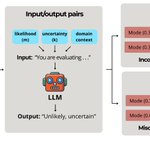
Turns out that many contemporary LLMs still struggle to explain probabilities and uncertainty in plain natural language 👀

Congratulations Nour!

I am pleased to share that I successfully defended my master's thesis at @polymtl and @Mila_Quebec , titled: "Understanding Out-of-Distribution Generalization in Tabular In-Context Learning".
I passed with distinction and was nominated for the best Msc thesis award.


5
671
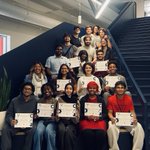
For the third year in a row, we held our annual Highschool Internship for recent graduates from across Montreal! 🎓🎉💻
Ten bright students underwent a month-long summer school and got introduced & coached on the basics of computer science and programming!


@ChandarLab will be at #ICML 2026
in Seoul — South Korea 🇰🇷 !! Presenting our most recent state-of-the-art research on continual learning, reinforcement learning and AI agents! Drop by and check it out! 🔥
We are super excited to announce @ChandarLab 7th Annual Research Symposium! 🔥
Join us on July 23–24 for two days of talks on deep learning, NLP, reinforcement learning, continual learning, and AI for science, plus a keynote by @mengyer from NYU!
Event is hybrid!
🔗 See our talks: chandar-lab.github.io/CRLSym…
🔗 Register: eventbrite.com/e/chandar-res…
2
161
We’re excited to see the Research on Agent Language Models (REALM) Workshop returning to #EMNLP2026!
Huge shoutout to our PhD student @MaryamHashemzadeh for co-organizing. We’re looking forward to the conversations this workshop will bring to the agent language model community!

AI agents like @openclaw 🦞 are everywhere, answering emails, managing calendars, doing our chores for us
📣 REALM is back for year 2! Workshop for Research on Agent Language Models at #EMNLP2026, Budapest 🇭🇺
Stellar lineup ⬇️
📅 Submit by July 17, 23:59 AoE
#LLMAgents #NLProc

ALT REALM 2026 workshop invited speakers and panelists: Maria Brbić (EPFL), Vishrav Chaudhary (Meta Superintelligence Labs), Marc-Alexandre Côté (Microsoft Research), Manling Li (Northwestern University), Baptiste Rozière (Mistral AI), Graham Neubig (Carnegie Mellon University), Perouz Taslakian (ServiceNow AI Research).
New paper from the lab:
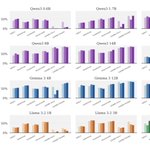
Ask a base LLM to pick a random weekday, and it might output "Wednesday" 80% of the time. We show that this can be fixed and that probabilistic calibration is actually a trainable capability.
Checkout the recent work on diffusion world models from our lab! The work studies a simple but important design choice: should the world model think in pixels reconstruction space or in semantic feature space?

Diffusion world models can help test and improve robot policies before running them on real robots.
But can the choice of latent space make the WM more faithful?
We show that semantic spaces beat reconstruction spaces on task relevant metrics.
hskalin.github.io/semantic-w…


We're thrilled to see the Workshop on Weight-Space Symmetries coming to #ICML2026! Huge shoutout to our postdoc @KateLobacheva for co-organizing it. We're excited for the ideas and discussions this workshop will bring to the community!


Quoting this from Aidan, who presented this as a talk to the lab last Friday.
If you think LLMs are unreliable for coding, this is the missing piece: reliability comes from how you structure the work around the model.
The article lays this out very concretely.
🧵↓
I wrote an article on agentic coding for beginners after my talk at @apsarathchandar @ChandarLab group. We cover history of AI coding tools, the importance of model harnesses, and general principles in simple research workflows.
Feedback is very welcome!
aidanli.dev/writing/articles…
In lifelong learning, continuously learning new tasks can cause ML models to forget previously acquired knowledge.
For this, our lab introduced TAG (Task-based Accumulated Gradients): a general wrapper on top of adaptive gradient optimizers. 📈


This week, as we celebrated International Women’s Right Day for the 115th time on Sunday, the Chandar Lab wanted to pay tribute to all the amazing women doing research👩🎓, and to highlight the cutting-edge work they do at our lab everyday...🧵
...@MaryamHashemz, Lola Le Breton @lo_LB_La , Istabrak Abbes, @nour_shaheen_ , Behnoush Khavari, Anabel Tan @AnabelCluster and @KateLobacheva. Give them a follow and take a look at a list of their publications with our lab in the past year! ⬇️
1
1
156
🧬New paper from our lab! We strongly encourage you to read this thread by @dapatil211 explaining CoPeP, at the intersection of continual learning and proteomics!


Today, we’re celebrating Gabriele Prato as they reached a major milestone in their PhD journey and defended their thesis. 🎉
It tackles an underexplored limitation of large language models: knowledge consolidation.
The thread below explains what this means and why it matters👇


Streaming Reinforcement Learning (RL) is a huge challenge: transitions are used once and discarded immediately. This makes agents extremely sample-inefficient. But what if we could "squeeze" more information out of every single frame?
Check out our latest paper!


‘The Markovian Thinker’, developed by our lab, has been accepted at @iclr_conf!
This work achieved long reasoning without the quadratic attention tax LLMs reason in chunks with a bounded state, achieving linear compute, constant memory and scaling beyond its training limit!
