

I help travel creators monetize their expertise. With @trip_ixo
Munich, Kolkata
Joined October 2025
- Tweets396
- Following771
- Followers80
- Likes868
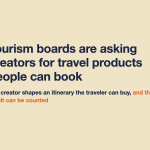


Tourism boards are starting to ask creators for products people can book, not just posts.
I LOVE NY and the agency BYRDLI have sent Australian creator Matt Lambley beyond the New York City skyline to build bookable New York State travel products.
That is a quiet but important shift in how creator work gets measured.
The old model paid for reach. A creator posts, views come in, and the hope is that some of it turns into trips. Creator budgets are hard to defend, because few destinations can say which posts led to bookings.
The new model starts from the booking. The creator shapes an itinerary, the traveler can buy it, and the result can be counted. Creators become product designers, not just promoters, destinations get proof of outcomes instead of just impressions. Travelers get plans built by someone who has actually been there.
This is exactly in line with the model we are building at @trip_ixo . A traveler books a live call with a creator who knows the place, and the call ends in a bookable itinerary that can be tracked from first intent to confirmed booking.
Reach opens the door. Bookable trust is what gets paid.

Many destinations are quietly rewriting the price of showing up.
In the past week alone, Mexico is debating a higher fee for non-resident visitors, Kyoto is working on tiered pricing, and the Swiss village of Kandersteg is weighing an entry fee for hikers at Lake Oeschinen. In the US, foreign visitors to the Grand Canyon now pay an extra $100 on top of the standard entry fee.
Different places, but the idea is the same: charge visitors differently from locals, charge for the most crowded spots.
The logic is clear. Popular places carry costs for cleanup, transport, trail upkeep and housing pressure, and residents have been the ones paying.
There are risks, however.
For one, costs become harder to predict. A trip budget now depends on fees that vary by nationality, season and site.
Second, fees get stacked. Entry charges, tourist taxes and local levies add up, and many travelers only find out at entry.
Third, demand moves rather than disappears. Businesses near the Grand Canyon are already reporting pain, and some are suing, though the fee is not the only factor.
For travelers, the sticker price on a booking site is no longer the real price of a trip. For destinations, the hard part is raising money without pushing away the people who spend the most locally.
The winners will be places that are clear about what the fee pays for, and travelers who plan around the true total cost, including less obvious spots nearby that offer similar views without the crowd.
Pricing is becoming a crowd dispersal tool. Transparency decides how these go down with visitors.
The EU is investigating Booking dot com over phishing scams and fraudulent listings.
This follows information requests the Commission sent in 2025 about fake accommodation listings and how platforms verify the businesses on them. Booking says it has cut phishing-related fake reservations sharply and will work with regulators.
The bigger story is that trust is becoming a regulated feature of travel marketplaces, not just a brand promise.
For twenty years, the pitch of the big travel platforms has been scale. More listings, more choice, lower prices. But scale also makes it cheap for bad actors to hide in the crowd.
Verification is expensive, and scale makes it harder.
A marketplace that grows by adding supply faster than it can vet supply is borrowing against its own reputation.
AI planners will not fix this on their own. An agent that books from the same pool of listings inherits the same problem, only faster and with less human oversight.
The strongest trust signal is still a real person who has actually been at the location and has something to lose if they get a recommendation wrong.
Marketplaces compete on inventory. The next layer competes on trust.
Alarming leaks in India... very limited information from institutions

Are we at war, or has India’s digital defences been left wide open?
SBI is investigating after a dataset of roughly 3.75 lakh records appeared on the dark web. A group called Siriusim claims it has the data, including customer details, loan and account-opening documents, and 2,722 PDFs. SBI says its initial review found personal information in 3,897 records. The bank has not publicly explained where the larger dataset came from or whether the group’s full claim is genuine.
eMudhra’s certificate problem is even more serious than a routine data leak. A researcher found that eight intermediate certificate keys were so weak they could be recovered almost instantly. One was reportedly the number 4. Those keys could have been used to create fake HTTPS certificates and impersonate websites. Browser companies blocked them. eMudhra says the flaw came from a script error and says its Indian eSign services were unaffected. But the public still deserves a clear account of how such keys were created, approved and left trusted.
CERT-In says AI agents reached live systems at Indian organisations, read business records and accessed personal and confidential information. The affected organisations did not detect the access themselves. CERT-In has not named the organisations or the AI providers. It also warns that attackers are using open-source AI tools to move from initial access to impact in hours. Who was affected, what data was read, and what safeguards failed?
In Rajasthan, a leak-monitoring advisory reportedly warned officials after government email credentials appeared for sale on the dark web. Separately, a group has claimed it breached Rajasthan Police and exposed data including FIR details. The scale and authenticity of that database claim are not independently confirmed. The government must say what credentials or records were exposed, and whether the police systems were accessed.
There are more reports: GMDC is investigating a probable website-linked breach; @cars24india told police that 3,100 customer records were stolen; and Tata Electronics reported a cyber incident after documents linked to major customers appeared online. These cases need clear findings, not silence.
The pattern is alarming. The public is left to piece together claims, partial disclosures and threat reports while institutions say little. @GoI_MeitY @IndianCERT @TheOfficialSBI @PoliceRajasthan: publish the facts. What was accessed, how many people are affected, when were they told, and who is accountable?
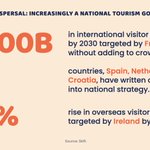
Europe’s tourism dispersal goals are colliding with AI search.
France is targeting €100B in international visitor spending by 2030 without adding to crowds in Paris. Spain, the Netherlands and Croatia have written dispersal into national strategy. Ireland is aiming for a 15% rise in overseas visitor revenue by 2031.
But the discovery layer gets in the way. Skift reports:
- Atout France says Google searches ending on its sites are down about 20%
- Only 19% of AI queries about Ireland this year were answered with information supplied by Tourism Ireland
- In 29% of persona and destination pairs tested, AI models rated a destination a strong fit for a traveler but never recommended it
Many DMOs are now rebuilding content for AI crawlers and tracking chatbot visibility.
Visibility, however, gets a destination named and being named is just the start. Dispersal needs a trusted voice to explain why a lesser-known place fits that traveler, and a way to measure whether it worked.
Local creators and experts know the smaller towns, the shoulder seasons and how to get there. Getting that knowledge in front of travelers while they plan, and turning it into a trip they can book, is what can ultimately move the needle for dispersal targets.
The destinations that close this gap will be the ones that can show not just visibility, but a shift in where visitors actually go.

New research suggests loyalty programs are losing their hold on travelers.
44% of US travelers book outside their preferred loyalty program when the price is better. 55% would follow an AI tool to a better deal. When asked what makes them trust an AI recommendation, loyalty membership ranked last.
A McKinsey and Skift study found half of 1,000 US travelers changed a confirmed stay after finding a better option. A booking is no longer a commitment. It is a placeholder until something cheaper shows up.
The economics make this harder for platforms. The same Expedia hotel inventory returns 1% to a free OneKey member and 10% in credits to an Uber One member. Platforms are investing heavily in loyalty incentives, yet travelers still decide on price.
For the industry, this raises a practical question. If a booking is no longer a commitment, and brand loyalty does not earn trust, what does?
One possibility is that trust moves toward people with firsthand knowledge. AI is well suited to finding the lowest price. Deciding which option fits a particular traveler, and when a deal is not actually a good deal is a problem which credible human advice may be better placed to solve.
This is the gap we are working on at @trip_ixo .

There are now well over 100 consumer AI trip planners.
Many of the names are well known. Mindtrip, TREK, Layla, Pilot, Stippl, TripBuddy, Google AI Mode, and dozens more all claim they can turn a prompt into a usable itinerary. Many offer free tiers. Most have maps, collaboration, calendar export, and some form of booking links.
The category is crowded. The product is largely commoditized.
Almost every one of them can generate a day-by-day plan. Very few can consistently do three things well:
- Stay accurate enough that a traveler doesn’t have to spend time fact-checking
- Handle real constraints (budget, mobility, group dynamics, taste) without generic output
- Get the traveler from the plan to a confirmed booking without friction
Surveys keep showing the same pattern: people will use AI for research and inspiration. Far fewer trust it with the final booking.
Bad recommendations still happen.
Verification time is real.
And the handoff from itinerary to paid booking is where most tools still lose the user.
This is why the pure AI planner layer is getting harder to differentiate on features alone.
The advantage is moving to whoever can add the human or creator layer on top of the machine, and then close the conversion.
Creators already have the trust and the taste that pure AI tools lack. The ones who win are not competing to be another chatbot. They are using AI for the first draft, then applying judgment, local knowledge, or audience fit, and making the path to booking short and trackable. Affiliate links, direct booking rails, or paid planning calls all become more valuable in this environment, not less.
Big platforms will keep shipping better AI planners. The tools will keep multiplying. The durable edge for independent creators is still the same: people will accept machine suggestions, but they will pay (or click through) for the version that feels like it actually understands them.
The crowded tool space is not a threat if your differentiation is the human filter and the conversion, not the itinerary generator itself.

Almost nobody books travel through AI yet. The platforms are building it anyway, and the booking is not the point. The intent data is the most valuable asset.
Booking Holdings says under 1% of room nights come from AI channels. Skift/McKinsey data shows AI use falls to about 6% at checkout. 51% of travelers distrust AI accuracy, per a survey cited by Skyscanner’s CEO.
Yet Google launched hotel booking in AI Mode with Booking dot com, Expedia, Hilton, Marriott, IHG and more. The hotel or OTA stays merchant of record and does the work of charging the card, confirming and supporting the guest.
Google passes along only name, payment, occupancy and property. The planning conversation stays with Google. That includes what the traveler wanted, what they compared and why they chose.
No verified commission structure exists yet for AI-executed bookings, and monetization is reportedly drifting toward in-chat ads.
So the trade looks like this. Suppliers keep the cost and the liability of the booking. The platform keeps the richest signal in travel, the reasoning behind the decision.
Volume will follow later. The advantage is being built now, one planning conversation at a time.
For creators and anyone who influences travel decisions, the lesson is the same. Whoever holds the intent data holds the leverage.
Creators hold this data every day, in DMs, comments and replies, and mostly give them away for free.

In July, Expedia Group acquired Layla, an AI-native platform where travelers plan and book trips by chatting.
On its Q2 call, Expedia’s CEO Ariane Gorin said that the AI that improves recommendations, ranking and personalization is already paying off. The conversational tools, the ones that feel like talking to a travel agent, do not convert into bookings yet. But they reportedly produce over 60%+ traveler-intent data, and the bet is that this value compounds over time.
This means that one of the largest travel companies in the world is investing in planning conversations mainly for what they reveal, not for what they sell today.
That tells you what a planning conversation is really worth. When a traveler explains who is coming, what they can spend, what they dislike, and which week they are free, they are giving away the information that every booking decision depends on. A search box never captures that, but a chat does.
Now put that next to other numbers we are seeing. AI-originated bookings are still under 1% of Booking Holdings’ room nights. Expedia says its chat tools do not convert yet. And about half of travelers say they distrust AI travel information. So the conversation is valuable, but the traveler does not fully trust the entity on the other end.
A conversation with a person who has actually been to the place does what the chatbot is trying to do, only that the traveler believes the answer. And the person giving it can be paid for the value they create, not only for the link they happen to drop afterward.
Platforms are buying planning conversations to learn about travelers. Creators already hold them every day, in DMs, comments and replies, and mostly give them away for free.
That is the gap we are building @trip_ixo around: a bookable, trackable planning call with a real creator, where the conversation itself is the product and the itinerary that comes out of it is something you can book.
The next phase of travel will not be decided by who has the smartest chatbot. It will be decided by who owns the conversation, and whether the entity on the other end earns the trust.

AI-generated travel content is about to make actually having been at a destination the most valuable asset in tourism.
AI-generated clips are everywhere: a perfect hidden beach, a café with a view that doesn’t exist, an itinerary no human walked. They’re cheap to make and they look great. They also quietly teach travelers to doubt everything they see.
The numbers already point that way. At Skift’s Data + AI Summit last week, Skyscanner’s CEO cited a survey in which 51% of travelers distrust the accuracy of AI travel information. And AI-originated bookings are still under 1% of Booking Holdings’ room nights. People will ask a chatbot. Very few will trust it with the trip.
So what happens when the feed fills up with content nobody can verify?
Trust becomes the scarce asset, and it moves toward people who can prove they were on the ground: creators with a track record in one place, a face, a history, and something to lose if they are wrong.
That changes the economics, too. Right now most travel creators are paid for attention: a link click, a 3% affiliate commission, a one-off brand post. But if verified local knowledge is the scarce thing, the valuable product isn’t the video. They are the answers to travelers asking questions around trips, providing information on their personal constraints (travel dates, travel with kids, daily budget)
That is a conversation, and it’s worth paying for.
It also changes what destinations should buy. A tourism board that builds a bench of trusted local experts gets something AI can’t fake, and something it can’t replace.
The next two years of travel content will probably not be about who has the best-looking clip. They’ll be about who the traveler believes.
That is the bet we’re making at @Tripixo.

Skift’s Creator Summit last month framed open decisions regarding the travel creator economy:
- prioritizing reach vs depth
- allocating brand vs performance budgets
- how much story control to give creators
- weighing owning vs renting creator networks
- valuing content vs conversion
The numbers behind these, per Skift Research and others:
- 36% of travelers start discovery in the social feed
- 57% of younger travelers name social as a top planning source
- Social drives $100B+ in travel demand, but social-attributed bookings are tiny next to that
- Only 8% of brands rank follower count as the most important factor in picking a creator
- Creators with under 20K followers now take nearly half of US influencer spend, up from under 20% in 2021
In summary: Creators are where the trip starts, but the booking happens somewhere else, and nobody can say which creator caused it.
That’s why brands still budget creators as an experiment. Difficult to scale a channel that cannot be properly measured.
The fix isn’t a better affiliate link. A link records a click. It doesn’t capture the interaction where someone asks where to go, giving their specific constraints (trip duration, family, budget) and a person they trust turns that into a real plan.
That conversation is the missing step between inspiration and booking. If it ends in a bookable, tracked itinerary, the brand sees which creator closed the trip, and the creator gets paid for the work they did.
That’s what we’re building at @trip_ixo . Content gets the attention, the call gets the booking, and the attribution is measured.

OpenAI launched Instant Checkout in ChatGPT in September 2025. By March 2026 it was winding it down. OpenAI described this as a transition to apps, and said the first version did not offer the flexibility it wanted.
The new model is: People discover products in ChatGPT, then complete the purchase on the retailer's own site or inside the retailer's app.
Travel is already built this way. Booking and Expedia have apps inside ChatGPT, and Skyscanner has a plugin. The chat does the thinking and the supplier does the transaction.
This lines up with what travel executives are saying:
- Booking says LLM referrals are under 1% of its room nights, and about 60% of its transactions are already direct
- AI is creating several entry points instead of one new gatekeeper
- Booking's CEO argues the scarce asset now is trust
So the picture is that while discovery is moving to AI quickly, commerce stays with whoever holds the inventory, the payment and the customer service.
Here is what that means, including for creators and affiliates. The handoff from recommendation to booking is where the value gets decided. If the AI recommends and the supplier closes, someone has to track who influenced the sale and pay them. Today that mostly happens through links and cookies, but these were built for a web where the last-click was the whole story.
The next fight in travel is going to be over attribution. Whoever makes it possible to credit a recommendation that happened in a chat, a video or a feed, and then pay for it, will ultimately matter most.

ETIAS is the pre-travel authorization that visa-exempt visitors, including Americans, Canadians and Brits, will need to enter Schengen countries. It was meant to arrive in late 2026.
Here is where things stand:
Officially, eu-LISA still lists Q4 2026 as the target.
Press reports say that is no longer realistic, and 2027 is now the likely outcome.
The reported causes are technical issues with the Entry/Exit System that went live in October 2025, plus unresolved ETIAS IT problems.
Travelers need no pre-authorization today, and the EU has said it will announce the date months before launch.
So the honest answer to when one should apply is that nobody knows yet.
Entry rules, tourist fees and visa windows are changing faster than most travel content gets updated. This is the part of travel that AI and creators both have to take seriously:
- Evergreen advice needs a date stamp. Rules as of this month
- Recommendations should carry the caveat, check the official source before you book
- Anything that plans trips needs a way to keep requirements current, because a wrong entry rule can cost someone the whole trip
🤖 Made with AI

Most travel creators are paid for attention. A growing few are getting paid for outcomes.
Fora is a clear example. It trains creators to work as travel advisors who earn backend commission on the trips their audience books, and the creator keeps roughly 75 percent of that commission. Skift notes notes that advisor-style booking carries commissions of 12 percent or more.
For the creator, income stops depending on a brand deal landing this quarter. It follows the audience they have already built, and it compounds as trust grows.
For the supplier, the sale is measurable. Typically, creators generate the desire to travel, but the booking happens weeks later, somewhere else, with nothing linking the two. Tying the booking to the creator fixes that.
But the advisor model asks a creator to become a travel agent. That means client service, supplier relationships and handling the booking itself. It is a real business, and plenty of creators will not want it.
That is the gap we think is worth building into.
At Tripixo, our view is that creators should not have to choose between staying a creator and running an agency. If the trip a creator already shares can be turned into an itinerary their audience can book, with the booking tied back to the creator, they get the outcome-based upside without the operational weight.
Attention built the creator economy. Attribution is what will pay for it.
Where do you think creators belong in the booking chain: closer to the transaction, or protecting their independence from it?

Our mission is to help creators monetize the expertise that they give out for free over DMs, comment replies and in response to emails asking for help regarding which hotels to stay at/ suitability of destinations for specific constraints (e.g., family, budget, season), or for help in planning whole trips.
The simple idea is that creators can setup profiles, which travelers can book for paid planning calls.
@trip_ixo handles: payment collection, booking interface, video/audio call infrastructure, AI note-taking during the call.
At the end of every call, @trip_ixo auto-generates a personalized, bookable itinerary, the Trip Page, for that specific traveller. This is not a generic AI itinerary, it preserves the creator's judgement and advice from the call and contains bookable links.
Travel creators are sitting on a business. Most just call it content.
Every day they answer "Which hotel in Bali?" and "Is five days in Rome too long?" in their DMs. For free.
I spent seven years at Trivago watching where travel money goes. The people who inspire the trips get almost none of it.
So we built Tripixo. 40 seconds on how it works, how creators earn, and why no commission can bend their advice.
Know a travel creator who does this every day? Tag them.
Skift Research estimates $7.3 trillion of travel spending is influenced by social media and creators.
Yet most of the creators driving that spend never see a dollar of it.
Skift's Creator Summit showed how the big brands are adapting:
- IHG works with around 100 creators a year
- Marriott folded creator work into its paid media team
- Hyatt says paid social now beats other channels on incremental ROI
Creator content is moving out of the PR budget and into the performance budget. Once that happens, the question changes from how many views did a piece of content get to what it actually booked.
The hard part is that creators can influence a traveler without ever touching the transaction. Someone watches a video, then books weeks later on another device. The brand cannot see it and the creator cannot prove it.
Second, format matters. whole-trip content converts better than isolated property reels. People do not plan a stay. They plan a trip.
Third, there is a trust tension. Audiences can tell when a recommendation is really an ad. Creators who monetize without losing credibility will be the ones who last.
So the creators who win from here likely will be the ones whose content retains credibility and connects directly to the itinerary and the booking, because that is where attribution, and income, actually live.
That is the problem we are building toward at Tripixo: turning the independent trip advice a creator already shares into something their audience can act on, with attribution that actually works.

A travel affiliate cookie lasts somewhere between a single session and about a month. A trip takes much longer than that to plan.
Here is what the big programs typically offer, based on a recent Stay22 comparison. Viator pays around 8% with a 30 day window. GetYourGuide pays around 8% with 31 days. Expedia pays 2 to 6% with 7 days. Booking dot com pays 3 to 4% and the cookie lasts only for the session. Privacy rules are pushing many programs toward 7 to 14 day windows.
Yet this is not how people actually plan. They save a video, ask a friend, compare options for weeks, then book. Often they book on a different device, through a different site.
The cookie, however, records a click, starts a short clock, and forgets. If the booking lands after the clock runs out, the creator whose content sparked the trip gets nothing. The last site the traveler touched gets all the credit.
That is a measurement problem, and it is also a pay problem. The creator did the work that shaped the decision, at a commission of a few percent, on a window shorter than the decision itself. The system rewards whichever link was closest to the checkout.
Until attribution can follow a trip from first idea to confirmed booking, creators will keep being underpaid for the planning, the most valuable part of the journey.
That is why we think the planning conversation deserves its own price. When a traveler pays a creator for a live call, the creator earns up front for the work that actually shapes the trip, and the traveler leaves with an itinerary they can book.
A small commission with a short cookie is not a business model. Paid expertise can be.
