

Unpacking the complexity of China’s rise through objective analysis and data visualization. Follows, RTs ≠ endorsements.
Washington, DC
Joined October 2015
- Tweets28.2K
- Following925
- Followers58K
- Likes975






Pinned Tweet
Join the CSIS China Power Project on October 28-29 for the 10th anniversary of the China Power Conference, bringing together leading experts for two days of discussions on the key issues underpinning China's global power. Register: buff.ly/37atDPJ

Why is biotechnology becoming increasingly important to U.S. national security and economic competitiveness? Learn more in the this #ChinaPower podcast: buff.ly/WSs4kEY

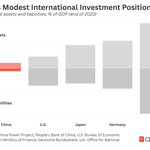
Economists often describe China’s markets as “shallow,” meaning they struggle to absorb incoming capital in a way that generates strong returns for investors. What are the challenges investors face in China’s financial markets? Read more in our #ChinaPower feature: bit.ly/fin-sec

Join us on Thursday, October 29 for Day 2 of the 10th Annual China Power Conference. Leading experts will debate China's willingness to militarily support its partners, the future of China-Japan relations, and whether a China-dominated BRICS could surpass the G7 as the world's most influential international grouping. Register here: buff.ly/37atDPJ

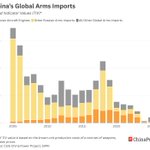
China has historically relied on Russian-made engines for many PLA aircraft. From 2016-2025, over 37 percent of China’s arms imports were turbofan engines, 88 percent of which came from Russia. Learn more: bit.ly/ChRusMil

Why is biological data becoming an increasingly important strategic resource? Learn more in this #ChinaPower podcast: buff.ly/IF1ruDR

@ChinaPowerCSIS analysis of open-source data shows increased Chinese military activities in 2025 in the Taiwan Strait, South China Sea, near Japan, and beyond the First Island Chain. Explore the data and analysis here: bit.ly/pla-2025

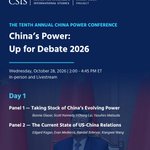
Join us on Wednesday, October 28 for Day 1 of the 10th Annual China Power Conference. Leading experts will assess how China's power has evolved over the past decade and examine the current state of U.S.-China relations. Register: buff.ly/37atDPJ

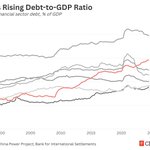
Geopolitical risks like U.S. tariffs complicate China’s debt-related vulnerabilities, as they put strains on Chinese manufacturers operating on thin margins. Our feature on China’s financial security analyzes this and more: bit.ly/fin-sec

What does the Iran conflict reveal about the current state of China-Iran relations? Learn more in the latest #ChinaPower Podcast: buff.ly/oQe66vj

China’s energy efficiency has dramatically improved over the years, but it was still 40% less efficient than the US in 2023. Learn more about China’s energy security in our #ChinaPower feature: bit.ly/cp_energy

China copied Russian Su-27 fighters to develop its J-11 fighter and it reverse-engineered Russian S-300 SAM systems to produce its HQ-9 SAM systems. Learn about other ways China has stolen and reverse-engineered Russian technology: bit.ly/ChRusMil

Join @BrianTHart and @Dalzell60 for Debate I: As China's power grows it will be more willing to militarily support and defend its closest international friends at the 10th Annual China Power Conference on October 29, 9:30-11:00 am ET. Register here: buff.ly/37atDPJ

As Xi Jinping reinforces traditional family values, women in China face growing pressure to marry and have children - reflecting a state-led effort to reverse a demographic decline. Learn more about these shifting gender narratives: buff.ly/3uDRpS6

A disruption in the Taiwan Strait would have ripple effects across China’s economy. In 2024, nearly 58% of China’s maritime imports transited the strait, including key industrial inputs such as oil, natural gas, ores, and metals. Read more: buff.ly/StML4MU

Is China helping to end the Iran conflict, or quietly helping Iran sustain it? Learn more in the latest #ChinaPower Podcast: buff.ly/oQe66vj

Join Bonny Lin, @edgardkagan, Evan Medeiros, Randall Schriver, and @wangxiangweihk for The Current State of U.S.-China Relations at the 10th Annual China Power Conference on October 28, 3:45-4:45 pm ET. Register here: buff.ly/37atDPJ

How do financial risks threaten China’s economic security? This #ChinaPower feature explores key vulnerabilities and strengths of China’s financial security. Read it here: bit.ly/fin-sec
China has procured around 67 percent of its arms imports from Russia since 2011—a notable drop from 85 percent during the previous 15-year period. What led to this decline? Find out in our updated feature: bit.ly/ChRusMil

Looking ahead, what should we watch most closely in China's approach to Iran and the broader Middle East? Learn more in the latest #ChinaPower Podcast: buff.ly/oQe66vj
