





Pinned Tweet
Today we're introducing Slite as the first self-maintaining Knowledge Base
Your wiki docs go outdated everyday, and your agents depend on them for your most ambitious workflows.
Slite monitors your docs' accuracy from all other work tools (slack, jira, linear, codebase, etc) while you sleep and updates them.
It even directly talks to your AI agents to give them accurate context without burning their context window or tool calls.
You've been trying to build this 'company brain' for months now with hacky MVPs
This is the final version of what you need, already built to be collaborative, headless, and secure.
Check it out and HMU if you need this for your team, I'll be running personal onboardings for the next few days!
Quality of life improvement for Slite
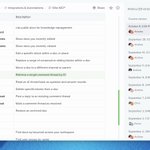
When you get notified of a change, you land on the history view, and see exactly who changed what, when, via which agent.
I've never seen any other doc tool do this, and I could not come back.
Christophe Pasquier °} retweeted

Using France's fiscal problems to argue against voting for Democrats feels off base. Just look at where American innovation thrives: California, Massachusetts, New York and Washington
We can protect innovation, reduce deficits by tackling corruption, tax breaks for the wealthy and costly wars, fight inflation & still build a compassionate society that protects the most vulnerable
(Oh and I love France. This isn't a dig at France. If it shifts hard right, I suspect things will get way worse. But that's a post for another day)

I’m French. I want to talk to Americans who are about to vote Democrat. Not to insult you. To warn you.
I come from your future.
In France we did everything your progressive politicians promise. Free healthcare, free college, generous welfare, strong unions, heavy regulation, high taxes on the rich, a state that takes care of everything. Public spending close to 57% of GDP, one of the highest on the planet. On paper, it’s the dream.
Here’s what it looks like from the inside. France hasn’t passed a balanced budget since 1974. Our debt is above 3,300 billion euros. Interest on that debt is becoming one of the biggest items in the national budget. Our hospitals are collapsing despite record funding. Our schools rank lower every year. Young people with degrees can’t afford an apartment in the city they were born in. Our best engineers leave for London, Zurich and San Francisco. And the rich you wanted to tax? They left too, and took the jobs with them.
The promise was protection. The result is stagnation.
The worst part is that nobody in France voted for decline. Every single step sounded generous, compassionate, reasonable. One more program. One more regulation. One more tax to fund it. Each step alone makes sense. Fifty years of them, and you wake up in a country that can no longer build a nuclear plant on time or keep its streets safe.
I love America because it’s the one place on earth where people still believe they can build something from nothing. I came to Silicon Valley as a self-taught kid and it changed my life. That spirit is the most precious thing your country has.
Before you vote, ask yourself one question: is the program you’re voting for making America more like America, or more like France?
Trust me. You don’t want to be France.
Christophe Pasquier °} retweeted

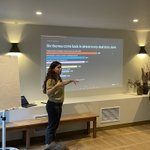
We hosted a company brain webinar to talk architecture.
But the questions that kept coming back were about maintenance:
1. Who reviews a change before it lands?
2. Which edit wins when two people disagree?
3. How do you know a gap the agent flagged is real?
Building a company brain is the part everyone plans for. Keeping it accurate is what they wanted to know about.
Five of their questions are in the image, and answered by Yochan Khoi from Gorgias, who built their brain in-house, and Christophe Pasquier (@Christophepas) who built Slite.
Missed the webinar?
Watch the full session: slite.com/webinars/company-b…
What's the maintenance question your team hasn't answered yet?

ALT What builders asked us about company brains: five questions from the Company Brain webinar on access, conflicts, trust, team size and integrations, each answered by Yochan Khoi (Gorgias) or Christophe Pasquier (Slite).
Christophe Pasquier °} retweeted
Your dev team is shipping faster than ever with AI.
Your help center hasn't kept up.
In this demo, a maintenance routine finds a merged PR that changes product behavior and suggests an update to the help center.
How it works:
1. Set which documents to check, how often to run the check, and who's responsible for reviewing them.
2. Choose the sources the routine should check against.
3. Review the suggested changes before accepting an update.
This clip comes from Company Brains in Action: Build vs. Buy, our 22 September webinar with Christophe Pasquier from Slite and Yochan Khoi from Gorgias. It shows the maintenance workflow being developed in Slite at the time.
Full session: slite.com/webinars/company-b…
Christophe Pasquier °} retweeted

We just solved attribution for AI Agents.
Introducing Journeys.
AI agents are visiting your product. Now you can see what they’re trying to do, what converts, and what’s making them churn.
With Journeys, you can:
- See the moment AI agents visit your product
- Follow the paths they take
- Track purchases, installs, and completed setup
- Pinpoint where agents get stuck and whats blocking them
- Review fixes prepared for you and publish them with a click
- Watch how those changes improve conversion
Turn agent traffic into revenue.
Try Journeys at tryscope.com
Christophe Pasquier °} retweeted

We're live on Product Hunt today ! An upvote takes five seconds and helps us a lot.
Tristan says he'll owe you something forever. I'll make sure he pays up 😅
xitter.cf/tristan_cte/status/211…

the best thing you can do to help me today
=> upvote here producthunt.com/products/pan…
I'll owe you something forever!

Christophe Pasquier °} retweeted

This is the Frame .io for the agentic video era
Introducing Flask: give feedback and collaborate on video with together with Claude, Codex, HyperFrames, Remotion or any agentic workflow
Try it free at flask.do or copy the prompt ↓
Christophe Pasquier °} retweeted

Meet Pancake, the Vercel for GTM.
Try it at pancake.ai
Your agent ships your product. Now it ships your go-to-market.
How? A GTM brain that knows your business, 50+ data providers to find the right customers and tools to reach them.
Your next customers are one prompt away.
(did I really have to jump off a plane to say that? questionable, but I survived and now you're reading my tweet)

Christophe Pasquier °} retweeted

What does an AI harness actually do?
These 6 terms explain how an agent goes from a request to a finished task.
Let's take this example: a support agent that checks an order and drafts a reply.
What happens at each step:
/1 Agent loop
The model chooses an action, a tool runs, and the result comes back. The cycle continues until the reply is ready, help is needed or a limit is reached.
/2 Tool calling
The model requests a tool by name, with arguments. The harness checks and executes that request, then returns the result. An order lookup gives the model a delivery status it can use.
/3 Context management
What the model sees at each step comes from your instructions, the conversation and tool results, like the order status. When the window fills up, older messages get compacted, and your prompts and hooks decide what's kept.
/4 Checkpointing
The workflow saves its state outside the model. After an interruption, it can reload the order lookup result and continue from a saved point.
/5 Permissions and sandboxing
The harness sets what the agent can touch: which tools, files and actions, and where code runs. The support agent can read the order but can't issue a refund.
/6 Guardrails
Checks inspect inputs, outputs or proposed actions. An output check can inspect the drafted reply; an approval gate can pause before sending it. Those are different controls, and neither catches every error.
The real payoff: you can switch between models from different labs and share the same skills and context across your team.
Which part is hardest to get right in your setup? 🤔

ALT AI Harnesses: six illustrated concepts. Agent loop repeats actions and results; tool calling retrieves order status; context management compacts older chat; checkpointing restores workflow state; permissions and sandboxing allow reading an order but block a refund; guardrails can require human approval before sending.

Christophe Pasquier °} retweeted
From our 22 September webinar, Company Brains in Action: Build vs. Buy, with @Christophepas (Slite) and Yochan Khoi (Gorgias).
Full session: slite.com/webinars/company-b…

Christophe Pasquier °} retweeted

Meet Mistral Large 4, aka Le Chonk.
• 1T parameters, natively multimodal. 49B active.
It is the best open weights model from US or Europe on aggregated benchmarks.
• State-of-the-art on critical workloads, including cyber defense, manufacturing and finance and it surpasses closed frontier models on visual grounding.
• Forged in Europe end-to-end and is deployable from Europe via our own Mistral Cloud infrastructure.
• Available to all via API today. Working with cybersecurity partners privately.
Open weights release end of October.
🤖 Made with AI
All our docs look like this these days, with majority of changes coming from agents.
These indicator of delegation are not a nice to have anymore (looking at you Notion)


Christophe Pasquier °} retweeted
Claude Code is built for one person.
What do you use when your whole team needs the same agent?
Here are 6 open-source harnesses built for teams, and who each one suits:
/1 Deep Agents (LangChain)
The foundations for building your own company agent. Stripe built Kai on it, with 100+ teams adding 1,000+ skills. A good fit if your engineers want to build their own.
/2 QM (Y Combinator)
One agent your team uses in Slack or on the web, where each person and each room gets its own memory, files and access rules. Made for startups that already run their day in Slack.
/3 Cloudflare OS (Cloudflare)
An agent chat that knows your company and builds small private apps on request, so non-technical people can make and share their own tools. Every action is recorded, and changes wait for a human to approve them.
/4 Omnigent (Databricks)
Puts your whole team in the same coding session. Teammates join by link to watch, comment or give instructions, while admins set budgets and permissions.
/5 OpenClaw 2.0 (Community)
The personal agent now has shared sessions that teammates can join or take over without losing context. Sharing doesn't separate users from each other, so it suits small teams where everyone trusts each other.
/6 Goose (Linux Foundation)
Runs on each person's own computer. Companies can package it with their chosen AI provider and internal data connections, so everyone starts from the same setup.
Whichever one you pick, it can only work with the context you give it: your docs, your processes and who owns what.
Which one is your team trying?
We opened up 9+ company brains to see how teams structure that context. The full breakdown is in our free ebook: slite.com/ebooks/company-bra…

ALT Six open-source agent harnesses for teams
Christophe Pasquier °} retweeted

Been playing with Claude Code mods.
3 I'm running right now:
- restate-intent: when I dictate a long prompt, Claude first restates in a sentence or two what it understood my goal to be, then carries on without waiting. It only fires on long dictated stuff (50+ words, stutters, "um", no punctuation).
- agent-model: picks the model for subagents spawned without one. Sonnet for simple things (lookups, mechanical edits), Opus when it needs stornger reasoning. If it can't tell, it asks me.
- at-a-glance (a bit of a melting pot): 1 line above the prompt with plan usage, running subagents, my open PRs, new Slack mentions, and a "Braver" button. Braver tells Claude to go for the root-cause fix instead of the cautious patch, for one prompt only. Click the line for the detail pane.


Christophe Pasquier °} retweeted
Most company brains are being built by developers.
and yet, developers are the people who use them the least.
That came up almost by accident in our build vs buy webinar this week, when someone from a growth team asked what a company brain does for them.
@Christophepas and Yochan Khoi, both developers themselves, described the same pattern:
/1 Most of the questions come from the business side
At Slite, most questions come from support, CX, sales and customer success. At Gorgias, engineering is the team that uses Cortex, their in-house brain, the least.
/2 Developers already have a source of truth
Engineers usually find their answers in the code. Business teams usually have nothing exactly like that: how a process works, why it changed and which exceptions matter all live in people's heads, Slack threads, a wiki with a bunch of stale docs, and call notes. Tribal knowledge is everywhere.
/3 The tool is only the first step
Yochan said the massive second step is getting business teams to write down what they know and own it. At Slite, usage took off once people could ask the brain right inside the tools they already use, like the Intercom reply box.
So if you're a developer building one, sit down with support, sales and CS early. That's where the knowledge lives, and they're the ones who'll be asking the questions.
If you've rolled one out, which team uses it most? 🤔
Is it not engineering at your team?
Replay of the full session: slite.com/webinars/company-b…

ALT Graphic: business teams use company brains more than developers