

Exploring history, archaeology, astronomy, geology and the roots of ancient civilizations. Proto-Historian.
Helsinki, Finland
Joined June 2025
- Tweets6.2K
- Following366
- Followers1.3K
- Likes4.5K



Some random old screenshots from ancient Egypt.
First 2 pictures: Bent Pyramid, History for Granite
youtube.com/watch?v=girVRn1M…
Last 2 pictures: Khufu's Pyramid, @UnchartedX1
youtube.com/watch?v=9qLdPQXF…
The original entrance to Khufu's Pyramid leads downward through the Descending Passage to the Subterranean Chamber deep beneath the pyramid.


1
13


Chronocivilis retweeted

Já vi pelo menos mais três novos vídeos além daquele divulgado por Maussan alguns dias atrás. Veja, todos eles são curtos com o tempo característico de vídeos gerados por IA.
teapawt.org/Ovniologia01/status/21…

Chronocivilis retweeted

In Iceland there’s a small bridge that spans two of the planet’s major tectonic plates. Effectively you can walk from North America to Eurasia in about 10 seconds.
<whispers> And most Icelanders live in North America. </whispers>


The Pyramids Are Finally Worth It! (Giza + Grand Egyptian Museum 2026)
Video by: Indie Traveller
#Egypt #YouTube
youtube.com/watch?v=LFuUIS6d…
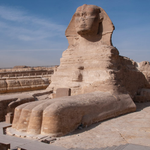
Great Sphinx of Giza (including its paws) about 4,500 years ago.
vs
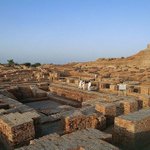
Mohenjo-daro 4,500 years ago with its major urban development occurring around 2600–1900 BC.


Mohenjo-daro, Sindh Province, Pakistan - Stupa and the Great Bath
Built around 4,500 years ago, Mohenjo-daro was one of the largest settlements of the ancient Indus Valley Civilisation and among the world's earliest major cities. It flourished alongside the great civilisations of ancient Egypt, Mesopotamia, Minoa, and Norte Chico (Caral–Supe).
With an estimated population of around 40,000 or more, Mohenjo-daro prospered for several centuries before gradually declining. By about 3,700 years ago, the city had been largely abandoned, along with several other major urban centres of the Indus Valley Civilisation.
The ruins came to archaeological attention in the early 20th century, with major excavations beginning in the 1920s. In 1980, Mohenjo-daro became the first site in South Asia to receive UNESCO World Heritage status. Today, its ancient structures remain vulnerable to erosion, salt damage, environmental conditions, and unsuitable restoration practices.
Interestingly, the city's original name remains unknown because the Indus script has never been conclusively deciphered. Researcher Iravatham Mahadevan proposed that its ancient name might have been Kukkuṭārma, meaning "City of the Cockerel," based on his interpretation of an Indus seal. He also suggested that cockfighting may have held ritual or religious significance, although these interpretations remain speculative.
One of the site's most remarkable structures is the Great Bath, a waterproofed brick basin measuring approximately 12 metres long, 7 metres wide, and 2.4 metres deep. Built using fired bricks, gypsum mortar, and natural bitumen, it featured two staircases, a nearby water supply, and a drainage system. Its exact purpose remains uncertain, although it may have been used for ceremonial bathing or ritual purification.
The nearby Buddhist stupa, however, belongs to a much later period, constructed more than two millennia after the Indus Valley city was established.
3rd picture: The Buddhist stupa is generally dated to the Kushan period, around the 2nd century AD, approx 1,800 years ago. It was constructed long after the original Indus Valley city had been abandoned. By that time, Buddhism had spread throughout the region of Sindh, which was connected to important trade routes and Buddhist communities.
Also interestingly, there is no established evidence that the Buddhists knew the original identity or history of Mohenjo-daro.
#IndusValley #History #Archaeology #Pakistan #Buddhism #UNESCO


5
148
Chronocivilis retweeted

Hidden cathedral floor emerges in Sudan, revealing one of the biggest medieval churches ever found trib.al/sohpvmY

Chronocivilis retweeted

THERE IS A MASSIVE PYRAMID-SHAPED MOUNTAIN IN GREECE, AND PEOPLE ARE STILL DEBATING HOW IT FORMED.
High above the ancient city of Sparta sits Mount Taygetus, rising more than 2,400 metres into the sky.
Its summit looks remarkably like a giant pyramid.
Sharp ridges. Steep triangular faces. A shape so striking that people have questioned whether nature alone created it.
The mountain was known to the ancient Greeks and appears in some of their earliest literature.
Today, the prevailing explanation is that it's a natural geological formation. There is no credible archaeological evidence that anyone constructed it.
But take a good look at this thing.
Nature can produce some extraordinary geometry, and sometimes what looks engineered isn't.
The question is whether we're looking at one of nature's most impressive coincidences or something that deserves a much closer investigation.
Either way, it's remarkable.

Chronocivilis retweeted

Take a look at some of the ancient granite construction detail at the UNESCO World Heritage Site of Hampi, India ✨🇮🇳


Chronocivilis retweeted

Xizhimen Archer Tower and City Wall, Beijing, China. Built in 1439, demolished in 1969 to build subway station.

Chronocivilis retweeted

what this account is: lost buildings. world's fairs, giant exhibition halls, grand hotels, stations and theaters, most of them burned or torn down, and the old photos restored so you can see them the way people did back then. forgotten history, one building at a time
this one's boston, 1872. a wooden coliseum built for one music festival, about 60,000 people inside, a 20,000 voice chorus and johann strauss himself conducting. a few years later it was sold off for lumber
how many of these did they teach you in school?


Secrets of Egypt’s Unexplored Pyramids | Lost Treasures of Egypt MEGA Episode | National Geographic
A two-hour mega episode exploring ancient Egypt from @NatGeo
Video description:
"How were the pyramids built? In this MEGA episode compilation of Lost Treasures of Egypt from National Geographic, journey alongside leading archaeologists as they unlock the engineering marvels, hidden burial chambers, and secrets of the ancient world's most iconic monuments. What purpose did the pyramids serve? What new discoveries are being unearthed about ancient Egyptian engineering? Archaeologists venture into unexplored pyramids, excavate burial chambers, and reveal secrets of a forgotten dynasty of pharaohs: the Sun Kings."
#ancientEgypt #Pyramid #YouTube #NationalGeographic
youtube.com/watch?v=zW1Kmr8O…

Chronocivilis retweeted

🇮🇷 The Qanat channels, a marvel of Persian engineering, are underground tunnels that carry water for miles.
-While enemy armies searched for water in the barren terrain, Persian settlements created hidden oases with water flowing from underground.
-Invading armies usually suffered logistical disasters and had to retreat because they could not find these secret water systems.


Chronocivilis retweeted

صندوق خشبي يوضع فيه الكحل من مصر القديمه
يسمي( مكحله )
يرجع تاريخه الي 1550- 1295 قبل الميلاد ♥️🇪🇬

Chronocivilis retweeted

Great example of ( older than Gobekli ) and difference between Pareidolia and Real.
This clay figurine tells a story, we may never know.
(Nov 2025)
A 12,000-year-old clay figurine of a woman and a goose marks symbolic innovations in Southwest Asia
pnas.org/doi/10.1073/pnas.25…

How the Great Pyramid’s 3 Security Zones Worked
Video by: IntoTheMap
Video description: "How do you close the Great Pyramid without trapping the people who sealed it, inside? The King's Chamber portcullis, the granite plugs in the Ascending Passage, and the original entrance controlled access to different parts of the pyramid. Looking at those barriers as three security zones raises a different question. Were they all closed at once, or could the pyramid have been sealed in stages?"
#Pyramid #YouTube
youtube.com/watch?v=oAc9Wl4k…

3
112

